Skip to content
BackGOD PLAYS DICE™Big questions, honest answers

THE QUESTION LIBRARY ORIGINS

Why is it so hard to test ideas about what happened before the hot Big Bang?

An earlier history needs a calculable path to a measurement that separates it from competing explanations.

THE SHORT ANSWER

We infer earlier history from later traces. A proposal must connect predicted patterns to measurements and distinguish alternatives. Different histories can share selected patterns, while foregrounds and noise complicate observation. These obstacles make particular tests difficult; they do not prove every earlier-history idea untestable.

  • Later photons can support indirect inference.
  • A transition must be calculated, not supplied by the word bounce.
  • Matching one spectrum need not identify one unique history.
  • A constraint depends on its model, dataset and assumptions.
On this page

WHERE THE EVIDENCE STANDS

How sure are we?

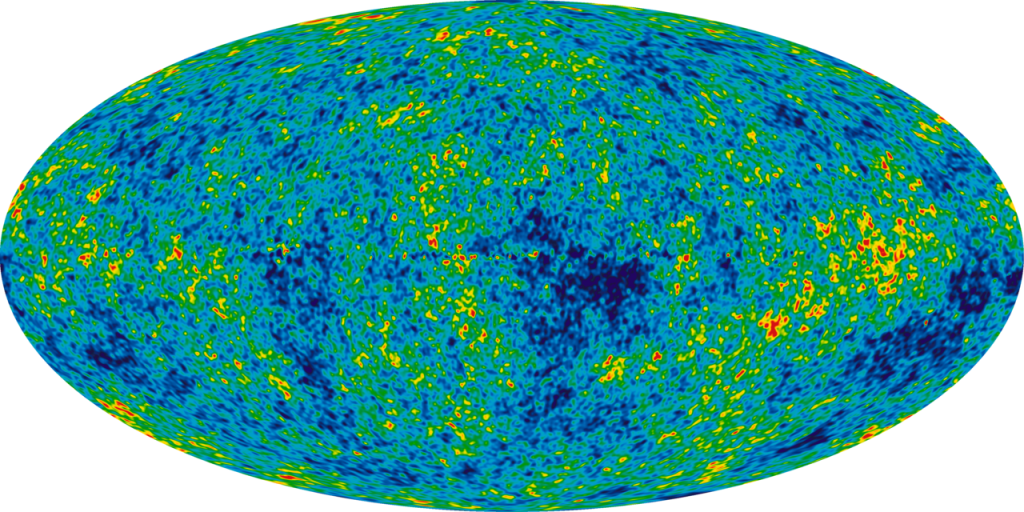
  • The cosmic microwave background (CMB) photographs the hot phase’s start.It records a later stage, as the early universe became transparent to light.
  • One matching spectrum identifies a unique earlier history.Wands’s 1999 example gives the same selected spectrum from different histories under specified conditions; it does not equate every observable.
  • The 2021 BICEP/Keck analysis detected primordial gravitational waves.Its dataset through the 2018 observing season yielded a conditional constraint, without significant evidence for a primordial gravitational-wave component.
  • A complete account of what preceded the hot phase is established.A proposed transition and its observable consequences need model-specific calculations and tests.
What the labels mean

WHAT WE DON’T KNOW YET

The relevant early physics and transition may remain incomplete. Which proposed histories can give controlled, distinguishable predictions depends on their particular assumptions.

WHAT WOULD CHANGE THIS ANSWER

A distinguishing prediction surviving independent checks would strengthen its model. One matching pattern would not establish a unique origin.

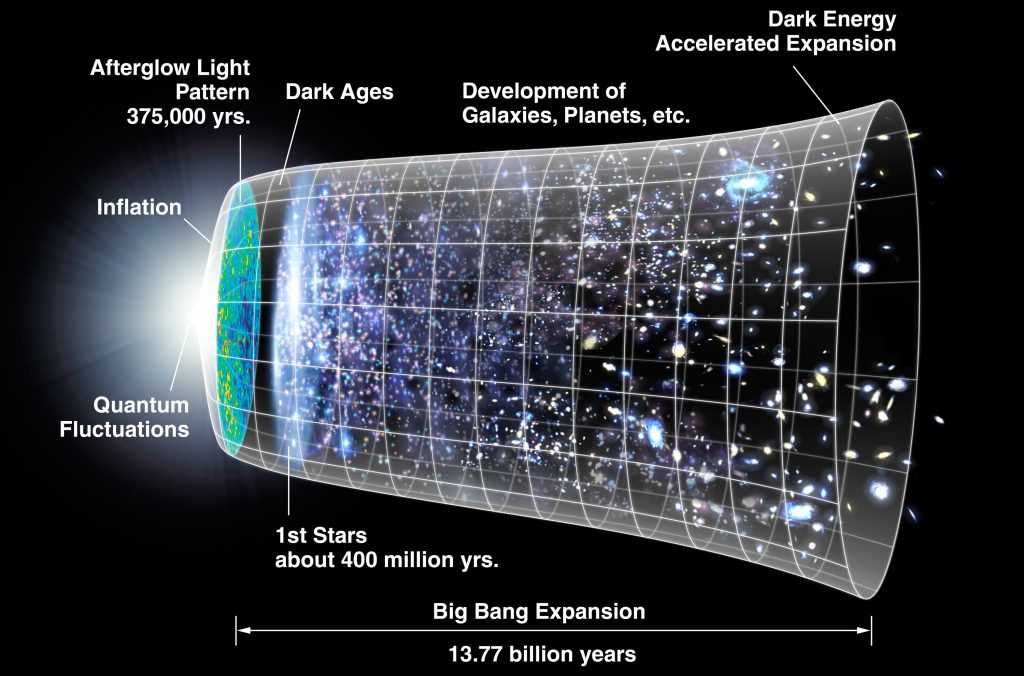
A telescope cannot directly photograph this earlier phase. In this answer, the hot Big Bang means the hot, expanding phase; an absolute first moment is a separate question. Read whether time began and the first-second timeline for that background.

The testing question is a chain: specify a model, calculate what reaches later observations, identify a distinguishing measurement, and check alternatives. A story about an earlier era becomes more useful when each link has an answer.

THE LONG ANSWER

Free long answer 1 of 3 this month.

1. Turn the idea into a prediction

In the inflationary setup of Baumann’s lectures, reheating transfers energy into particles. Connecting observed scales to conditions depends on that reheating and later thermal history.

A contracting proposal needs its own bridge. Brandenberger and Peter’s 2016 review explains that a bounce must pass from contraction to expansion and carry perturbations through the transition. Stability and control of those calculations matter. Saying bounce happened does not calculate what a telescope should see.

2. Work forward to a later record

The early plasma repeatedly scattered light. When neutral atoms formed, photons could travel much farther without scattering. The CMB record therefore comes from a later stage. That limits direct electromagnetic viewing, while leaving the separate question of what earlier physics can be inferred indirectly.

Working forward means following initial patterns into observable ones. Temperature and polarization maps do not arrive labeled with an earlier mechanism. Transfer calculations connect them to primordial patterns; the inference then works backward. If an uncertain link changes the prediction, it belongs in the comparison rather than being hidden.

3. Ask whether another history predicts the same thing

In his 1999 paper, David Wands showed that, under specified field and background conditions, exponential expansion and a contracting history can give the same spectrum for a massless scalar field. This is a concrete warning about identifying a history from one spectral feature. It does not equate every observable, or supply a complete, stable bounce into the later hot universe.

Imagine two explanations passing the same first question on an exam. That answer alone cannot choose between them. The useful next question asks where their answers differ. The example does not show that additional measurements could never separate the proposals.

The bounce review discusses correlations beyond the basic two-point spectrum, changes of spectral shape with scale, and relative gravitational-wave and density-pattern amplitudes. These are possible comparisons under stated implementations, not universal fingerprints of inflation or contraction.

4. Compare a specified prediction with data

The Planck 2018 inflation analysis used temperature, polarization and lensing observations to constrain primordial patterns and selected models. Its comparisons depend on choices about fields, gravity, reheating and statistical assumptions. Fitting those observations is not direct observation of an inflationary field, nor identification of an absolute origin.

The conclusion needs its conditions attached: which model was tested, with which settings, against which data? A model can be constrained without being wholly rejected. Conversely, compatibility can leave competing explanations in play. This dated analysis illustrates the method.

5. Separate the proposed signal from other contributions

The 2021 BICEP/Keck analysis, using observations through the 2018 season, faced Galactic dust, synchrotron emission, gravitational lensing and instrumental noise in polarization measurements. It used multiple frequencies and a statistical model to separate contributions. B-mode polarization is one kind of pattern in light’s orientation. It alone does not establish primordial gravitational waves.

For that dataset and baseline interpretation, it found no significant evidence for a primordial gravitational-wave component. This was a conditional constraint, not rejection of every earlier-history model. The sensitivity and uncertainty of a particular measurement limit what it can decide; no future detection is promised here.

6. Make the next check informative

As a testing rule, state the distinguishing prediction and assumptions before inspecting another result. If parameters are adjusted afterward, explain that adjustment and ask for a further check. An independent measurement should challenge the same prediction rather than merely repeat its wording.

The practical questions are different: is the idea sufficiently specified, is its passage to observations calculable, and is a discriminating measurement available? A missing calculation calls for theory; an insensitive measurement calls for better data. Neither automatically proves impossibility. For the broader meaning of evidence, see how science builds confidence.

THREE THINGS TO REMEMBER

  1. Specify the model and the passage to an observable.
  2. Seek a difference between alternatives, not only a shared pattern.
  3. Keep dated constraints and their assumptions attached.
Words worth knowing (5)
Hot Big Bang
The hot, expanding phase, distinct from an absolute beginning.
Perturbation
A small variation whose evolution can be calculated in a specified model.
Spectrum
How the strength of a pattern varies with scale.
Foreground
A contribution, such as Galactic dust emission, that complicates inference about the sought signal.
Conditional constraint
A restriction obtained for particular data and model assumptions.

Sources & further reading

(6) · Checked Oct 2, 2026
  1. The Universe’s History ↗NASA Science (updated August 12, 2026)Later photon record and indirect inference.
  2. TASI Lectures on Inflation ↗Daniel Baumann (2009 lectures; v2 2012)Reheating, thermal history and transfer calculations; theoretical setup remains conditional.
  3. Duality Invariance of Cosmological Perturbation Spectra ↗David Wands (1999)Selected-spectrum example only; neither every observable nor a complete bounce.
  4. Bouncing Cosmologies: Progress and Problems ↗Robert Brandenberger and Patrick Peter (2016)Transition control and implementation-dependent comparisons, not a discovered contraction.
  5. Planck 2018 results. X. Constraints on inflation ↗Planck Collaboration (2018 data; v2 2019)Dated, conditional model comparisons.
  6. BICEP / Keck XIII: Improved Constraints on Primordial Gravitational Waves using Planck, WMAP, and BICEP/Keck Observations through the 2018 Observing Season ↗BICEP/Keck Collaboration (2021; data through 2018)Analysis published in 2021; data through 2018, foregrounds and conditional non-detection.

See a mistake? Report a problem. Corrections are made openly.

The Architect AI companion · All Access

Your next question can go further.

Included with All Access →Up to 5 questions a day while available.

Put God Plays Dice on your Home Screen

On iPhone: tap Share (on iOS 26, tap ••• first), then Add to Home Screen, then Add.

On Android: In Chrome, you can also open the ⋮ menu and choose Add to Home screen or Install.

The Home Screen version keeps its own memory on iPhone, so your nights and saved answers start fresh there.

Search the Question Library

149 answers to read · 0 questions awaiting answers Your search runs on your device.

Answers about death, grief and crisis are always free, in full. If a question is personal right now →