

How We KnowAnswer
Are the colors in space photos real?
A space image can be faithful to measured light without matching human eyesight. Here is how to read the translation.
THE QUESTION LIBRARY HOW WE KNOW
Real conspiracies have happened, so suspicion can be reasonable; here is why some theories spread so easily, and how to check one fairly.
Because they speak to ordinary human needs. Research suggests that people are drawn to conspiracy theories when they want to make sense of big events, feel safe and in control, and feel good about their group. In a large Twitter study, false stories spread faster than true ones, perhaps partly because they seemed new. Some suspicions are warranted: the CIA’s MKUltra drug tests and the Tuskegee syphilis study were real abuses. The fair test is evidence you can check, the way those cases came to light.
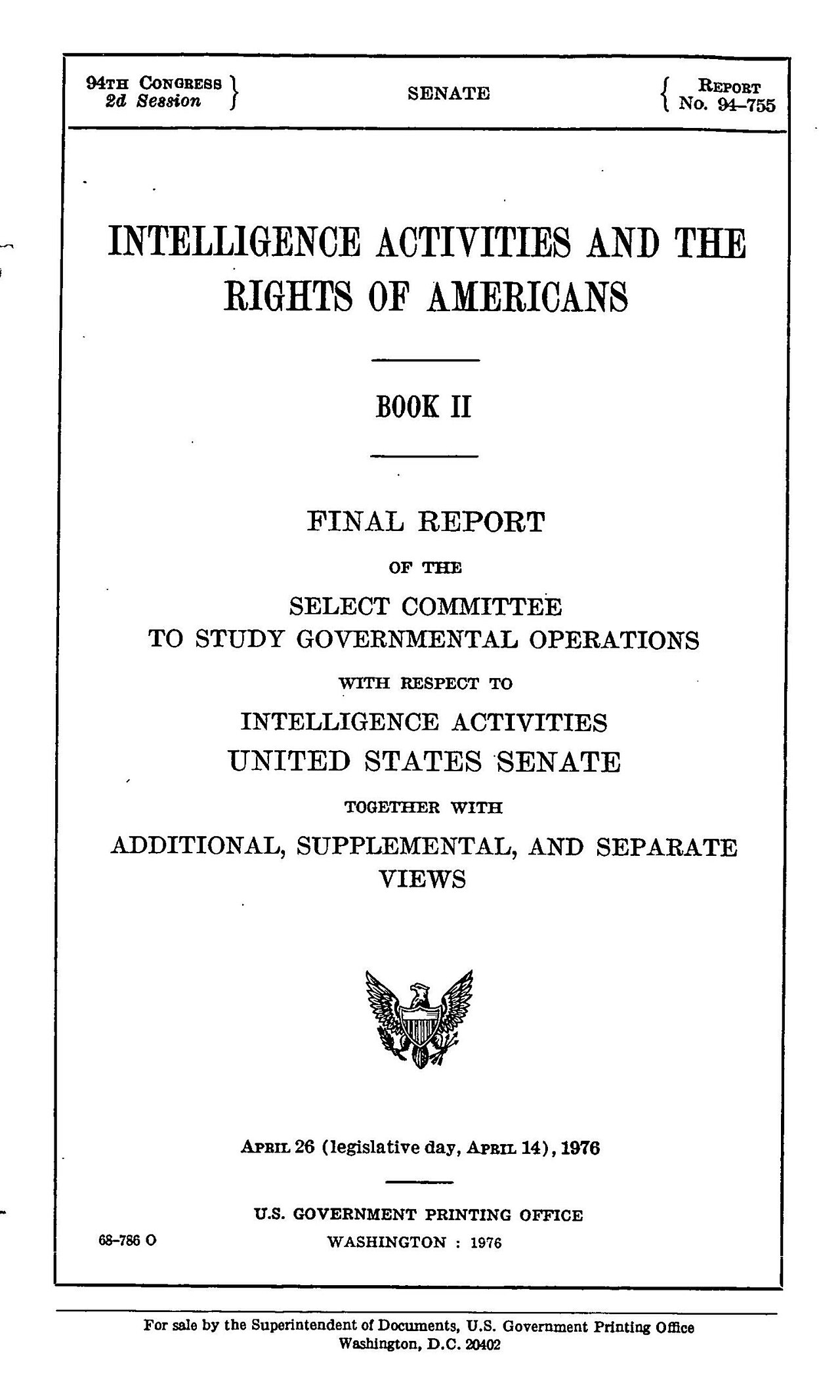
The title page of Book II of the Church Committee’s 1976 final report. The Senate committee, led by a Democrat with a Republican vice chairman, documented real abuses by U.S. intelligence agencies, and scholars still use its reports today.
WHERE THE EVIDENCE STANDS
WHAT WE DON’T KNOW YET
Much of this research is correlational, so cause and effect are often unclear. Researchers still debate how much the internet spreads conspiracy belief, and the 2022 prebunking study could not measure how long its effect lasts.
WHAT WOULD CHANGE THIS ANSWER
Well-designed surveys showing that belief in conspiracy theories is rising would change part of this answer. So would long-term studies finding that conspiracy belief leaves people feeling safer, more in control and more connected; research so far has not shown this, though few studies have tested groups that already feel shut out.
Conspiracy theories spread easily because they speak to ordinary human needs: to understand what is happening, to feel safe and in control, and to feel good about the people we belong to. Researchers note that people are not always aware of these needs. Online, new and surprising false stories can move fast, though conspiracy theories often stay among people who already agree.
History also gives real reasons for suspicion. From 1953 to 1964, a CIA project called MKUltra funded research on drugs and behavior, including drug tests on people who did not know they were being tested. The bulk of its records were destroyed in 1973. From 1932 to 1972, a U.S. Public Health Service study at Tuskegee, Alabama, followed 399 Black men with syphilis without their informed consent and did not offer them treatment, even after it was widely available. Both cases are documented by the U.S. government itself.
So how do you tell a warranted suspicion from a theory that no evidence could ever count against? The real cases came to light through things anyone can check: documents, news reports, public hearings and a request for records under the Freedom of Information Act. A theory that treats evidence against it as part of the cover-up is much harder to test. Some philosophers suggest judging each theory on its own merits and asking how many people would have to keep quiet, and for how long.
There is good news, too. In studies with thousands of people, short videos that explain common manipulation tricks ahead of time, a method called prebunking, helped people spot those tricks. You are welcome here, whether you suspect a plot or doubt one.
Free long answer 1 of 3 this month.
Researchers Karen Douglas, Robbie Sutton and Aleksandra Cichocka of the University of Kent reviewed the research in 2017. They describe conspiracy theories as explanations of important events that involve hidden plots by powerful and malevolent groups. They sorted the motives into three families:
The few studies of what happens next do not show that conspiracy theories meet these needs. In experiments, exposure to them lowered people’s sense of control and their trust in government institutions. The authors suggest the theories may be “more appealing than satisfying.” But they note that those experiments mostly tested students and survey panels; for groups that already feel shut out, the theories may offer belonging. The review also makes a fair point: history has repeatedly shown that corporate and political elites do conspire against the public interest, and conspiracy theories can help bring their misdeeds to light.
Yes, and the records are public. On August 3, 1977, the Director of Central Intelligence, Admiral Stansfield Turner, told a Senate hearing about MKUltra, a CIA project run from 1953 to 1964 that funded research on drugs and behavior. A 1963 internal CIA report had mentioned covert drug testing on unwitting U.S. citizens, and Senator Edward Kennedy said at least one death resulted. The bulk of the records were destroyed in 1973, but an employee answering Freedom of Information Act requests later found seven boxes of overlooked financial papers. They named 80 institutions, including 44 colleges or universities, and Turner said most of the people and institutions involved still did not know the CIA had sponsored the work.
From 1932 to 1972, the U.S. Public Health Service ran a study of untreated syphilis at Tuskegee, Alabama. According to the CDC, it followed 399 Black men with syphilis. There is no evidence the researchers obtained informed consent, and community members thought it was a special government health care program. The men were not offered treatment, even after penicillin became widely available. The study ended in 1972, after news articles about it led to an advisory panel. In 1997, President Clinton issued a formal apology.
After a 1974 New York Times article claimed that the CIA had spied on antiwar activists, the Senate set up the Church Committee in 1975, chaired by Democrat Frank Church, with Republican John Tower as vice chairman. It documented abuses by the CIA, FBI, IRS and National Security Agency, including an FBI program that targeted civil rights leaders, antiwar activists and elected officials. Its 1976 final report found these excesses were not the product of “any single party, administration, or man.”
Notice how each came out: through documents, reporters, a records request and public hearings. A 2019 review by Douglas and colleagues notes that conspiracies do happen but tend to fail, because plans are hard to carry out and people are hard to keep quiet. For what government records show about UFOs, see Are governments hiding evidence of aliens?
Novelty seems to help, and strong feelings may too. A 2018 study tracked about 126,000 news stories shared on Twitter from 2006 to 2017. False stories spread farther, faster and more broadly than true ones, especially about politics. The false stories were more novel, and replies to them expressed fear, disgust and surprise. Automated accounts spread true and false stories at the same rate, so people, not bots, drove the difference. The study covered false news in general, not only conspiracy theories.
But fast spread is not the same as rising belief. A 2022 study tracked belief in 46 conspiracy theories in the U.S., some across half a century, and six in six European countries, and found no systematic increase: some theories gained believers, but more lost them. Online, conspiracy theories tend to stay among people who already agree, the 2019 review adds.
Suspicion often follows power, not one party. One study of letters to the editor of The New York Times from 1890 to 2010 found that when a Republican was president, popular conspiracy theories tended to accuse Republicans and big business; under Democrats, they tended to accuse Democrats and socialists. In news-site comments about 9/11, the theory’s opponents wrote in a more hostile tone, which may feed believers’ sense of being a bullied minority, the 2019 review notes.
Some philosophers, called particularists, argue that each conspiracy theory should be judged on its own merits, the Internet Encyclopedia of Philosophy explains. Questions like these can help:
The objection: “Officials have lied before, so why trust them now?” That is a fair place to start. Some scholars argue that because elites do conspire, conspiracy theories are an important tool for holding authorities accountable, the 2019 review reports. Its authors argue that conspiracy theories do more harm than good, yet caution against demonizing the people who believe them. The practical answer is to trust evidence, not labels.
Start with prebunking: learning about a manipulation trick before you meet it. In a 2022 study led by Jon Roozenbeek of the University of Cambridge, 1.5-minute animated videos explained five techniques: emotionally manipulative language, incoherence, false dichotomies, scapegoating and personal attacks. The examples were humorous and nonpolitical, to avoid any look of partisan bias. In six experiments with 6,464 people, the videos helped people recognize the techniques and make better sharing choices, and the effects held across the political spectrum. In a real-world test with YouTube ads, recognition rose by about 5% on average compared with similar users who had not seen the videos. The limits: the team could not measure how long the effect lasts, the study covered only the U.S., and it was funded by Google’s Jigsaw unit, which helped design the videos. The videos can be watched at inoculation.science.
Some suspicions have been right, and the fair way to sort them is by evidence you can check.
THREE THINGS TO REMEMBER
Next on the path “I saw something. How would we know?” · step 8 of 8
How can I check a viral video before I share it?
Pause, then check where it came from.
See this path: I saw something. How would we know?
God Plays Dice answers big questions in plain words, with sources and one of six honest labels.
See a mistake? Report a problem. Corrections are made openly.
CONTINUE THE THREAD
How We KnowAnswer
A space image can be faithful to measured light without matching human eyesight. Here is how to read the translation.
How We KnowAnswer
Why anecdotes feel convincing, what individual cases can show, and how to assess a confident judgment.
How We KnowAnswer
How scientists distinguish real signals from lucky fits: look-elsewhere effects, independent predictions, black-hole searches and data-window artefacts.
The Architect AI companion · All Access
Labels describe the evidence for a claim, not the people who hold it.
Match my phone uses your device’s light or dark setting.