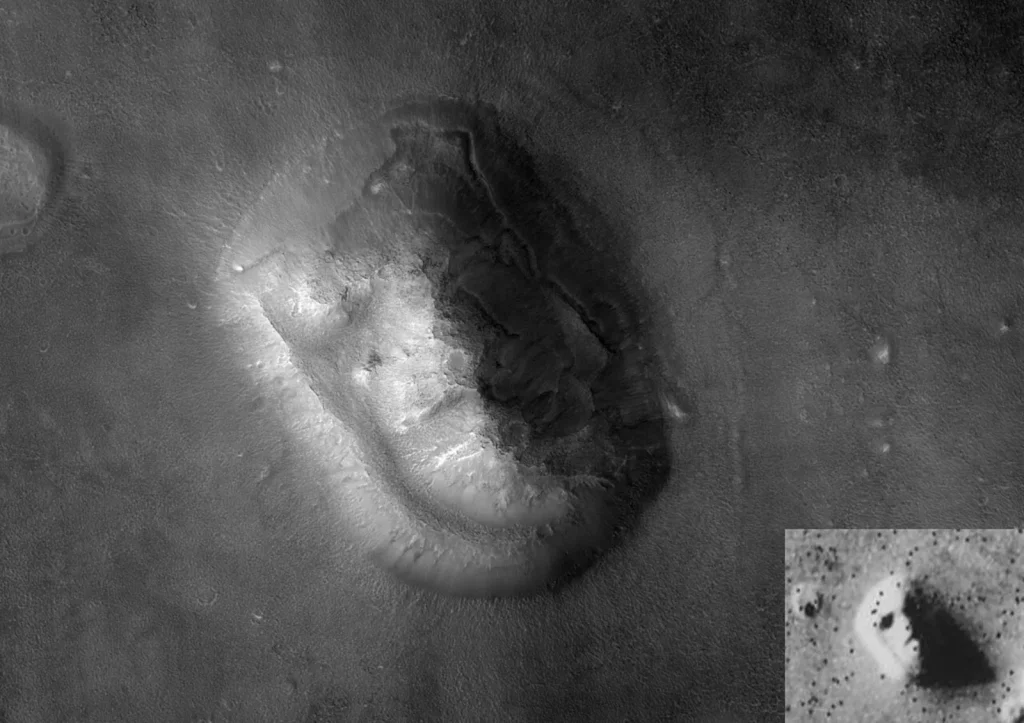
Extraordinary ClaimsExplainer
How to Check a Viral Science Claim in Five Minutes
You don't need a lab to test a shocking headline: a few quick habits borrowed from professional fact-checkers can show whether a claim deserves your trust.
THE QUESTION LIBRARY HOW WE KNOW
Smart, caring people share false videos every day, so here is a calm routine for tracing a clip to its source, and what research says about spotting AI fakes.
Pause, then check where it came from. Ask who first posted it, when and where it was filmed, and what trusted outlets say about it. Search for older copies by putting screenshots into a reverse image search. Don’t count on your eyes to catch AI fakes: in one large study, people did about as well as a coin toss. Labels and tools can help, but none catches everything. If you can’t confirm a video, hold off on sharing it.
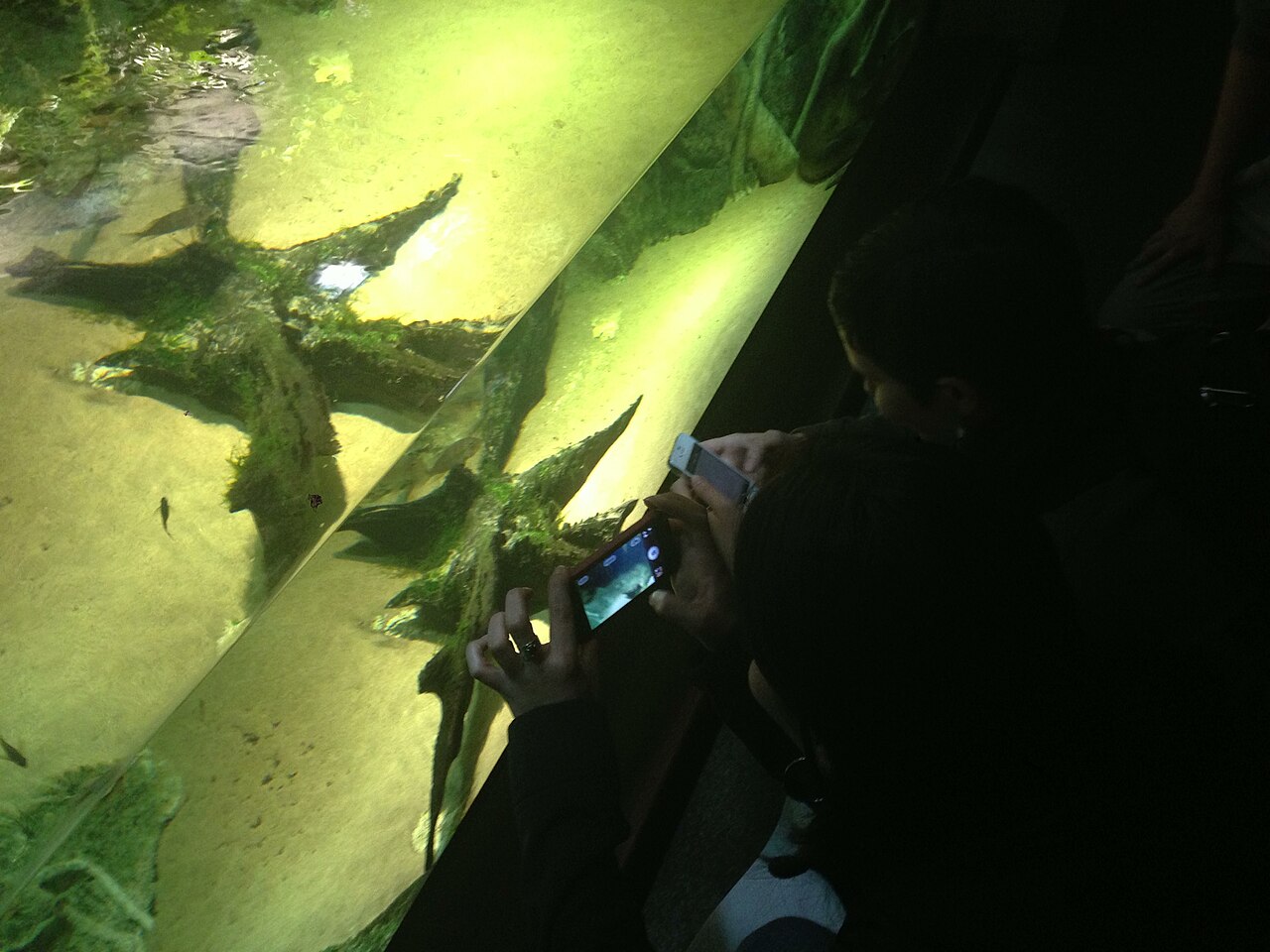
Visitors photograph fish at an aquarium exhibit; the photographer’s description places it at the California Academy of Sciences. Every viral video starts as someone’s recording, and finding that first recording is the heart of checking it.
WHERE THE EVIDENCE STANDS
WHAT WE DON’T KNOW YET
Nobody knows yet whether watermarks and content labels will spread widely enough to help with most videos. AI video tools keep improving, so today’s tips may not work next year. Researchers are still testing which habits help ordinary viewers most.
WHAT WOULD CHANGE THIS ANSWER
If content labels became standard on cameras, apps and platforms, and were hard to strip, checking a video could get much faster. If AI detectors proved reliable across all video tools, and not just some, relying on them would make more sense.
Pause first, then check where the video came from. That one habit catches a lot. You don’t need special training. You need a few minutes and a willingness to wait before you share.
Start with a fair point: people who share a false video are usually not foolish. Gordon Pennycook and his colleagues found that most people in their studies said it matters to share only accurate news. Yet in their tests, whether a headline was true had little effect on whether people wanted to share it. The problem was attention. People’s minds were on other things, not on whether the post was true. When the researchers subtly turned people’s attention to accuracy, the quality of what they shared went up.
Speed works against us too. A large study of Twitter found that false news was 70% more likely to be retweeted than true news. The authors suggest one reason: false stories tend to feel new and surprising.
And now some videos are made by AI. In one study of 1,276 people, the average ability to tell real media from AI-made media was close to a coin toss. Knowing more about AI did not help much. So the old advice, “look closely for glitches,” is not enough.
The good news is that checking where a video came from still works, whether it is AI-made or real footage with a false caption. Ask who first posted it, when and where it was filmed, and what trusted outlets say. Put a screenshot into a reverse image search to find older copies. Look for content labels, but don’t treat a missing label as proof of anything. If you still can’t confirm the video, you can wait. Waiting is free.
Free long answer 1 of 3 this month.
It helps to know how false videos spread, and research suggests it is not simply a story about careless strangers. In a 2021 study in Nature, Gordon Pennycook and colleagues found that whether a headline was true had little effect on whether people wanted to share it, even though it had a large effect on whether they believed it. Most participants still said it is important to share only accurate news. The authors concluded that people often share false posts because their attention is focused on other things. Subtly shifting attention to accuracy raised the quality of what they shared, both in surveys and in a field experiment on Twitter.
In 2018, Soroush Vosoughi, Deb Roy and Sinan Aral of MIT published in Science a study of about 126,000 chains of retweets, shared by about 3 million people from 2006 to 2017. False stories were 70% more likely to be retweeted than true ones. The team found that false news tended to be more novel, and replies to it showed more surprise and disgust.
None of this means people who share are foolish. It means a fast feed and a shocking clip are a hard mix for any brain. That includes experts: in a study below, PhD historians were often fooled by official-looking logos and web addresses. Our answer on common thinking traps explains why.
Start by separating what the video shows from what the caption claims. A clip might truly show a crowd running. The caption might say where, when and why. Those are claims, and they can be checked.
The Verification Handbook, a guide for journalists, repeats five questions from First Draft’s visual verification guide, written for photos and videos:
Then read sideways. In a study by Sam Wineburg and Sarah McGrew, 45 experienced internet users judged live websites: 10 PhD historians, 10 professional fact-checkers and 25 Stanford students. The historians and students often stayed on a site and were fooled by official-looking logos and web addresses. The fact-checkers read laterally: after a quick look, they opened new tabs to see what others said about the source. They reached better-supported conclusions in a fraction of the time. For a video, that means searching the account that posted it, and searching the event itself with a few key words and the word “fact check.”
Most videos can be searched through still pictures. Pause the clip at a clear moment, take a screenshot and use a reverse image search, which finds where else a picture appears online. Google Lens and TinEye can do this. Look for the earliest copy and its first caption. If the same scene was posted years ago about a different place, you have your answer.
The InVID verification plugin, a free browser add-on built for journalists by the European InVID project, can break a video into keyframes, the distinct still frames of the video, and send them to several reverse image search engines. It can also read a video file’s metadata, the hidden details stored in a file, and magnify a frame so you can read signs and banners.
Context matters as much as origin. The handbook’s authors, Hannah Guy, Farida Vis and Simon Faulkner, note that deepfakes get a lot of attention, but that low-tech misleading photos and videos, especially those shown out of context, are more common. Storm videos offer a clear example. In September 2024, a compilation of stormy video clips, including a giant inflatable duck taking flight, spread on Instagram as if it had been filmed during Hurricane Helene. The fact-checking site PolitiFact tracked the origins of the 10 clips. One was filmed in North Carolina in July 2023, and one, a trampoline flying across a backyard, in South Carolina in July 2021. The duck had blown across a road in Michigan earlier that year. For the other clips, PolitiFact found versions online from before the storm made landfall. The clips were older footage from other times and places, passed off with a new caption.
A deepfake is a video or audio clip changed or made by AI to look real. In a 2021 study in iScience, Nils Köbis and colleagues showed 210 people a mix of real and deepfake videos. People could not reliably tell them apart. Raising their awareness of deepfakes did not help, and neither did paying them for right answers. They tended to take fakes for real, and they rated their own skill too highly.
A larger study by Di Cooke and colleagues tested 1,276 people on images, audio, video and audio with video. On average, people scored close to the 50% you would get by guessing. Prior knowledge about AI media did not make a clear difference, and older people did worse.
What about tools? The U.S. National Institute of Standards and Technology (NIST) reviewed them in a 2024 report. It describes two kinds of help. One records a file’s origin, for example through watermarks or metadata. The other tries to detect AI content directly. NIST calls detection a constant cat-and-mouse game: as soon as a new detector appears, the AI tools improve and people learn new ways to avoid it. Detectors are often tied to specific AI tools and may work well only on those. Some videos are only partly AI, such as a real clip with one object removed. And NIST warns that, in many contexts, wrongly calling real content AI-made can be extremely damaging.
Labels are spreading. Content Credentials, based on a standard from a group called C2PA, work like a nutrition label for a file. They can show who made it, when and with what tools, and they are built so that tampering shows up. The group behind them says they are not meant to declare whether a piece of content is “real.” In a May 2026 company blog post, Google said it had added checks for SynthID, the invisible watermark it builds into content from its own AI tools, to its Gemini app for images, video and audio, and was bringing those checks to Search and Chrome. It said checks for Content Credentials were rolling out in Gemini, with Search and Chrome to follow in the coming months, and that companies including OpenAI are bringing SynthID to more of their AI-made content. These are the company’s own announcements, not independent tests. Even if they work as described, there is a limit. NIST notes that labels stored in a file are often stripped when it is shared on social media, sometimes for harmless reasons like privacy. So a missing label does not show that a video is fake, or that it is real.
“I would know a fake if I saw one.” The studies above say most of us would not, and that we tend to overrate ourselves.
“If it looks real, it is what the caption says.” The Verification Handbook’s authors call misleading real photos and videos, especially those shown out of context, more common than deepfakes. The storm clips above are an example.
“One tool will tell me the answer.” Detectors and labels help, but NIST describes their gaps. Treat a tool’s verdict as one clue among several.
“Everything could be fake, so nothing can be trusted.” That goes too far the other way. Many videos can be traced to a named person, a place and a date, and confirmed by other footage or reliable reporting. For unusual sky videos in particular, our answer on UFOs shows how to separate what a video shows from what it proves.
For science headlines in particular, our story How to Check a Viral Science Claim in Five Minutes adds more steps. The main answer stays the same: trace the video to its source before you trust your eyes.
THREE THINGS TO REMEMBER
What are the most common thinking traps, and how do we avoid them?
Everyone falls into thinking traps, including scientists.
See this path: I saw something. How would we know?
God Plays Dice answers big questions in plain words, with sources and one of six honest labels.
See a mistake? Report a problem. Corrections are made openly.
CONTINUE THE THREAD
Extraordinary ClaimsExplainer
You don't need a lab to test a shocking headline: a few quick habits borrowed from professional fact-checkers can show whether a claim deserves your trust.
How We KnowAnswer
A space image can be faithful to measured light without matching human eyesight. Here is how to read the translation.
How We KnowAnswer
Why anecdotes feel convincing, what individual cases can show, and how to assess a confident judgment.
The Architect AI companion · All Access
Labels describe the evidence for a claim, not the people who hold it.
Match my phone uses your device’s light or dark setting.