
The UniverseExplainer
What Is a Black Hole, Really?
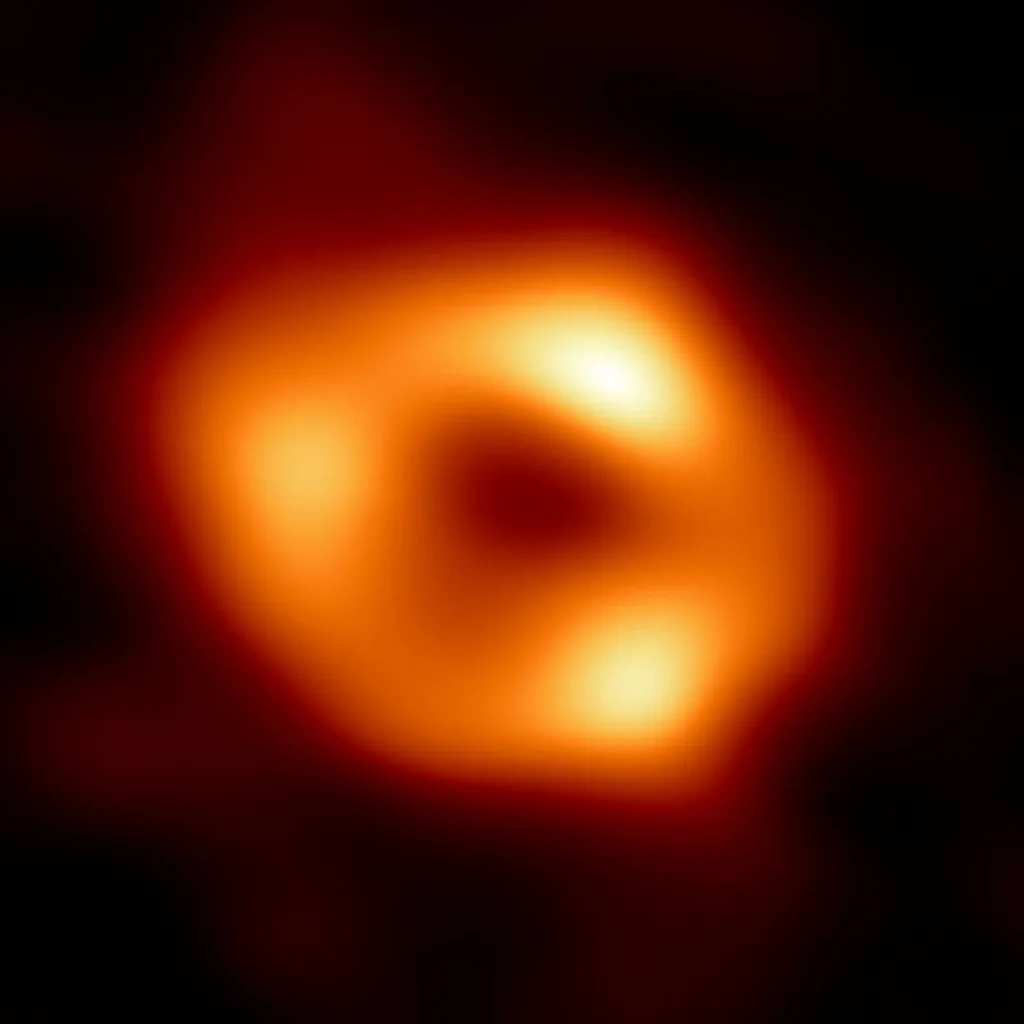
Not really holes and not cosmic vacuum cleaners, black holes are places where matter is packed so tightly that not even light can climb back out.
THE QUESTION LIBRARY THE UNIVERSE
A tunnel in an equation, a black hole in the sky and a working spacecraft are three different claims.
Observed black holes are not established doorways. Wormholes and white holes appear in mathematical models, but that does not show a usable tunnel or an astronomical white hole exists. Some warp models describe travel slower than light using positive energy; they do not demonstrate a faster-than-light craft. The original Alcubierre model needs negative energy in parts of its wall. Whether nature permits a useful traversable shortcut remains unresolved.
WHERE THE EVIDENCE STANDS
WHAT WE DON’T KNOW YET
We do not know whether a stable, safely traversable wormhole can form or be constructed. The cited white-hole models do not establish an astronomical example. How to produce and control useful warp geometries, including acceleration, remains unresolved. Results under classical gravity or particular quantum assumptions need not settle every future theory.
WHAT WOULD CHANGE THIS ANSWER
Independent observations with predictions that distinguish a proposed wormhole or white hole from ordinary objects would change the evidence. A repeatable experiment creating and controlling the claimed geometry would be stronger than a numerical metric alone. A workable proposal must also explain formation, stability, energy, acceleration and how to test it.
Black holes, wormholes, white holes and warp drives sound like members of one science-fiction family. They name different ideas. A black hole has an event horizon: a boundary beyond which light cannot return to distant observers. A traversable wormhole would connect places with a route that a traveler could actually cross. A white hole is a time-reversed black-hole region in a mathematical solution. A warp model changes the geometry around a moving region.
We have strong observational evidence for black holes. That evidence does not establish a doorway. NASA explicitly separates black holes from wormholes and portals. The same caution applies to a diagram: drawing two connected regions does not show that a person, or even light, can get through.
The theoretical work is still worth reading. Equations let researchers ask what a proposed shortcut would require and where the proposal fails. The questions are whether its matter and energy can exist, whether the geometry stays stable, and whether it can be formed and controlled.
One useful correction belongs up front. Some 2021 and 2024 warp models use positive energy at speeds below light speed. They do not demonstrate faster-than-light travel. “Allowed in a model,” “possible to build” and “observed” are separate steps.
Free long answer 1 of 3 this month.
A horizon tells us which signals can escape, not where an exit sits. Watching stars orbit a black hole or observing nearby gas gives evidence about the object and its surroundings. It does not reveal a tunnel through its interior. For the evidence for black holes themselves, read what a black hole is.
Some idealized black-hole solutions connect two exterior regions. In the familiar non-spinning example, even light cannot cross between them. Morris and Thorne’s 1988 analysis distinguishes a connection in geometry from a route through it.
A real hole formed by collapse need not realize every region of an idealized rotating solution. Evidence about its exterior does not establish interior tunnels.
A wormhole would link regions of space-time through a connecting throat. The Max Planck Institute’s explanation describes model-universe shortcuts and their speculative status. For travel, the route must remain open and permit passage; drawing a short connection is only a beginning.
In Morris and Thorne’s classical models, keeping a throat open requires unusual energy and tension that violate familiar energy conditions. Ordinary materials do not provide that support.
Static observers need not all measure negative density. Tension matters; other observers can measure negative density in these models. The requirement concerns the full stress-energy pattern, not negative-mass bricks.
The folded-paper picture can illustrate a shorter connection, but it is not a construction method. Nor does a spatial shortcut automatically establish a machine for visiting the past. The separate time-travel answer explains why those questions need additional assumptions.
Reverse the direction of time in an idealized black-hole solution and you obtain a white-hole region. Where the black-hole horizon permits entry and blocks escape, the reversed boundary permits things to emerge and blocks entry from outside. This describes allowed paths in a model, rather than a new kind of electrically charged matter.
A white hole is not defined as negative mass, antimatter or repulsive gravity.
In its 1997 and 2001 discussions, NASA separates the time-reversed solution from evidence. These are historical explanations, not a current detection catalogue. None of the observations cited here establishes a white hole. A proposed example would need distinguishing evidence and an account of formation and stability.
In Miguel Alcubierre’s 1994 proposal, a region can move rapidly relative to distant locations while a passenger follows a locally allowed path. The construction describes expansion behind the region and contraction ahead. That is a property of this model, not a universal definition of every warp geometry.
The geometry requires negative energy density in parts of its wall. Slowing this particular model below light speed does not remove that requirement when it is moving. The paper supplies a proposed space-time geometry and its required energy distribution, not machinery for generating and steering it.
The distinction matters when discussing the cosmic speed limit. A large coordinate speed is not by itself evidence for physically faster arrival. Ken Olum’s 1998 analysis connects genuine superluminal travel with energy-condition violation under stated classical-gravity assumptions. It is a conditional argument, not a proof covering every possible future theory.
They show why “every warp model needs negative energy” is too broad. Bobrick and Martire’s 2021 paper describes positive-energy models for travel slower than light. It also emphasizes that changing the shell’s motion requires propulsion. Describing a moving geometry does not explain how to accelerate it from rest.
Fuchs and colleagues’ 2024 study presents a numerical, constant-velocity model using a positive-mass shell and a change in the interior geometry. The authors report that their construction satisfies the energy conditions they test. This is a theoretical result, not an engine tested in a laboratory.
The scale of their illustrative example helps explain the gap. Its shell mass is about 4.49 × 10²⁷ kilograms, with inner and outer radii of 10 and 20 meters and a transport parameter of 0.04 times light speed. Those numbers describe a model configuration, not a spacecraft specification ready to manufacture. The authors explicitly leave efficient physical acceleration unresolved.
A slower-than-light construction can be interesting without delivering the faster-than-light promise of science fiction. Check the speed regime, the mass requirements, which energy conditions were tested and whether the paper solves formation and propulsion.
In quantum-field calculations, a local energy density can be below an appropriate reference-vacuum value. Ford and Roman’s work examines restrictions on such negative energy and what they imply for traversable-wormhole geometries. The result depends on the field, geometry and sampling assumptions; magnitude and duration cannot simply be chosen freely.
The Casimir effect, involving closely spaced surfaces, is often brought into this discussion. It does not demonstrate a stockpile of wormhole fuel. Boundaries change the calculation, so a simple rule for freely moving observers in empty space cannot be applied unchanged to every static arrangement. Meeting one quantum bound also does not establish a useful, stable passage.
Antimatter is a separate subject. Antiparticles have the same positive masses as their corresponding particles; reversing charges does not supply negative mass-energy. CERN’s 2023 ALPHA experiment found released antihydrogen falling consistently with attraction to Earth. That supports ordinary downward gravity within the experiment’s precision, not an exact test of every antiparticle in every situation. The antimatter answer explains the broader evidence.
Ask what was actually done: an observation, an experiment, an analytic solution or a numerical construction? Then ask what it establishes. A calculation can show that specified assumptions produce a geometry without showing that its required material can be manufactured.
Look for the speed regime and the observers used to measure energy. Check formation, stability, acceleration and control rather than only the shape of a bubble. Finally, look for independent tests. A striking picture and the word physical in a title cannot replace those steps.
The strongest objection is that theoretical work can still reveal a route future technology might use. That is fair. Studying the conditions is useful; declaring the route built before those conditions are met is a different claim. The unresolved question is whether nature permits a usable shortcut, not whether a diagram can be drawn.
THREE THINGS TO REMEMBER
Yes, into the future, and it has been measured.
God Plays Dice answers big questions in plain words, with sources and one of six honest labels.
See a mistake? Report a problem. Corrections are made openly.
CONTINUE THE THREAD
The UniverseExplainer
Not really holes and not cosmic vacuum cleaners, black holes are places where matter is packed so tightly that not even light can climb back out.
The UniverseAnswer
Why the matter surplus remains unexplained, what Sakharov's conditions require, and how sphalerons and proposed neutrino mechanisms might connect.
The UniverseAnswer
How matter and antimatter differ in some decays, what quarks have to do with it, and why hydrogen–antihydrogen spectroscopy tests a different symmetry.
The Architect AI companion · All Access
Labels describe the evidence for a claim, not the people who hold it.
Match my phone uses your device’s light or dark setting.