EssaysEssay · personal view
Where to start in GOD PLAYS DICE if you are new to cosmology
A simple reading guide to the questions, measurements and scientific limits in GOD PLAYS DICE, Volume One.
ESSAYS PERSONAL VIEW
The answer to a closed mind is not a different doctrine. It is an education that teaches us how to examine claims, change our minds, and keep asking.
We do not need more indoctrination.
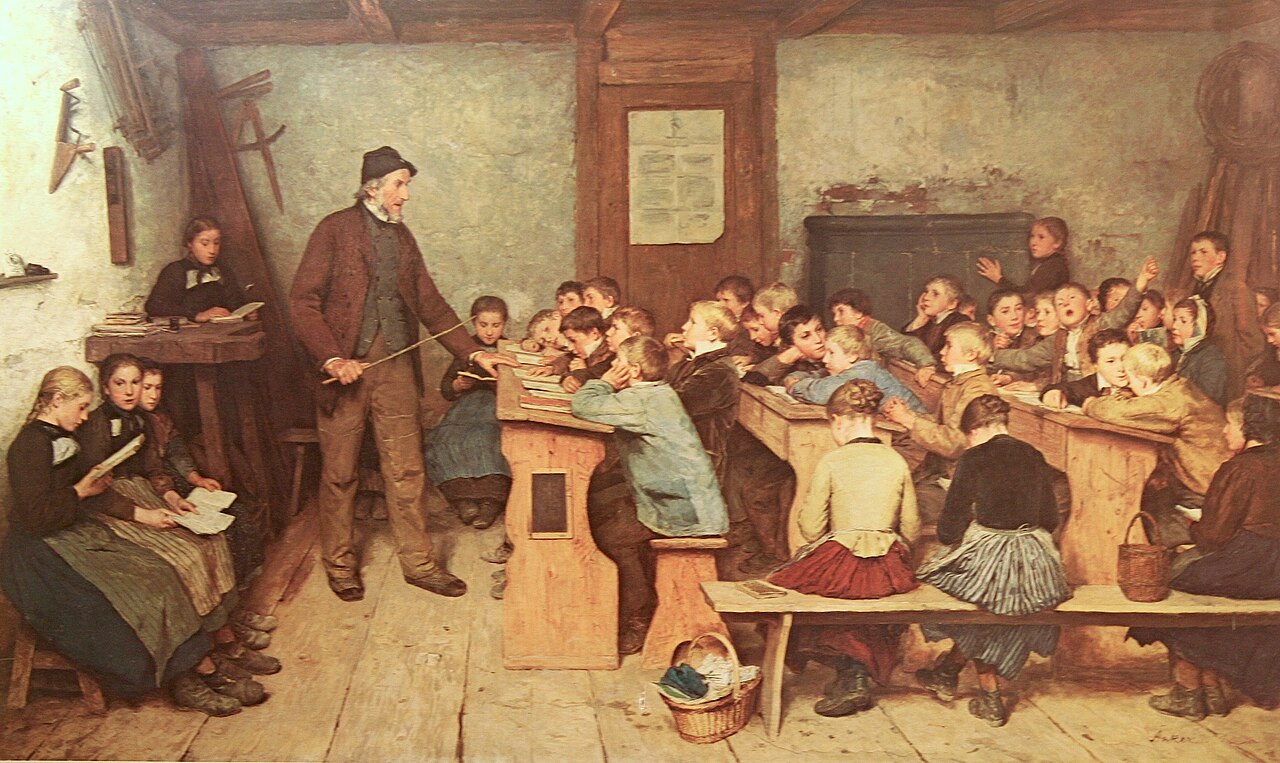
We need more education.
The words can sound similar, but they point in opposite directions.
Indoctrination teaches people what they must think and punishes serious questions.
Education teaches people how to think: how to ask for evidence, recognize uncertainty, compare explanations, and revise an answer when the facts change.
Any institution can indoctrinate—a government, a political movement, a religious group, a school, a media system, even a family. The danger is not one particular doctrine. It is the locked door.
My argument is simple: the answer to a closed mind is not another closed mind with different beliefs. It is a better education.
Indoctrination is powerful because it does not merely give people an answer. It teaches them which questions are forbidden.
History shows where that can lead. Nazi Germany used schools and youth organizations to train children in obedience, racism, and antisemitism. Authoritarian governments have rewritten history, punished teachers, and turned education into loyalty training. Violent extremist groups do the same on a smaller scale: simplify the world, divide humanity into pure and impure, and make doubt feel like betrayal.
The uniforms change. The method remains familiar.
Education should do the opposite. It should make manipulation harder.
For most of history, education was reserved for a small minority. Around 1820, only about one in ten adults worldwide could read. Today, the figure is close to nine in ten.
That is extraordinary progress, but access is still not equal. Girls in Afghanistan have been barred from education beyond the primary grades, and women from universities. UNESCO has estimated that millions of girls there have been shut out of secondary school. In other places, children avoid school because the journey—or the school itself—is unsafe.
When education is available every day, it is easy to treat it as ordinary. History reminds us that it is not.
I once joked that teenagers want whatever is forbidden, so perhaps banning school would make everyone desperate to attend. The joke contains a serious point: we often recognize the value of something only after it is taken away.
We should not need its disappearance to appreciate it.
Many parents worry about what their children will hear at school. That concern is understandable. Parents should know what schools teach, ask questions, and remain involved.
But children will encounter difficult subjects somewhere. If not in a classroom, then through friends, social media, videos, pornography, influencers, or anonymous strangers online.
A good classroom does more than expose a child to information. It provides context, responsible adults, competing perspectives, and the chance to ask questions.
The answer to bad information is not ignorance.
It is better information and better judgment.
I was forty before I first paid attention to the phrase willful ignorance. Once I understood it, I began seeing it everywhere—including in myself.
The law sometimes calls a related behavior willful blindness: deliberately avoiding facts we strongly suspect are true. Researchers also use the phrase deliberate ignorance for the conscious choice not to seek or use information.
Why would anyone choose not to know?
Because knowledge can be expensive. It may demand an apology, a changed vote, a different habit, a difficult conversation, or the loss of a comforting certainty.
None of us is immune.
Education should not merely fill the mind with facts. It should help us notice when our own minds are hiding from them.
Learning science does not require every person to abandon faith.
Religious traditions have changed their interpretations when evidence demanded it. In 1996, Pope John Paul II said that new knowledge had led scholars to recognize evolution as “more than a hypothesis.” A Vatican theological commission later described Earth’s ancient history and the common descent of life without treating those findings as enemies of belief.
People can disagree about theology while agreeing that a scientific question should be examined scientifically.
That distinction matters. A sacred text may guide faith, ethics, ritual, or identity. It is not a laboratory instrument.
Scientists make mistakes. Institutions can become defensive. Studies can be weak. Bias can enter an analysis. Fraud can happen.
Science is valuable not because scientists are perfect, but because the method gives other people a way to check them.
Evidence can be reexamined. Experiments can be repeated. Conclusions can be challenged. Corrections can become part of the record.
That is why education matters so much. Indoctrination says, The answer is settled because authority said so. Education says, Here is the claim. Here is the evidence. Here is what remains uncertain. Now learn how to judge it.
Indoctrination closes the door and tells you to stay inside.
Education opens it—and teaches you how to walk through without surrendering your mind to the next person waiting outside.
How can you tell good science from bad science?Established
Good science makes a clear, testable claim; shows how evidence was gathered and analyzed; reports uncertainty; and lets others check the work. There is no…
Ricardo Maldonado, founder and editor of God Plays Dice.
More essays by Ricardo
Why does grief hurt so much, even physically?
Grief hurts because loss strikes the body’s stress system, not only your thoughts.
CONTINUE THE THREAD
EssaysEssay · personal view
A simple reading guide to the questions, measurements and scientific limits in GOD PLAYS DICE, Volume One.
EssaysEssay · personal view
World Space Week 2026 celebrates Rocket Revolution. Ricardo Maldonado asks how curiosity about cosmic origins connects to his unproved HD-Blast hypothesis.
EssaysEssay · personal view
A short reading exercise separates understanding a proposal from accepting it, while keeping your unresolved questions visible.
Match my phone uses your device’s light or dark setting.