Extraordinary ClaimsExplainer
How to Check a Viral Science Claim in Five Minutes
You don't need a lab to test a shocking headline: a few quick habits borrowed from professional fact-checkers can show whether a claim deserves your trust.
THE QUESTION LIBRARY HOW WE KNOW
Good science shows how a claim was tested and gives other people enough information to challenge it.
Good science makes a clear, testable claim; shows how evidence was gathered and analyzed; reports uncertainty; and lets others check the work. There is no single step-by-step method used by every field. A lab experiment, a telescope survey and a study of ancient rocks need different tools, but each must connect its conclusion to evidence. One paper, a famous name or peer review alone is not enough. Confidence grows when independent checks and different lines of evidence agree.
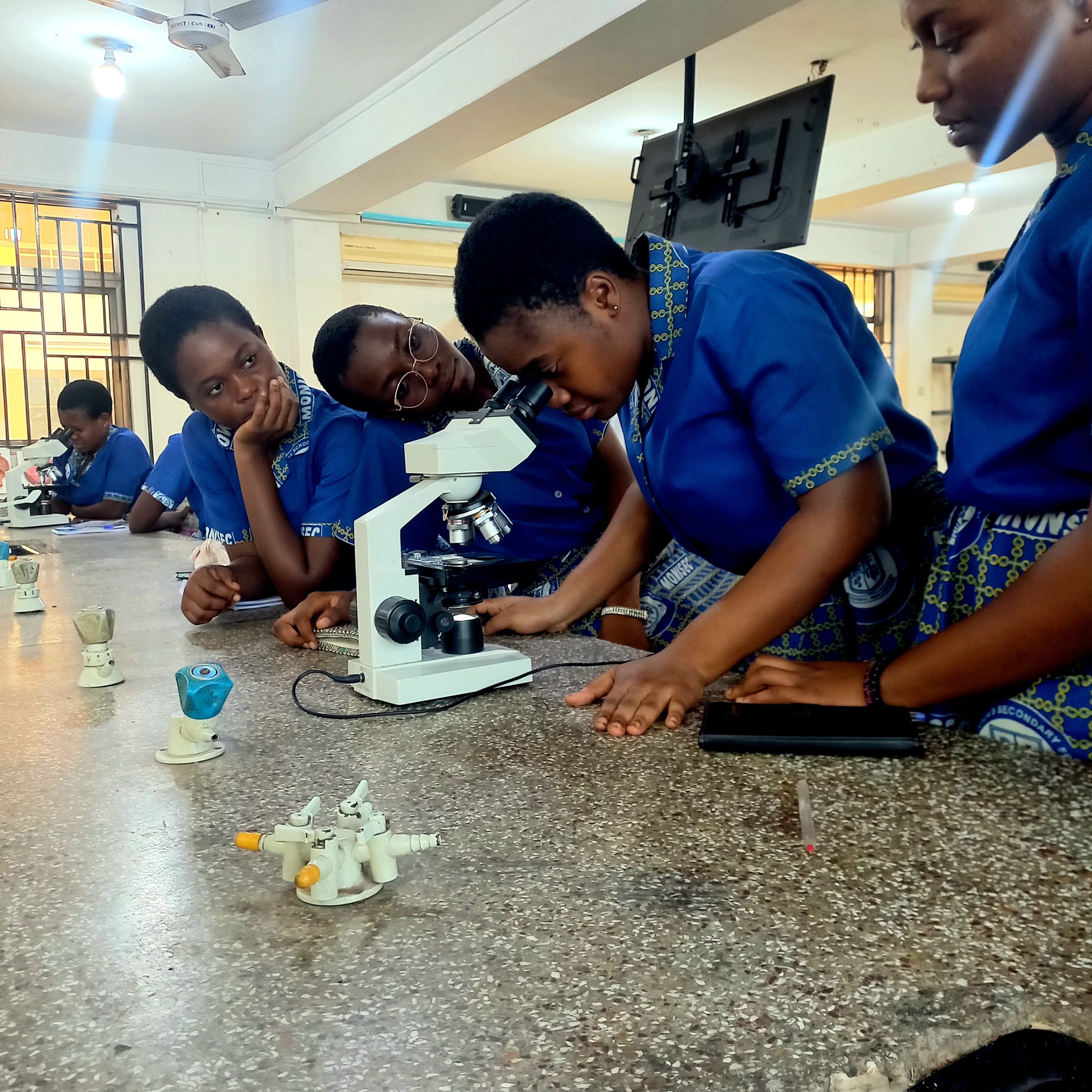
A microscope is one scientific tool. The right way to investigate a question depends on what is being studied.
WHERE THE EVIDENCE STANDS
WHAT WE DON’T KNOW YET
No checklist can give a final verdict on every new finding. The right test and the meaning of a failed repeat depend on the field, the claim and how much the evidence could have varied by chance.
WHAT WOULD CHANGE THIS ANSWER
A new study with clear methods, stronger measurements and independent confirmation can strengthen or overturn a current judgment. A claim that cannot be tested against observations cannot gain scientific support by repetition alone.
Good science lets you see how someone moved from evidence to a conclusion, and it leaves room for others to check the move. Start with four questions: What exactly is claimed? What was measured or observed? Could something else explain the result? Have independent researchers tested it? A dramatic headline or a respected scientist can draw your attention, but neither answers those questions.
There is no single recipe called “the scientific method” that everyone follows in order. A physicist may run a controlled experiment. An astronomer may compare light from distant objects because she cannot move a star into a lab. A geologist may study layers left by events long past. The National Academies says there is no single set of methods used across all of science. What joins them is careful evidence, reasoning, and testing that other people can examine.
Good work describes how the data were collected, what was left out, how the analysis was done and how uncertain the result is. The conclusion should match the strength of the evidence. One study may show a correlation, meaning two things change together. That alone does not show one caused the other. A careful author tells you what the study can and cannot rule out.
Science also gains strength over time. Another team may repeat the work with new data. Researchers may combine several studies or test the idea in a different way. Sometimes a result fails to hold up. That does not make every first study dishonest or every later study final. It means the evidence is being checked. Peer review can catch some problems before publication, but it is not a certificate of certainty. The most useful habit for a reader is to ask whether the claim remains convincing after someone tries to find a better explanation.
Free long answer 1 of 3 this month.
Begin with the claim itself. “This medicine helps some patients under these conditions” is different from “This medicine cures everyone.” “We saw an unusual signal” is different from “We discovered a new particle.” Good science states the question and the proposed answer clearly enough that a measurement could count for or against it. If the claim changes whenever a test fails, you cannot tell whether it has learned from evidence.
Next, ask what was observed. Were the measurements direct, or did researchers infer something from a pattern? Inference is an ordinary part of science. Geoscientists, for example, reconstruct past events from the record left in rocks. The issue is whether the inference rules out plausible alternatives. A study should describe instruments, samples, comparison groups where useful, choices made in analysis, and sources of uncertainty. This gives other people a chance to find mistakes or test the conclusion.
The National Academies' report on reproducibility says that when research is reported with a clear, specific and complete account of materials, methods, results and uncertainty, other scientists can know how to interpret the results. If crucial information is missing, confidence should be lower until it is supplied. Transparency is valuable even when another team cannot rerun the exact event, as with an earthquake or an epidemic. The same report says such studies rely on careful accounts of uncertainty, data from past events and checks of models against what happens.
No. School diagrams often show a tidy line from question to hypothesis to experiment to conclusion. That is a useful introduction to one style of inquiry, but actual work can loop back and branch. A National Academies report quotes the American Association for the Advancement of Science (AAAS): there is “no fixed set of steps that scientists always follow.” Researchers may observe first, build a model, discover a surprise, revise the question, design a better instrument, or compare competing explanations.
Methods must fit the subject. A lab may change one factor while holding others as steady as possible. A health study may compare groups of people instead of running a controlled trial; the National Academies notes that which kind of evidence carries the most weight depends on the question being asked. A geologist cannot recreate Earth's whole history but can test what different histories predict for rocks. An astronomer can use several kinds of light to test an idea about a distant galaxy. The strength lies in the fit between the question and the method, the care of the measurement, and the willingness to revise.
There are shared principles despite this variety: claims about the natural world need evidence; uncertainty matters; proposed explanations should face tests; and methods and results should be open to scrutiny. A method may be ingenious and still weak if it cannot distinguish the favored explanation from its rivals.
One research team can make an honest error or encounter an unusual sample. Another team using new data can test whether a result holds under similar conditions. The National Academies calls this replicability. Reproducing a computational result, in the report's terminology, means using the original data and analysis steps to see whether the same output appears. The words are used differently in some fields, so ask what was actually repeated.
Agreement between independent studies raises confidence. Agreement between different kinds of evidence can be even stronger: if a theory fits lab results, observations and new predictions, a single flaw is less likely to explain every line. Researchers also combine studies to see the whole pattern. A single failed repeat does not automatically prove the first finding false. Differences in conditions, random variation or a hidden factor may matter. The failure should prompt investigation rather than a slogan.
Uncertainty is part of an honest result. A number without a range or an account of possible error can look more precise than it is. Good scientists state limits and revise conclusions when better evidence appears. That willingness is a strength of the process, even if it can make headlines sound less satisfying.
Look for a named author with relevant expertise, a clear publisher, a date, and links to the evidence. Ask who pays for the work and whether the page is informing you, selling something, or arguing for a position. Read the linked study: a source can be accurately quoted while its result is stretched beyond what it tested.
The National Library of Medicine recommends checking ownership, purpose, funding, review processes, references and dates when evaluating health information. These questions are useful starting points for other science claims too. A familiar logo is a clue to investigate, not a substitute for the evidence. For health decisions, its guidance also recommends discussing what you find with your health professional.
Check independent sources, and look for corrections or later tests. Several websites repeating the same paper are still one line of evidence. Peer review adds specialist scrutiny; the evidence still has to hold up.
No. Peer review means other researchers examine a paper before publication, usually to assess its methods, reasoning and place in the field. The National Academies lists rigorous peer review among the practices that reduce avoidable errors. It still has limits. Richard Smith, a former editor of the medical journal BMJ, wrote that a review that asks for raw data and repeats the analyses is “vanishingly rare.” In BMJ studies where major errors were deliberately inserted into papers, he reports, most reviewers spotted only about a quarter of them. His essay is one critic’s view. The practical lesson for a reader is modest: publication is a starting point for checking, not the end of it. A published paper is a piece of evidence, not a final stamp of truth. A preprint is a paper shared before this journal review; it may still be useful, but its status should be clear.
The strongest objection to a simple “good versus bad” label is that research quality lies on a range. A preliminary study can be careful yet uncertain. A celebrated study can contain a flaw. A negative result can be valuable if the test had enough power to find the effect it sought. A surprising finding deserves interest and careful checking, not automatic belief or dismissal. Look at what the study actually did, and compare it with the claim made about it.
Watch for warning signs: a conclusion much larger than the data support; no clear method; selective use of results; no discussion of alternatives; or claims that criticism itself proves the idea right. These signs call for closer examination. They do not let you judge a person from a headline alone.
“Scientists disagree” can mean several things. They may have measured different populations, used different tools, or asked slightly different questions. Their results may overlap once uncertainty is considered. Sometimes they truly disagree, and new work is needed. The National Academies says debate and dissenting views are built into the process of science, and its public guide adds that when studies disagree, it is useful to find out why.
Another mistake is thinking that because some findings change, none deserve confidence. Evidence can become very strong even though future work may refine it. The National Academies describes knowledge as built through repeated tests and multiple lines of evidence. At the other extreme, certainty language can hide uncertainty that matters to a decision. Ask how firmly the specific claim is supported, not whether all of science is either perfect or broken.
Take a claim you saw in a headline and find the original paper or the research organization's account. Write down its exact question, who or what was studied, the main measurement, and the largest uncertainty. Check whether the headline describes the same claim. Then look for another group testing the issue, or a review that compares multiple studies. If the finding is new, it is fair to say “interesting, but early.” Our guide How to Check a Viral Science Claim in Five Minutes and the Library answer on extraordinary claims and evidence walk through the same habit.
The National Academies' public “Decoding Science” guide gives a simple path: wonder (ask questions), test, and confirm. Its longer report explains why the path is not a rigid recipe. Read both and notice the difference between a useful beginner's map and the actual variety of science. Finally, ask the question that keeps any explanation honest: what result would make me change my mind?
THREE THINGS TO REMEMBER
How much evidence should it take to change your mind?
There is no fixed amount.
God Plays Dice answers big questions in plain words, with sources and one of six honest labels.
See a mistake? Report a problem. Corrections are made openly.
CONTINUE THE THREAD
Extraordinary ClaimsExplainer
You don't need a lab to test a shocking headline: a few quick habits borrowed from professional fact-checkers can show whether a claim deserves your trust.
How We KnowAnswer
A space image can be faithful to measured light without matching human eyesight. Here is how to read the translation.
How We KnowAnswer
Why anecdotes feel convincing, what individual cases can show, and how to assess a confident judgment.
The Architect AI companion · All Access
Labels describe the evidence for a claim, not the people who hold it.
Match my phone uses your device’s light or dark setting.