Skip to content
BackGOD PLAYS DICE™Big questions, honest answers

THE QUESTION LIBRARY MIND & MORTALITY

When does grief need more help?

Most grief slowly softens on its own, but some grief stays stuck and heavy, and knowing the signs, and what actually helps, can make a real difference.

If this is personal right now: call 988 or text 988 in the US · more support

THE SHORT ANSWER

Right away, if grief brings thoughts of ending your life or harming yourself: in the US, call or text 988. Otherwise, most grief eases with time and support. Grief may need more help when it stays intense nearly every day and keeps you from living your life a year or more after the loss. Doctors call this prolonged grief disorder. The American Psychiatric Association estimates it affects 4% to 15% of bereaved adults, and grief-focused therapy helps many of them.
  • For most bereaved people, grief symptoms lessen between 6 months and 2 years after the loss, the U.S. National Cancer Institute says.
  • The American Psychiatric Association added prolonged grief disorder to its diagnostic manual, the DSM-5-TR, in March 2022.
  • For adults, the diagnosis needs a loss at least 12 months old, plus intense longing or preoccupation and at least 3 other signs nearly every day for a month.
  • In a 2016 trial of 395 adults, 82.5% of those given grief-focused therapy and a placebo pill were rated much or very much improved, compared with 54.8% of those given the placebo pill without grief therapy.
  • In the US, the 988 Suicide & Crisis Lifeline takes calls, texts and chats any time, day or night, for free.
On this page
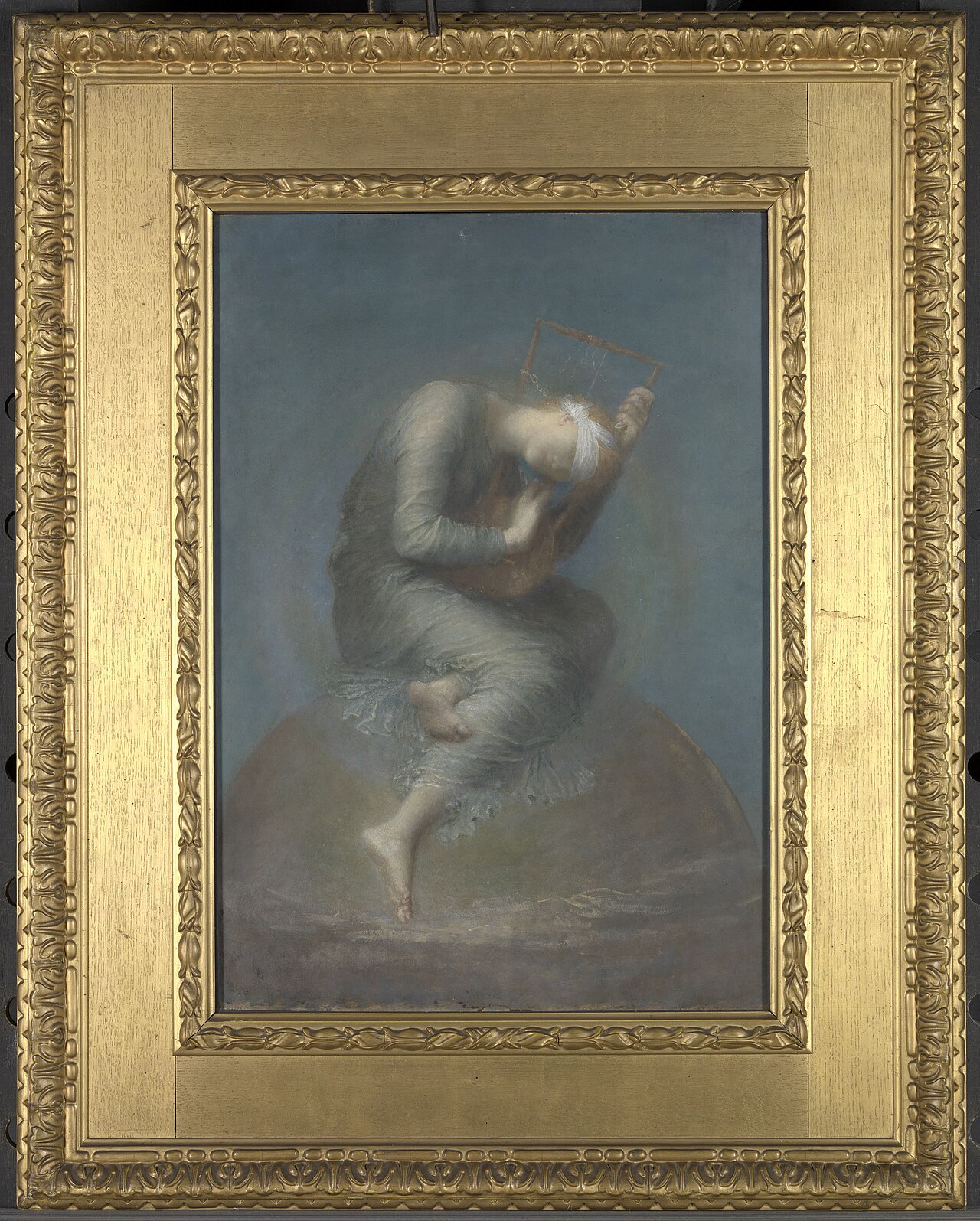
A painting in a wide gold frame of a barefoot woman in a pale, flowing gown, blindfolded with a white cloth, sitting hunched on top of a large brownish globe against a blue-gray background. She bends her head close to a small wooden lyre whose strings mostly hang loose.
About this picture

Hope, a painting by George Frederic Watts in the Yale Center for British Art. A blindfolded woman sits bowed on a globe, her head bent close to a small lyre with most of its strings hanging loose.

George Frederic Watts, Hope, Yale Center for British Art, via Wikimedia Commons · Public domain · Image source ↗

WHERE THE EVIDENCE STANDS

How sure are we?

  • Most grieving people get through the worst of grief without professional treatment.The American Psychiatric Association says grief symptoms decrease over time for most people and do not usually require treatment; the National Cancer Institute says symptoms lessen between 6 months and 2 years for most.
  • Some bereaved adults develop prolonged grief disorder, grief that stays intense and disabling a year or more after the loss.Added to the DSM-5-TR in 2022. Estimates vary: 4% to 15% (APA); 9.8% in a 2017 review of 14 studies (Lundorff et al.); 4.7% in a random German sample (Treml et al., 2024).
  • Therapy that focuses on grief helps many people with prolonged grief.Randomized trials: Shear et al. (JAMA, 2005), 51% vs 28%; Shear et al. (JAMA Psychiatry, 2016), 82.5% vs 54.8%; Bryant et al. (JAMA Psychiatry, 2014). Reviews of 14 trials (Wittouck et al., 2011) and 31 trials (Johannsen et al., 2019) agree, with a warning about possible publication bias.
  • Grief counseling for everyone after a loss prevents later problems.Currier et al. (Psychological Bulletin, 2008), 61 controlled studies: small overall effect after treatment, no significant benefit at follow-up, and discouraging results where people were not screened for distress; Wittouck et al. (2011): preventive interventions did not appear effective.
  • Giving long, intense grief a diagnosis helps grieving people.Johnson et al. (2009): 15 of the 16 widowed people with complicated grief said they would be relieved to learn they had a recognizable problem; Prigerson et al. (2021): the criteria pick out people with more suicidal thoughts and worse quality of life; Thieleman et al. (2025): 72.2% of 755 bereaved adults rated a diagnosis unhelpful.
What the labels mean

WHAT WE DON’T KNOW YET

Researchers still debate where ordinary grief ends and a disorder begins. The U.S. manual waits 12 months, while the World Health Organization’s ICD-11 uses at least 6 months. Estimates of how many people are affected also change a lot with the rules and the group studied.

WHAT WOULD CHANGE THIS ANSWER

Large studies of random samples of bereaved people, using the same criteria, could narrow the estimates of how many people develop prolonged grief. New trials could show that other kinds of help, such as support groups or online programs, work as well as grief therapy, or better.

Grief is a natural response to losing someone close. For most people, it slowly softens. The waves come less often and hurt a little less. But for a smaller group, a year or more later, the pain stays intense and life has stalled. If you are wondering whether your grief needs more help, that question deserves a real answer.

First, the urgent part. If grief ever brings thoughts of ending your life or harming yourself, reach out now. In the US, call or text 988, the Suicide & Crisis Lifeline. It is free, confidential and open all day, every day. Elsewhere, call your local emergency number. Warning signs include talking about wanting to die or being a burden, feeling hopeless or trapped, and pulling away from people.

For everything else, here is what research shows. For most people, the U.S. National Cancer Institute says, grief symptoms lessen between 6 months and 2 years after the loss. Pain that comes and goes in waves is normal. So are tears, poor sleep and longing. Most people do not need professional treatment for grief.

A smaller group has grief that stays stuck. In 2022 the American Psychiatric Association added prolonged grief disorder to its manual of mental disorders. For adults, it means that a year or more after the loss, a person still feels intense longing for the one who died, or cannot stop thinking about them, nearly every day. Other signs include feeling that part of yourself died, deep loneliness, feeling that life has no meaning, and trouble getting back into life. The grief must also get in the way of daily life and last longer than the person’s culture or faith would expect. The association estimates that 4% to 15% of bereaved adults develop it.

The hopeful news is that help often works. In clinical trials, therapy that focuses on grief helped more people than standard talk therapy or pills alone. This page cannot diagnose you. It can help you know when to ask.

THE LONG ANSWER

What does ordinary grief look like?

The U.S. National Cancer Institute’s guide to grief describes normal grief broadly: numbness and disbelief at first, then sadness, crying, anger, guilt, poor sleep, low appetite, tiredness and longing. For most people, the guide says, these symptoms lessen between 6 months and 2 years after the loss. The American Psychiatric Association (APA) agrees that for most people grief eases over time and does not usually need mental health treatment.

Grief can look like depression, but the Cancer Institute notes that in grief, painful feelings tend to come and go, and people usually keep their sense of self-worth. Depression can also follow a loss, and it can be treated, so constant low mood or feelings of worthlessness are worth raising with a doctor. See also Why does grief hurt so much, even physically?

What is prolonged grief disorder?

In March 2022, the APA added prolonged grief disorder to the DSM-5-TR, its manual of mental disorders. In plain words, the criteria for adults are these:

  1. Someone close to you died at least 12 months ago (6 months for children and teens).
  2. Since then, you have felt intense longing for the person, or been caught up in thoughts and memories of them, nearly every day for at least the last month.
  3. You also have at least 3 of these 8 signs, nearly every day for the last month: feeling as if part of you has died; strong disbelief about the death; avoiding reminders that the person is dead; intense emotional pain, such as anger, bitterness or sorrow; trouble getting back to friends, interests or plans; emotional numbness; feeling that life is meaningless without them; and intense loneliness.
  4. The grief causes real distress or problems at home, at work or in other parts of life.
  5. It lasts longer than your culture or faith would expect, and another condition, such as depression, does not explain it better.

The World Health Organization’s classification, ICD-11, also includes prolonged grief disorder. As a 2024 study by Treml and colleagues explains, it sets the minimum at 6 months and asks for fewer symptoms. That gap is one reason researchers still debate where ordinary grief ends.

How many grieving people develop it?

Estimates vary with who is studied and the rules used. The APA estimates 4% to 15% of bereaved adults. A 2017 review of 14 studies of adults after non-violent losses found 9.8%, about one in ten, but warned that the studies differed and were not always representative. In the 2024 German study, which drew a random sample of the population, 4.7% of 1,062 bereaved people gave questionnaire answers that fit the DSM-5-TR criteria, and 5.4% fit the ICD-11 criteria.

Some losses carry more risk. The APA names sudden or unnatural deaths, the death of a child or partner, a history of depression, a very close or dependent relationship, and a lack of social support. A 2020 review of 25 studies after accidents, disasters, suicides or homicides put the pooled rate at 49%, with a warning that the studies varied widely. The authors say this shows why it matters to check for prolonged grief after such losses. If your loss was sudden or violent, the signs in this answer are worth knowing.

Which signs mean you should get help now?

Some signs cannot wait. The U.S. National Institute of Mental Health lists warning signs of suicide, including:

  • talking about wanting to die, great guilt or shame, or being a burden to others;
  • feeling empty, hopeless, trapped or without a reason to live, or in unbearable emotional or physical pain;
  • making a plan, withdrawing from friends, saying goodbye or giving away important things;
  • using drugs or alcohol more often, or eating or sleeping more or less.

If any of these apply to you or someone you love, especially if they are new or getting worse, get help as soon as possible. In the US, call or text 988, or chat at 988lifeline.org. The 988 Lifeline is free, confidential and open 24/7, and you can reach out for a friend or relative too. Elsewhere, call your local emergency number. Some grieving people wish they could be with the person who died. If that wish ever turns into thoughts of ending your life, reach out now.

What actually helps?

Therapy that focuses on grief. Randomized trials, which assign people to treatments by chance, have tested it. In a 2005 trial of 95 adults with complicated grief, a closely related label used in earlier studies, 51% responded to 16 sessions of complicated grief treatment, compared with 28% who had a standard talk therapy. A 2016 trial of 395 adults gave everyone a pill (an antidepressant or a placebo) plus information, monitoring and encouragement. Of those who also had 16 weekly sessions of grief therapy with a placebo pill, 82.5% responded, compared with 54.8% of those on the placebo pill alone. Suicidal thoughts eased more with therapy. And in a 2014 trial of 80 patients in Sydney, Australia, everyone had group therapy plus 4 one-on-one sessions that either revisited memories of the death or offered supportive counseling. Among those who finished, fewer in the memory group still met the criteria six months later (14.8% vs. 37.9%).

Not pills alone. The APA says there are currently no medicines to treat the specific symptoms of grief, though research is under way. In the 2016 trial, the antidepressant citalopram alone did not do significantly better than placebo, though adding it to therapy eased depression symptoms.

Help aimed at those who need it. A 2008 review of 61 controlled studies found that, overall, grief help had a small effect right after treatment and no clear benefit later. Studies that did not first check who was struggling had weak results, possibly because people in the comparison groups also improved on their own. Help aimed only at people having marked trouble adapting compared well with therapy for other problems. Later reviews of 14 and 31 trials point the same way, with a warning that some weak results may never have been published.

Support groups and people who understand. The APA says bereavement support groups and peer support can offer connection and help people feel less alone. Lack of social support is itself a risk factor.

Faith communities, for those who have them. The Cancer Institute reports mixed findings: some studies show religion helps people cope with grief, others show it does not help or adds distress, and support from a religious community is linked with better outcomes. In Judaism, as Chabad.org explains, mourning moves through set stages: the seven days of shiva, when family, friends and community comfort mourners with their presence, then the thirtieth day, called shloshim, and on through the first year. As another Chabad.org article puts it, “we must mourn, but we must also set boundaries to our mourning.”

What is the strongest objection?

Some grieving people and researchers worry that calling grief a disorder turns sorrow into sickness. A 2021 study that tested the new criteria notes that there has been opposition to treating pathological grief as a separate mental disorder. In a 2025 survey of 755 bereaved adults, over half of whom had lost a child, 72.2% rated a grief diagnosis as unhelpful, 11.4% as helpful, and 16.4% were unsure. Themes in their answers included grief as the measure of love and the harm of treating grief as an illness, though some also found the language of disorder useful.

In a 2009 study of 135 widowed people, 15 of the 16 who had complicated grief said they would be relieved to learn they had a recognizable problem, and all 16 said they would be interested in treatment. The 2021 study found the new criteria reliable, distinct from depression, PTSD and anxiety, and linked with suicidal thoughts and a worse quality of life. Whatever you think of the label, the trials above show that targeted help works for many people whose grief has stalled.

What do people often get wrong?

“If it still hurts after a year, I must have a disorder.” Not necessarily. Waves of pain on holidays and anniversaries are part of ordinary grief. The diagnosis requires intense symptoms nearly every day that disrupt your life.

“Getting help means letting go of the person.” Not necessarily. The APA describes one approach, Prolonged Grief Therapy, as helping people accept the reality of the loss and work toward goals and satisfaction in a world without the person. It also says online programs that let mourners express their grief in notes to the person who died have been found to reduce symptoms. Many people keep a bond with the person who died; see Is it normal to feel that someone who died is still with me?

How can you check this yourself?

  • Read the criteria. The APA’s prolonged grief disorder page lists them in plain language.
  • Ask about screening. Researchers built a questionnaire, the PG-13-Revised, to match the new criteria; a doctor or therapist can help you read it.
  • Check who was studied. In the 2016 trial, 78% of participants were women and 82% were white, so results may not fit everyone equally.

The answer stays the same after all this detail. Most grief softens with time. When it stays intense and blocks your life, targeted help often works. Thoughts of ending your life need help right away. If a question is personal right now, our care page is a gentle place to start, and Is it possible to make peace with the idea of dying? explores fears about death itself.

THREE THINGS TO REMEMBER

  1. Most grief eases with time, and pain that comes and goes in waves is normal.
  2. Grief that stays intense nearly every day a year later, and blocks daily life, deserves help, and grief-focused therapy helps many people.
  3. Thoughts of ending your life need help now: in the US, call or text 988.
Words worth knowing (6)
Prolonged grief disorder
Grief that stays intense nearly every day and disrupts daily life long after a loss: at least 12 months for adults under the U.S. manual.
DSM-5-TR
The 2022 text revision of the American Psychiatric Association’s Diagnostic and Statistical Manual of Mental Disorders, which defines and classifies mental disorders.
ICD-11
The World Health Organization’s disease classification. It also includes prolonged grief disorder, with a minimum of 6 months.
Complicated grief
A closely related label for grief whose symptoms do not improve, last a long time and disrupt daily life. Many studies used it before prolonged grief disorder entered the diagnostic manuals.
Randomized trial
A study in which people are assigned to treatments by chance, so the groups can be compared fairly.
Placebo
A dummy pill with no active medicine, used as a comparison for a real treatment.

Sources & further reading

(10) · Checked Sep 29, 2026
  1. Prolonged Grief Disorder ↗American Psychiatric AssociationGrief is a natural response; for most people symptoms decrease over time and do not usually require treatment; loss at least a year ago for adults, 6 months for children and adolescents; at least 3 symptoms nearly every day for the last month (identity disruption, disbelief, avoidance of reminders, intense emotional pain, difficulty with reintegration, emotional numbness, life meaningless, intense loneliness); must exceed social, cultural or religious norms; estimated 4%–15% of bereaved adults; risk factors (sudden or unnatural death, child or spouse/partner, history of depression, closeness or dependence, lack of social support); CBT-based treatments and Prolonged Grief Therapy (accepting the reality of the loss and restoration); online interventions that let mourners express their grief in virtual notes to the deceased; support groups and peer support help people feel less alone; no medications for specific grief symptoms; added to DSM-5-TR, released March 2022.
  2. Grief, Bereavement, and Loss (PDQ), Patient Version ↗U.S. National Cancer Institute (updated February 12, 2025)Normal grief reactions (numbness, shock, disbelief; separation anxiety; crying, dreams, illusions and hallucinations of the deceased; anger; sadness, loss of sleep and appetite, fatigue, guilt); grief bursts of 20–30 minutes, set off by reminders such as holidays and the anniversary of the death; symptoms occur less often and feel less severe as time passes; if thoughts of suicide come up in normal grief, they tend to focus on the deceased, such as a wish to join them in death; symptoms lessen between 6 months and 2 years for most; grief vs major depression (feelings come and go; self-esteem kept); complicated grief; religion: mixed findings, regular church attendance and social support from a religious setting linked to positive grief outcomes.
  3. Prevalence of prolonged grief disorder in adult bereavement: A systematic review and meta-analysis (Lundorff et al.) ↗Journal of Affective Disorders (2017)14 studies of non-psychiatric adults after non-violent bereavement; pooled prevalence 9.8% (95% CI 6.8–14.0); heterogeneity and limited representativeness. Also: Djelantik et al., Journal of Affective Disorders 2020, doi:10.1016/j.jad.2020.01.034 (25 articles on unnatural losses such as accidents, disasters, suicides and homicides; pooled prevalence 49%; interpret with caution).
  4. Prolonged grief disorder in ICD-11 and DSM-5-TR: differences in prevalence and diagnostic criteria (Treml, Linde, Brähler and Kersting) ↗Frontiers in Psychiatry (2024), open accessDSM-5-TR: one of two separation-distress symptoms plus at least 3 of 8 accessory symptoms, functional impairment, at least 12 months since the loss; ICD-11: at least one core symptom plus any accessory symptom, at least six months; representative German sample (N = 2,509; 1,062 bereaved analyzed): 4.7% DSM-5-TR, 5.4% ICD-11; debate about criteria and medicalizing normal grief. ICD-11 as the WHO classification: Killikelly et al., Clinical Psychology in Europe 2025, doi:10.32872/cpe.11435.
  5. Optimizing Treatment of Complicated Grief: A Randomized Clinical Trial (Shear et al.) ↗JAMA Psychiatry (2016)395 adults, March 2010–September 2014, Boston, New York, Pittsburgh and San Diego; 78.0% female, 82.3% white; all received pharmacotherapy (citalopram or placebo), psychoeducation, grief monitoring and encouragement; CGT with placebo 82.5% vs placebo 54.8%; citalopram alone not significantly different from placebo; citalopram added to CGT reduced depressive symptoms; suicidal ideation diminished more with CGT. Also: Shear et al., JAMA 2005, doi:10.1001/jama.293.21.2601 (95 adults, 16 sessions; 51% vs 28% with interpersonal psychotherapy); Bryant et al., JAMA Psychiatry 2014, doi:10.1001/jamapsychiatry.2014.1600 (80 patients, University of New South Wales Traumatic Stress Clinic, Sydney; completers still meeting PGD criteria 14.8% with exposure vs 37.9% without).
  6. The effectiveness of psychotherapeutic interventions for bereaved persons: a comprehensive quantitative review (Currier, Neimeyer and Berman) ↗Psychological Bulletin (2008)61 controlled studies; small effect at posttreatment, no significant benefit at follow-up; interventions for grievers with marked difficulties compare favorably with psychotherapies for other difficulties; controls tend to improve naturally. Also: Wittouck et al., Clinical Psychology Review 2011, doi:10.1016/j.cpr.2010.09.005 (14 RCTs; treatment effective, prevention not); Johannsen et al., Journal of Affective Disorders 2019, doi:10.1016/j.jad.2019.04.065 (31 RCTs; larger effects for individual delivery, ≥6 months post-loss, high baseline symptoms; possible publication bias).
  7. “I would feel misunderstood and diminished:” Perceived helpfulness of a grief diagnosis among grievers (Thieleman, Cacciatore and Mangiapane) ↗Death Studies (2025)755 bereaved adults, over half had lost a child, 36% met PGD criteria; 72.2% rated a diagnosis unhelpful, 11.4% helpful, 16.4% unsure; themes include grief as the measure of love and harms of pathologizing grief. Other side: Johnson et al., Death Studies 2009, doi:10.1080/07481180903070392 (135 widowed, of whom only 16 had complicated grief; 15 of 16 would be relieved to know they had a recognizable problem, the abstract says more than 90% and a recognizable psychiatric condition; 16 of 16 interested in treatment; full text PMC2834798); Prigerson et al., World Psychiatry 2021, doi:10.1002/wps.20823 (opposition to recognition as a distinct disorder; criteria reliable and valid, distinct from PTSD, depression and anxiety; associated with suicidal ideation and worse quality of life; PG-13-R scale).
  8. Warning Signs of Suicide ↗U.S. National Institute of Mental Health (revised 2025)Talking about wanting to die, great guilt or shame, being a burden; feeling empty, hopeless, trapped, no reason to live, extremely sad or anxious, unbearable pain; making a plan, withdrawing, saying goodbye, giving away items, risk-taking, mood swings, eating or sleeping more or less, using drugs or alcohol more often; get help as soon as possible, particularly if new or increased; 988 call or text, chat at 988lifeline.org.
  9. 988 Suicide & Crisis Lifeline ↗988 LifelineAvailable 24/7/365; free and confidential; call, text or chat; support for a friend, a loved one or yourself.
  10. The Periods of Mourning in Judaism; The Stages of Mourning in Judaism ↗Chabad.orgShiva (first seven days), Shloshim (thirtieth day), the first year; for parents, Kaddish is recited for eleven months, less one day. Companion page https://www.chabad.org/library/article_cdo/aid/282506/jewish/The-Stages-of-Mourning-in-Judaism.htm: family, friends and community comfort mourners with their presence; “we must mourn, but we must also set boundaries to our mourning.” Chabad pages return HTTP 403 to scripts; both were read from Internet Archive snapshots (16 and 10 February 2026).

See a mistake? Report a problem. Corrections are made openly.

Search the Question Library

149 answers to read · 0 questions awaiting answers Your search runs on your device.

Answers about death, grief and crisis are always free, in full. If a question is personal right now →