EssaysEssay · personal view
Before We Are Nations, We Are Life
A cosmic case for human dignity. Before we are nations, we are life. Before we inherit a border, we inherit a planet.
THE UNIVERSE ESSAY · PERSONAL VIEW
Two ordinary truths—the turning of Earth and the atoms inside our bodies—can make the sky feel much closer than it did before.
“Day and night do not really exist,” I once said.
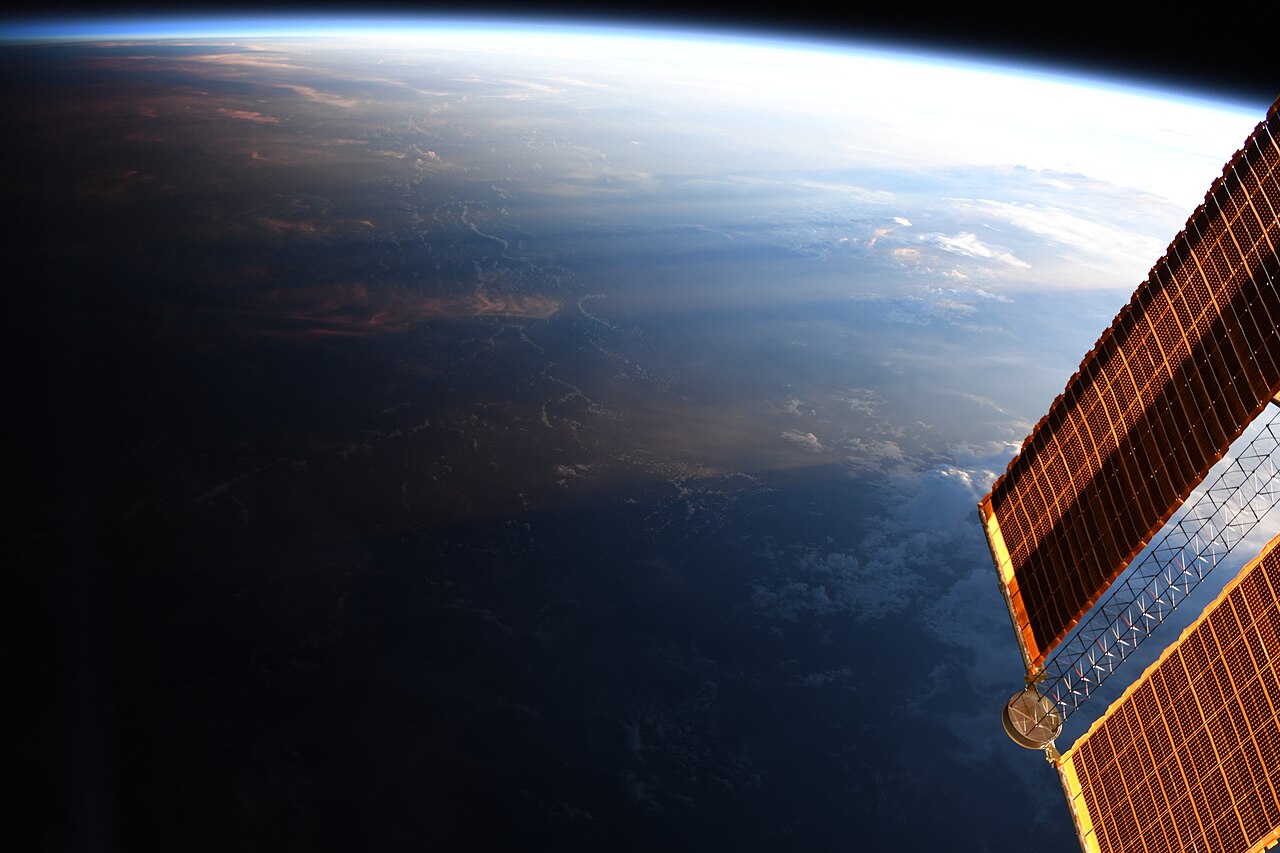
Earth’s day–night line, photographed from the International Space Station.
My daughter would probably answer, “What? What? What?”
Of course day and night exist as human experiences, timekeeping words, and powerful parts of culture. My point is physical: the Sun does not turn off, rise, or set. Earth turns.
What we call night is the period when our part of the planet has rotated into Earth’s own shadow.
That may sound obvious. Sometimes the obvious becomes new again when we change the angle from which we see it.
Sunlight reaches one half of Earth at every moment. The other half faces away.
So instead of picturing the Sun “going down,” picture the ground beneath you rotating until your part of the planet turns its back to the Sun.
Stand outside facing the sunlight. Then turn around.
You did not make the Sun disappear. You changed your orientation to it.
Earth does the same thing on a planetary scale.
The Sun will continue shining for billions of years. What changes every twenty-four hours is which part of our rotating world receives its light directly.
Language preserves older appearances. We still say sunrise and sunset even though the Sun is not circling us each day. There is nothing wrong with those words. They are beautiful and useful. But remembering the motion behind them can make an ordinary evening feel like astronomy.
At the poles, the everyday meaning of day and night becomes less familiar. Near the North Pole, the Sun can remain above the horizon for months during the warmer part of the year and below it for months during the colder part.
Astronauts on the International Space Station orbit Earth roughly every ninety minutes. They can see about sixteen sunrises and sixteen sunsets during one Earth day.
From orbit, the boundary is visible: a moving line between the illuminated half of Earth and the half inside its shadow.
At every moment, billions of us are riding on one side or the other.
Pink Floyd called an album The Dark Side of the Moon, though the Moon has no permanently dark side. Its far side receives sunlight too. Likewise, Earth’s night side is not a separate world. It is simply the side currently facing away.
Imagine speaking with the mechanics exposed:
Kids, bedtime. Our side of Earth is turning into shadow.
How long until we face the Sun again?
Let’s finish while our part of the planet is still in direct light.
We are not likely to replace day and night, and I am not seriously asking anyone to try. I like the words too.
The point is to notice how language can freeze an appearance long after science reveals the motion underneath it.
And Earth is not the only familiar thing whose deeper story is hidden by ordinary words.
So are we.
“Stardust” can sound poetic, but it is also a summary of chemistry and cosmic history.
A star begins when a cold cloud of gas and dust collapses under gravity. As matter gathers, the center becomes hotter and denser. Eventually, nuclear fusion begins.
Fusion is not ordinary fire. It is the joining of atomic nuclei under extreme pressure and temperature. In stars like the Sun, hydrogen fuses into helium. In later stages and in more massive stars, fusion builds heavier elements, including carbon and oxygen.
When stars die, they return material to space. Some shed their outer layers gradually. Massive stars can explode. Colliding neutron stars and other extreme events also help create and distribute heavy elements.
Those atoms become part of new clouds, new stars, new planets—and eventually living bodies.
An adult human body is mostly oxygen, carbon, hydrogen, and nitrogen.
The hydrogen in the water inside you is ancient. Most of it traces back to the early universe.
The oxygen you breathe and carry in your body was forged in stars.
The carbon central to life was made through stellar processes and spread into space as stars aged and died.
Calcium in your bones, iron in your blood, phosphorus in your cells—their histories are older than Earth.
For you to exist, generations of stars had to form, transform matter, and return those elements to space. A solar system had to assemble. Earth had to cool. Chemistry had to become biology. Life had to survive long enough to become capable of asking where its atoms came from.
That took billions of years.
So the next time darkness arrives, remember what is physically happening.
The Sun did not leave.
Your side of Earth turned away.
And when you look up at the stars, remember that you are not looking at something completely separate from yourself. You are looking toward the kinds of places where most of the material inside you was made.
Night is Earth’s shadow.
And we are the universe’s recycled light and matter, briefly awake enough to notice.
Why do we feel awe under the night sky, and is it a spiritual experience?Supported, still debated
We feel awe because the night sky is vast in a way our minds cannot easily take in, psychologists say. For many people, that feeling is spiritual, whether they…

Ricardo Maldonado, founder and editor of God Plays Dice.
More essays by Ricardo
Next on the path “Can I feel wonder without a creed?” · step 3 of 8
Where did the gold in a wedding ring come from?
Most likely from collisions of dead stars, called neutron stars, long before Earth formed.
See this path: Can I feel wonder without a creed?
God Plays Dice answers big questions in plain words, with sources and one of six honest labels.
CONTINUE THE THREAD
EssaysEssay · personal view
A cosmic case for human dignity. Before we are nations, we are life. Before we inherit a border, we inherit a planet.
The UniverseExplainer
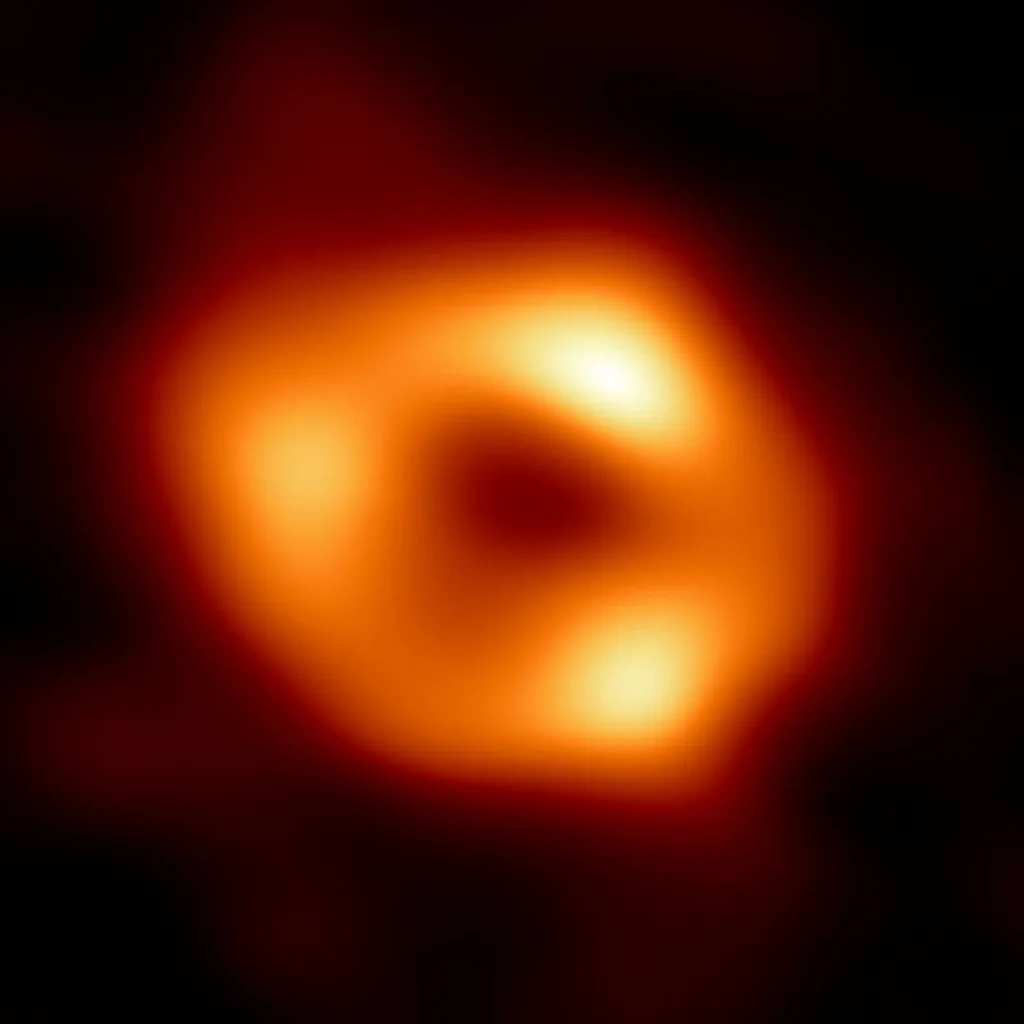
Not really holes and not cosmic vacuum cleaners, black holes are places where matter is packed so tightly that not even light can climb back out.
The UniverseExplainer
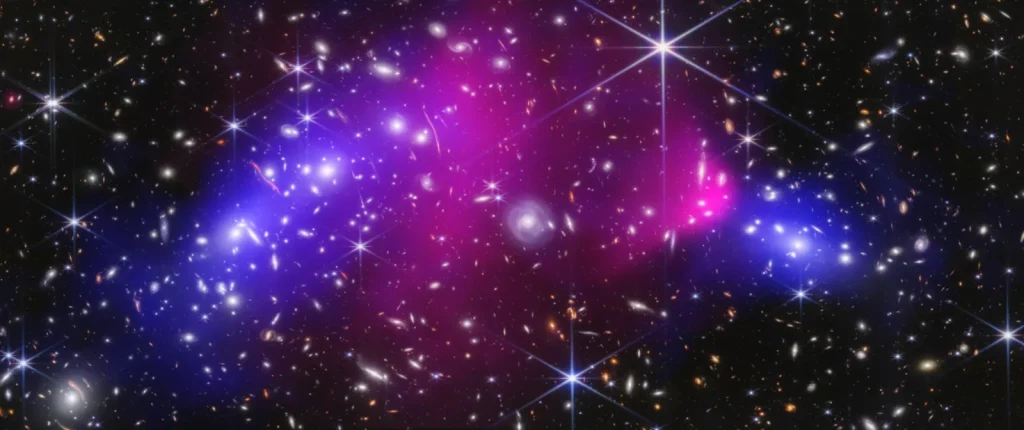
Galaxies spin too fast and light bends too much, so something unseen seems to be out there, but nobody yet knows what it is.
The Architect AI companion · All Access
Match my phone uses your device’s light or dark setting.