Life in the UniverseEssay · personal view
The Questions I Would Ask an Alien
If I ever met a visitor from another world, I would skip the small talk. I would ask what its civilization knows about beginnings—and how it knows.
LIFE IN THE UNIVERSE ESSAY · PERSONAL VIEW
We keep imagining advanced civilizations as someone else, somewhere else. From the eyes of our ancestors—or another species—the advanced civilization may already be us.
When people imagine an advanced civilization, they usually picture visitors from another star: beings with impossible spacecraft, unlimited energy, and knowledge far beyond ours.
I understand the fascination. I share it.
But I want to change the point of view.
What would we look like to a chimpanzee? To one of our own ancestors from fifty thousand years ago? To a young civilization just learning how to shape stone?
From those perspectives, the advanced civilization would be us.
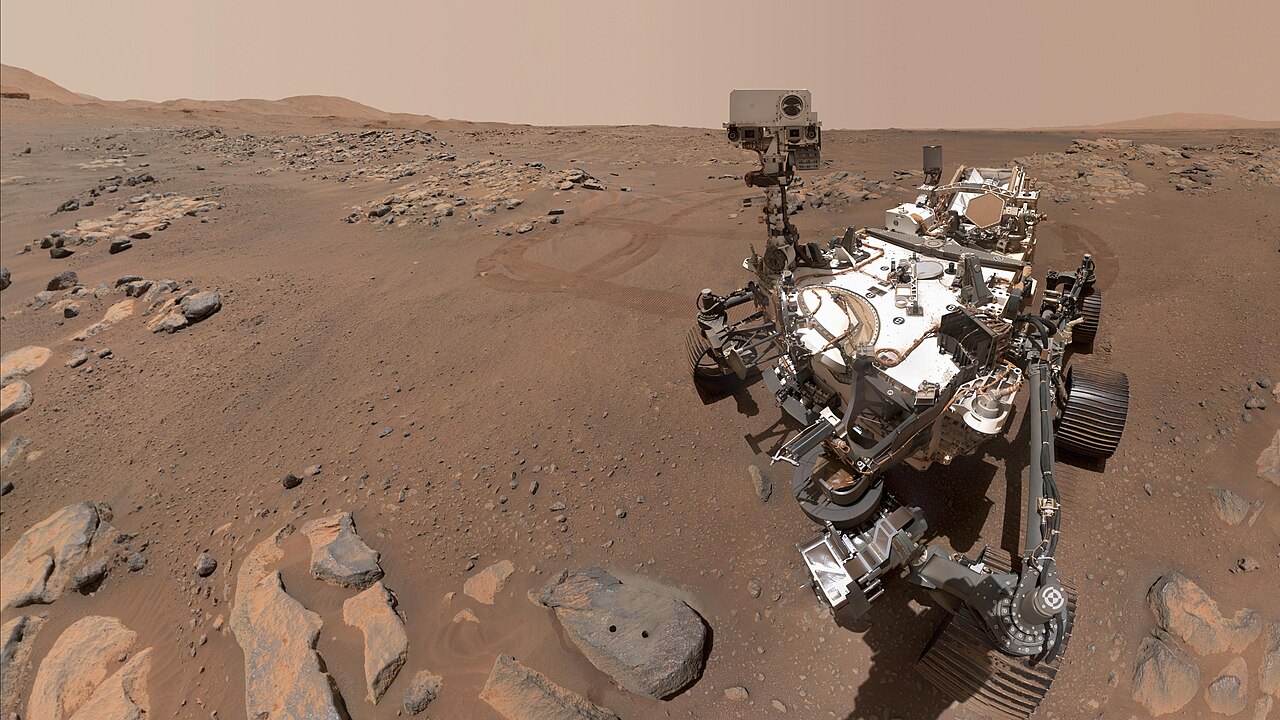
We have placed robotic explorers on other worlds. We have built telescopes that collect light older than our species. We can change genes, split atoms, detect ripples in spacetime, speak across continents in seconds, and build machines that generate language, images, predictions, and code.
The question is not whether we are advanced in any sense.
The question is what kind of advancement we have achieved—and whether our wisdom has kept pace with our power.
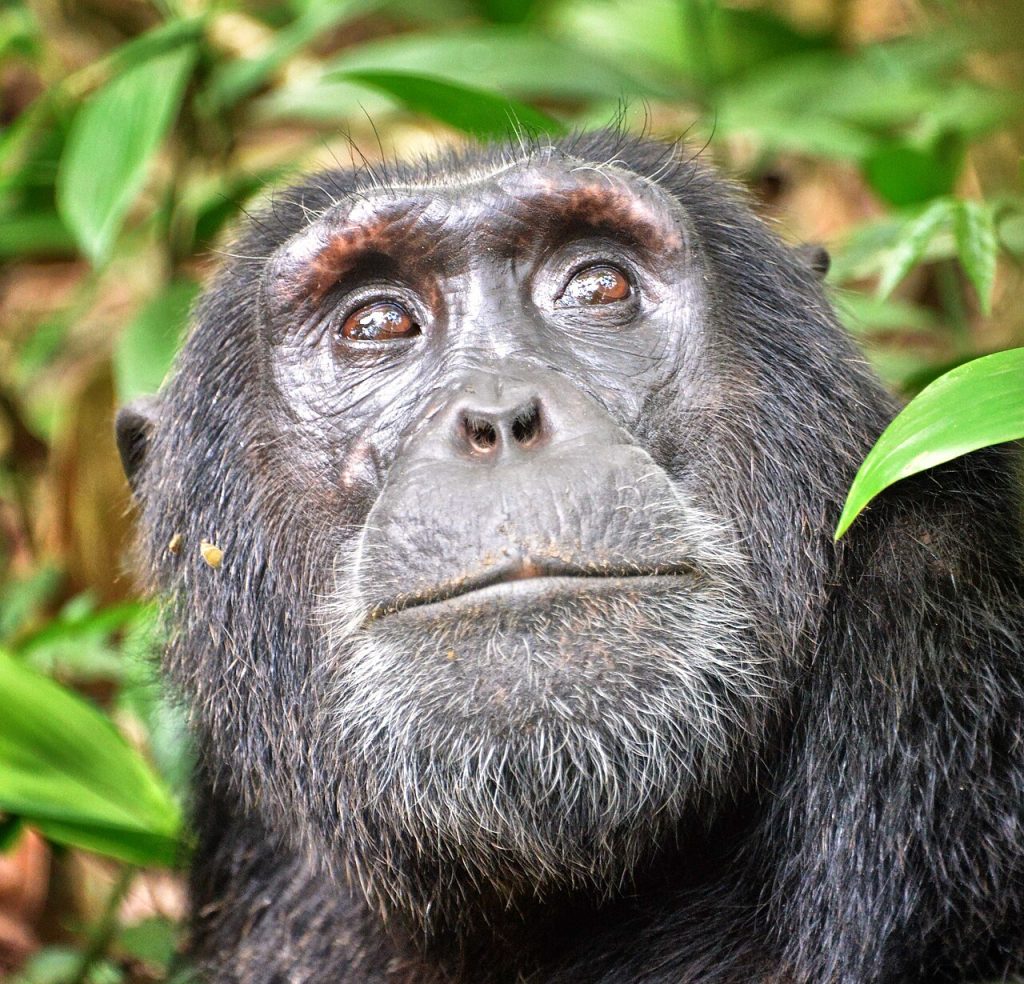
Start with a chimpanzee.
Chimpanzees use tools, solve problems, cooperate, compete, communicate, play, comfort one another, and live inside complex social groups. They share much of our DNA and a distant common ancestor with us.
Yet the difference between a chimpanzee’s world and ours is enormous.
We built agriculture, writing, mathematics, medicine, cities, satellites, and global networks. We did not do this because one human brain suddenly became magical. We did it because generations accumulated knowledge and passed it forward.
A chimpanzee looking at a city would not understand the institutions, supply chains, laws, electricity, and engineering holding it together.
If it could form the concept, it might reasonably call us advanced.
Now imagine a person from the distant human past arriving in a modern city.
A glass tower would look impossible. A moving car might appear alive. A phone would seem like a magical object that speaks, remembers, translates, and shows distant faces.
The visitor would not be less human than we are. The difference would be accumulated knowledge.
That is important because it reminds us that civilization is not stored in one person. No modern individual knows how to recreate everything around us from scratch. We inherit systems built by millions of minds.
Our advancement is collective.
So is our dependence.
We often assume extraterrestrial intelligence must be older and more capable than we are.
Why?
If life exists elsewhere, some of it may be microbial. Some may be multicellular but not technological. Some species may be discovering tools, language, agriculture, or astronomy for the first time.
A civilization a thousand years behind ours would still be extraordinary. A civilization a million years ahead may be difficult for us even to recognize.
“Advanced” is not an absolute label. It is a comparison.
That means humanity could be ahead of many forms of life and behind others at the same time.
Here is where I would correct my own earlier enthusiasm.
Artificial intelligence is a powerful sign of technological advancement, but it is not proof that our civilization is mature.
AI can help discover patterns, translate languages, assist people with disabilities, speed up research, and widen access to tools once limited to specialists. Brain-computer interfaces are also being tested to help people control devices through neural signals.
Those developments may transform human life.
But a civilization should not be judged only by what it can build.
It should also be judged by what it can control, what it refuses to destroy, how it treats vulnerable lives, and whether it can survive the power of its own inventions.
A species that can split the atom but cannot restrain hatred is advanced in one direction and primitive in another.
A species that can create intelligent machines but cannot agree on basic truth has not finished growing up.
I do believe AI marks the beginning of a new period.
In a few decades, we moved from early personal computers and a young internet to systems that can generate useful language, analyze images, design molecules, and assist scientific work.
It is tempting to predict exactly where this leads. I have made bold predictions myself. Some may be right; many probably will not be.
What can be said more safely is that AI increases the speed at which ideas can be tested, copied, improved, and distributed. That could compress years of work into months in some fields.
It could also compress mistakes, manipulation, surveillance, and inequality.
Technology magnifies the values of the people and institutions directing it.
So the question is not only, How intelligent will our machines become?
It is, How responsible will we become while building them?
Want to know what an advanced civilization looks like?
Look around.
We are one.
But we are not a completed one.
We are capable of mapping the early universe and still vulnerable to tribal hatred. We can communicate with nearly anyone on Earth and still fail to listen to the person beside us. We can imagine life among the stars while damaging the only living world we know.
That does not cancel our achievements.
It defines our stage of development.
Humanity may be an advanced civilization in adolescence: astonishingly creative, emotionally unstable, newly powerful, and not yet certain whether it will become wise enough to survive itself.
If another civilization is watching, that may be the most important thing it notices.

Ricardo Maldonado, founder and editor of God Plays Dice.
More essays by Ricardo
How can identical twins with the same DNA turn out so different?
Shared DNA does not guarantee identical lives.
God Plays Dice answers big questions in plain words, with sources and one of six honest labels.
CONTINUE THE THREAD
Life in the UniverseEssay · personal view
If I ever met a visitor from another world, I would skip the small talk. I would ask what its civilization knows about beginnings—and how it knows.
Life in the UniverseExplainer
Small inherited differences, filtered over countless generations, add up to the variety of life. Here is how evolution works and how we know.
OriginsEssay · personal view
To another intelligence, we might not be “humans” at all, but one highly social species of living organism—technologically remarkable, biologically related to the rest of life, and still learning what consciousness means.
The Architect AI companion · All Access
Match my phone uses your device’s light or dark setting.