
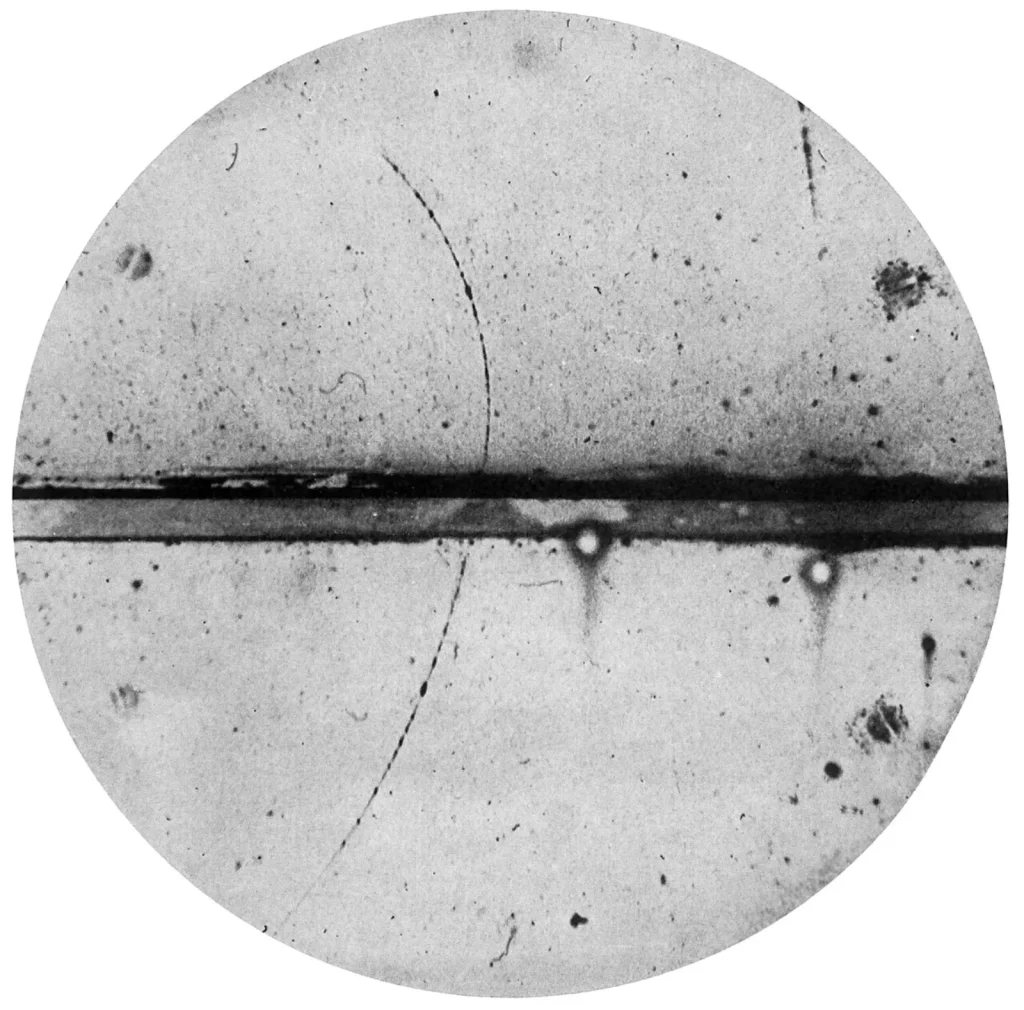
The UniverseExplainer
Why Is There More Matter Than Antimatter?
The Big Bang should have left an almost empty universe. A tiny surplus of matter built everything we know, and nobody yet knows why.
THE QUESTION LIBRARY THE UNIVERSE
The matter in every star and body may be the remnant of a tiny early imbalance whose cause remains unknown.
Nobody knows yet. The young universe had both matter and antimatter. When matching particles met, they turned much of their mass into energy. But matter seems to have had a small lead. CERN puts it at about one extra matter particle for every billion antimatter particles. That small surplus was left after most pairs met. It became the stuff in stars and our bodies. We have found some ways in which matter and antimatter differ, but they cannot yet explain the surplus.
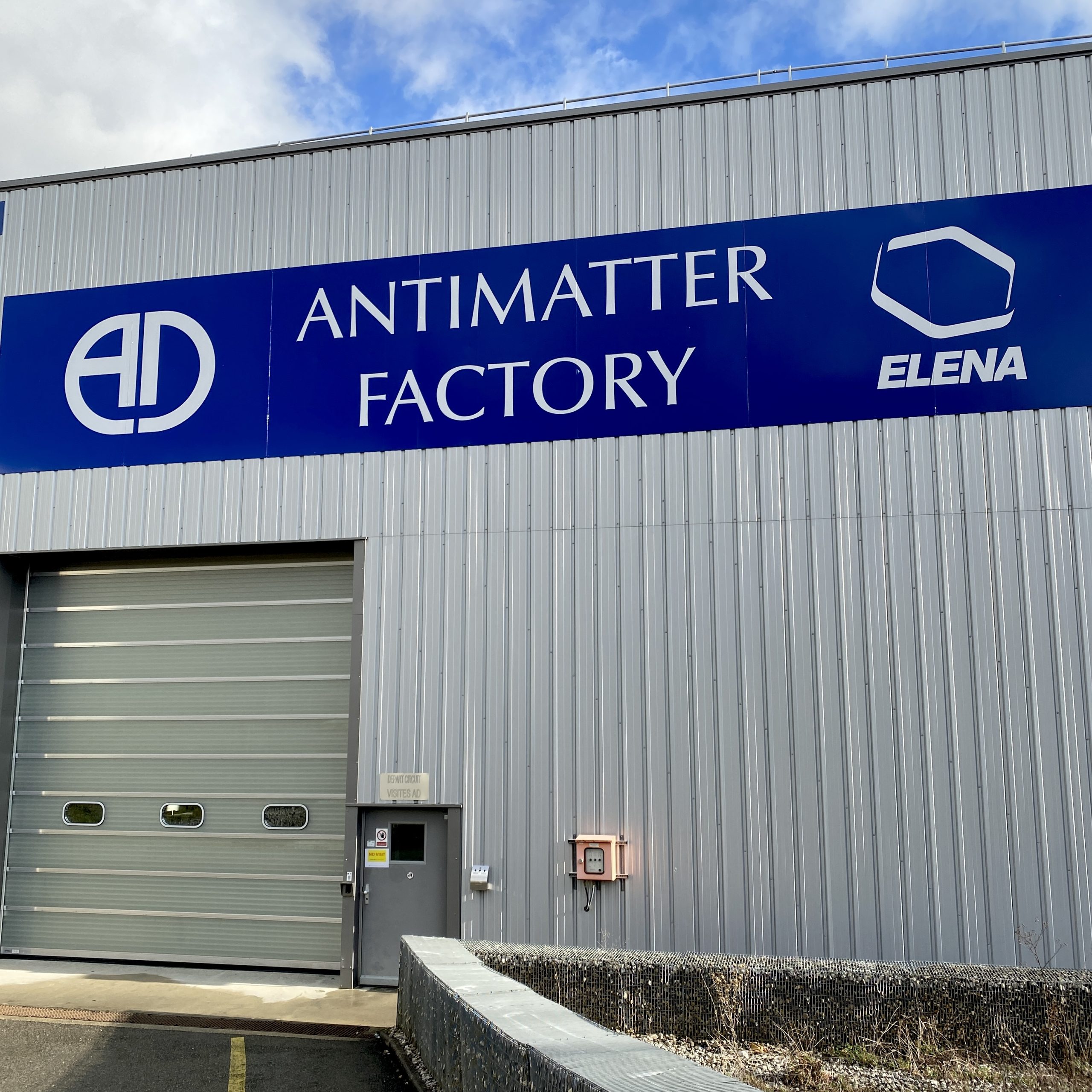
CERN's Antimatter Factory lets researchers study antiparticles. Laboratory antimatter is a clue to a question about the early universe, not a recreation of its conditions.
WHERE THE EVIDENCE STANDS
WHAT WE DON’T KNOW YET
We do not know what made matter get ahead. We also cannot watch the first moments of the universe as they happened.
WHAT WOULD CHANGE THIS ANSWER
A new idea must predict the size of the surplus and pass tests in labs and in space. Then it could explain why matter was left.
Nobody knows yet why any matter was left. This is a question about the young universe. It asks why matter did not cancel out with antimatter. Each matter particle has an antimatter partner. When the two meet, they can turn much of their mass into energy. CERN says the young universe had huge numbers of both kinds.
Here is an analogy. Picture two groups of people. Each person in one group leaves with a partner from the other group. If the groups match in size, no one stays. If one group has a few extra people, they stay after the rest leave. Real particles do not line up like people. Their meetings also make light and other particles. But the image shows how a tiny lead can leave a trace.
CERN says matter had about one extra particle for each billion antimatter particles. Most pairs met and were lost from the matter count. The small surplus became the matter in stars, planets and living things. This number helps us see the scale. It is not a head count made at the Big Bang.
Tests show that matter and antimatter do not always act alike. One form of this is called CP violation. It means a process can change when we swap particles for their antimatter partners and reverse left and right. In 2025, CERN's LHCb team found this kind of difference in a type of particle decay. But CERN says the effects in today's main particle theory are far too small to make the surplus we see. We know the matter is here. We do not yet know what gave it the lead.
Free long answer 2 of 3 this month.
A matter particle has an antimatter partner with the same mass and opposite electric charge when the particle is charged. An electron's partner is a positron. A proton's partner is an antiproton. Antimatter is not imaginary: laboratories can make and hold some of it for study. When a particle and its matching antiparticle meet, they can annihilate. Their energy becomes other particles. CERN says these are mostly photons (particles of light) and pions.
According to CERN's account, the hot young universe produced many particle–antiparticle pairs. If the counts had stayed perfectly equal and each member found a partner, the ordinary matter making galaxies would not have been left behind. Radiation would remain. This is a simplified picture of a complex early universe, but it explains why the question matters. We see stars and people made of matter. We do not see a universe filled with the equal amount of antimatter that the simplest symmetry would suggest.
The phrase “matter won” can mislead. It is a short way of describing a difference in counts, not a struggle or a goal. Matter has no wish to survive. It does not mean every antimatter particle vanished forever. Antimatter can still be created in energetic processes and in laboratories. The puzzle is why the large-scale universe we observe is overwhelmingly made of ordinary matter.
CERN gives a useful scale: roughly one extra matter particle for every billion antimatter particles. Picture a billion pairs, plus one unpaired matter particle. After the pairs annihilate, that one is left. This is an analogy for the surplus, not a literal snapshot or a claim that every region evolved identically. A small early imbalance can leave all the matter we now see because the paired particles mostly removed one another from the matter count.
Here “matter” means ordinary particles such as those forming atoms. It should not be confused with dark matter, which ESA describes as an unknown type of massive particle that does not give off light (see how we know dark matter exists). Nor does the argument say the whole universe has exactly the same balance as the region we can observe. The evidence tells us about our observable surroundings and the early universe inferred from them.
The key difference is between measuring a leftover and explaining how it arose. Stars, gas, rocks and our bodies demonstrate that a surplus survived. They cannot by themselves tell us which early physical process made it. That is the part physicists are trying to solve.
Yes. Physicists call one important kind CP violation. The letters stand for charge and parity. The charge (C) change swaps particles for their antiparticles. The parity (P) change is a mirror-like reversal of directions. If a process occurs at a different rate after both changes, it violates CP symmetry. This is a measured feature of some particle decays. It means nature is not perfectly indifferent to matter and antimatter.
In 2025, CERN reported that the LHCb experiment observed CP violation in decays of baryons, a family of particles that includes protons and neutrons. The measured difference in a particular decay was about 2.45 percent, with uncertainty of about 0.47 percent. This is a result about that laboratory process. It is not a measurement that the early universe had a 2.45 percent matter surplus. Confusing those two numbers would turn a clue into a false solution.
CERN also states that the CP violation predicted by the Standard Model is many orders of magnitude too small to explain the cosmic matter–antimatter imbalance. New physics may be needed, but no proposed mechanism has been established. Particle experiments keep testing known asymmetries and seeking new ones because a successful explanation must fit both the laboratory data and the universe we observe.
No. The Big Bang model describes the early hot, dense expansion and the later development of the observable universe. The matter-surplus puzzle asks what made one kind of particle slightly more common during that early history. Solving it would explain an important part of how our kind of material universe became possible. It would not by itself explain why there is a universe, why its laws exist, or whether anything preceded the hot phase.
It is tempting to say that matter and antimatter simply “cancel to nothing.” That wording hides a crucial point. Annihilation conserves energy and produces radiation and sometimes other particles. A balanced universe would not automatically be philosophical nothingness. It would be a universe very unlike the one with atoms, stars and life that we know.
A good candidate explanation has to do more than say that matter and antimatter differ. It must show how that difference could act while the universe was hot and changing, and how it could leave the amount of matter inferred today. It must also fit the many particle results that already work. Ideas about new particles or new stages in the young universe can be studied, but none is a settled account of this surplus. That is why the puzzle survives even as experiments find new clues.
It is also tempting to treat any observed CP violation as the complete answer. The difference must be produced in the right conditions, at the right time, and in enough quantity to yield the measured surplus. A laboratory result can establish that one ingredient exists without demonstrating the whole cosmic recipe.
Start with CERN's Antimatter overview. Read its account of pair annihilation and its estimate of the small surplus. Notice how it separates what remained from the unknown mechanism that made the excess. Then read CERN's 2025 LHCb report: identify exactly which decay was measured, and compare its claim with the larger cosmic question. The report itself says current Standard Model effects are too small to explain the observed imbalance.
For another check, compare independent explanations from CERN and the European Space Agency's Planck material on the early universe. Ask what each source directly measured, what it inferred, and what it still cannot tell us. In a headline promising that physicists have “solved” the puzzle, look for a quantitative prediction of the cosmic surplus and an independent test. A measured difference between a particle and an antiparticle is important, but the required bridge from that measurement to the early universe needs evidence.
THREE THINGS TO REMEMBER
Why is there something rather than nothing?
Nobody knows, and science alone may never be able to say.
God Plays Dice answers big questions in plain words, with sources and one of six honest labels.
See a mistake? Report a problem. Corrections are made openly.
CONTINUE THE THREAD
The UniverseExplainer
The Big Bang should have left an almost empty universe. A tiny surplus of matter built everything we know, and nobody yet knows why.
The UniverseAnswer
Why the matter surplus remains unexplained, what Sakharov's conditions require, and how sphalerons and proposed neutrino mechanisms might connect.
The UniverseAnswer
How matter and antimatter differ in some decays, what quarks have to do with it, and why hydrogen–antihydrogen spectroscopy tests a different symmetry.
The Architect AI companion · All Access
Labels describe the evidence for a claim, not the people who hold it.
Match my phone uses your device’s light or dark setting.