Mind & MortalityExplainer
What Happens When We Die?
Medicine can describe how the body and brain shut down. Whether anything of us continues is a question science cannot reach, and traditions answer it differently.
MIND & MORTALITY ESSAY · PERSONAL VIEW
Science can study the edge of death, but not promise what lies beyond it. Gratitude for having existed may not erase fear, but it can change its shape.
If this is personal right now: call 988 or text 988 in the US · more support
Almost everyone fears death at some point.
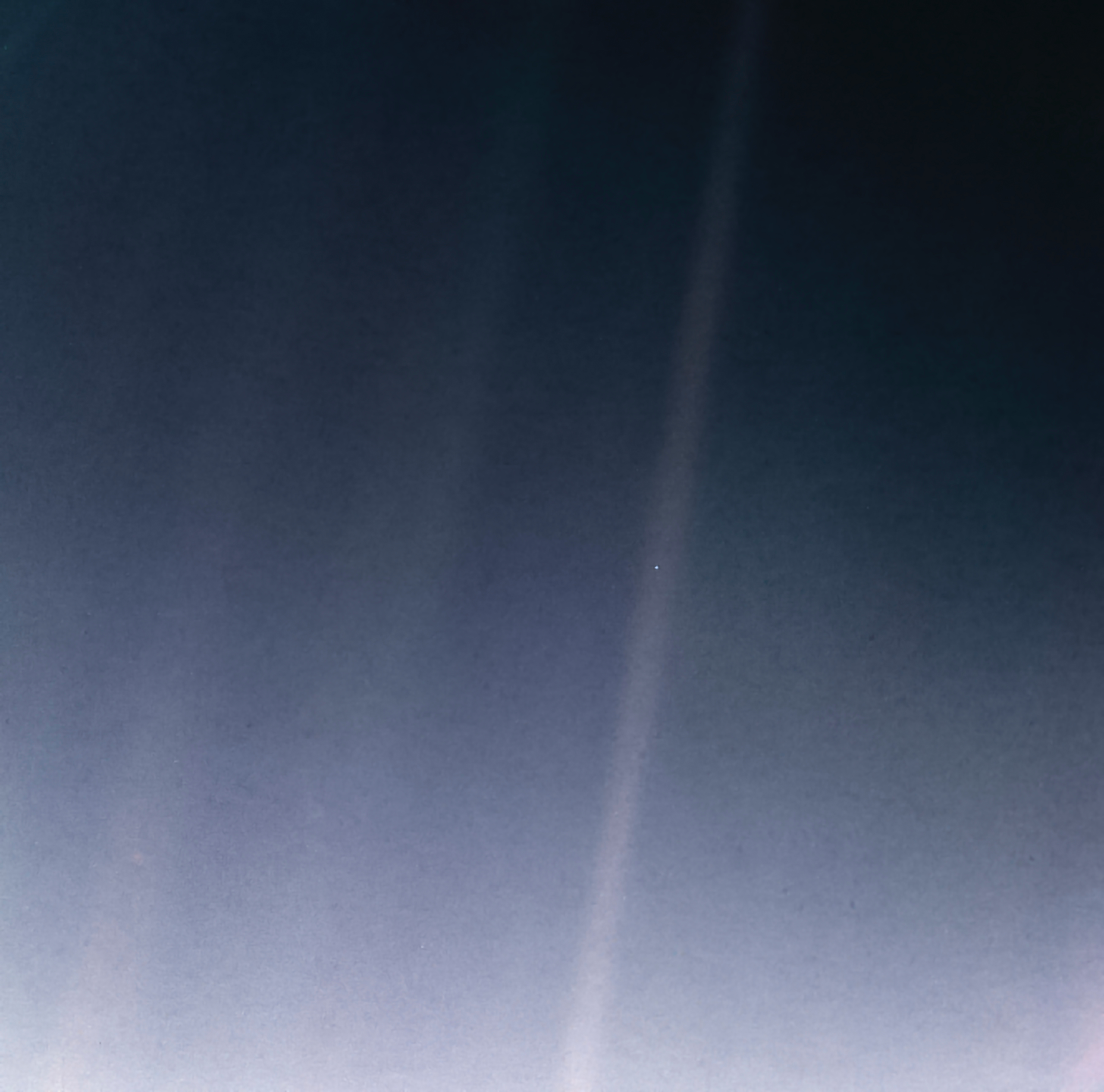
Earth from about 6 billion kilometres: Voyager 1, 14 February 1990 (image reprocessed 2020).
The questions often arrive quietly, especially at night.
What happens when the heart stops? Does consciousness continue? Can science tell us anything? And is there a way to live that makes the fear less powerful?
I have come to believe there is—not as proof of what comes after, but as a way of seeing what has already happened.
You existed.
You had the chance to be here.
That fact may be more extraordinary than we usually allow ourselves to feel.
The day we can say, with deep conviction, “It has been a true privilege to have existed, to have lived, and to have experienced this wonder we call life,” may be the day death loses some of its power over us.
To explain what I mean, I want to begin with a headline that claimed more than the research showed.
I once shared an article titled, “After death, you’re aware that you’ve died, say scientists.”
It was irresistible. It also went too far.
The article discussed research led by Dr. Sam Parnia on cardiac arrest and resuscitation. It correctly noted that some people revived after cardiac arrest later report memories of events around them. It also referred to the brain’s electrical activity becoming undetectable within seconds after blood flow stops.
But a monitor going flat is not the same as measuring a person’s awareness of being dead.
The original interview said the cerebral cortex can stop showing visible activity within roughly 2 to 20 seconds. Damage to cells can unfold over a longer period. None of that demonstrated the headline’s dramatic claim.
This distinction matters because death is one of the subjects on which human beings are easiest to persuade. We want reassurance. A headline that offers certainty can travel much farther than the careful sentence underneath it.
Newer research is still fascinating.
In the 2023 AWARE II study, researchers followed 567 people whose hearts stopped in hospitals. Fifty-three survived, twenty-eight could be interviewed, and eleven described memories or perceptions suggesting some awareness during the event.
Researchers also recorded organized brain activity in some patients during prolonged CPR, in certain cases tens of minutes after cardiac arrest began. They tested hidden visual and audio targets as possible checks on awareness. No participant identified the image, and one identified the sound.
Other studies have reported bursts of fast brain activity near death in animals and in a small number of human patients. Scientists continue debating what those signals mean. They could relate to vivid experience, disorganized stress, seizure-like activity, or something else.
The honest conclusion is limited but important:
The dying brain may be more active and recoverable than people once assumed.
But everyone who described an experience was revived.
This research studies the border of death. It does not show what happens after irreversible death, and it does not establish that consciousness exists independently of the brain.
That question remains open in belief and philosophy—not settled by these experiments.
The word spirit comes from the Latin spiritus, meaning breath, from a verb meaning “to breathe.”
Carl Sagan used that history beautifully in The Demon-Haunted World: Science as a Candle in the Dark. He argued that science and spirituality do not have to be enemies.
“Science is not only compatible with spirituality,” he wrote. “It is a profound source of spirituality.”
Sagan was not using spirituality as proof of a supernatural realm. He was naming an experience: the humility and joy that can come from grasping the scale of the universe, the complexity of life, the courage of moral action, or the power of art and music.
I understand him this way:
Wonder does not become less meaningful when we understand more about its physical causes.
A song is still moving when we know it is air pressure reaching the ear. Love is still real when we study the brain. A night sky is still overwhelming after astronomy explains the stars.
Science can deepen awe instead of destroying it.
Science can take us closer to the boundary between life and death. It can improve resuscitation, measure brain activity, and test claims about perception.
It cannot currently tell us that a soul continues after the brain irreversibly stops. It also cannot turn the absence of evidence into proof that every possible form of continuation is impossible.
So I return to the one fact we do have.
You were here.
You breathed. You experienced time. You saw colors, heard voices, felt pain, laughed, feared, remembered, forgot, loved, and changed.
For billions of years before you, the universe existed without your point of view. Then, for one brief opening, matter became aware from where you stood.
Whatever you believe comes after death, that happened.
I do not expect gratitude to erase every fear. Biology built us to protect life, and fear of death is part of that protection.
But gratitude can change the question.
Instead of asking only, Why must this end? we can also ask, How extraordinary is it that this happened at all?
A life does not have to last forever to have been real.
A song does not become meaningless because it ends.
The day we can look honestly at our brief existence and say, It was a privilege to have been here, death may remain frightening—but it no longer has the final word over the life that came before it.
Is it possible to make peace with the idea of dying?Supported, still debated
Yes, many people do, though nobody can promise it, and it looks different for each person. Studies suggest fear of death is often strongest in young adulthood…
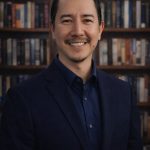
Ricardo Maldonado, founder and editor of God Plays Dice.
More essays by Ricardo
Next on the path “When someone has died, or you’re afraid”
Is there life after death? What can science say?
Nobody knows yet, and science may never be able to say.
CONTINUE THE THREAD
Mind & MortalityExplainer
Medicine can describe how the body and brain shut down. Whether anything of us continues is a question science cannot reach, and traditions answer it differently.
Mind & MortalityExplainer
Science can map which brain activity goes with experience. Why any of it feels like something from the inside remains one of the great open questions.
Mind & MortalityExplainer
Near-death experiences are real experiences that can change lives. What causes them, and what they mean, is still an open scientific question.
Match my phone uses your device’s light or dark setting.