Ricardo Maldonado’s idea asks whether the Big Bang was the local echo of an event in a larger space, and it bets on one frozen test that future data can fail.
God Plays Dice Editorial · independently fact-checked · corrections welcomeChecked Sep 30, 202611 min read
THE SHORT ANSWER
It is a testable proposal, not established science. HD-Blast is an Author’s hypothesis by Ricardo Maldonado, author of GOD PLAYS DICE. It asks whether the hot, dense start of our universe was the local aftermath of a short burst of energy in a larger space with more dimensions than we can see. No one has observed such an event, and the idea does not yet say what caused it. Its test is a frozen curve: the slow hum of gravitational waves should bend near one cycle per year.
The idea is that our hot beginning may be the aftermath of a brief burst of energy in a larger space with extra dimensions.
It proposes a possible chapter before the hot beginning, not a replacement for the Big Bang model or for inflation.
Its test is a frozen curve for the slow gravitational-wave hum, with a bend, or “knee,” near one cycle per year.
The curve was set using data already in hand, so matching that data is calibration, not a successful prediction.
If later pulsar data show a straight line with no bend there, this version of the idea fails.
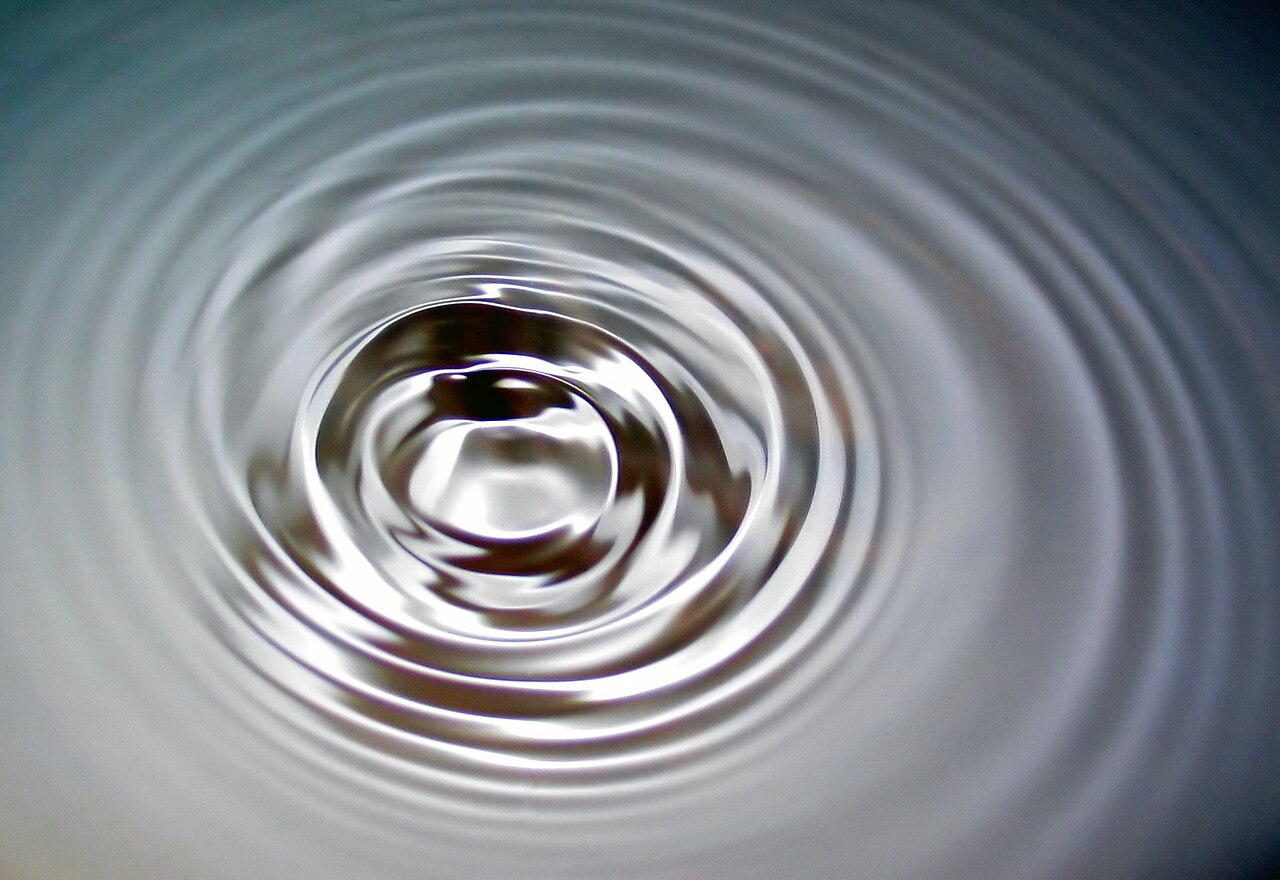
About this picture
Ripples spreading from a small disturbance in water. The book uses a pond like this as an analogy for HD-Blast: a fish at the surface feels the ring but never sees the stone. It is a picture to think with, not evidence.
The universe went through a hot, dense early phase and then expanded and cooled.The book’s Chapter 2 and its Sources and Notes cite the expansion of space (Hubble, 1929), the cosmic microwave background (Penzias and Wilson, 1965) and the light-element amounts, plus the Planck 2018 analysis.
A slow background hum of gravitational waves passes through our galaxy.The book’s Sources and Notes (Chapter 3) report that major pulsar-timing teams announced evidence for this background in 2023, at differing levels of significance.
Our hot beginning was the local aftermath of a short burst of energy in a larger space with more dimensions.Proposed in the book’s Introduction and Chapter 2. The book says no one has observed such an event and it cannot yet say what released the energy; Zenodo record 22347452 lists a higher-dimensional cause of the Big Bang as not established.
The five-number benchmark curve was fixed in a public, dated record on 17 December 2025.Zenodo record 17968738, published 17 December 2025. The Test Ledger calls such a record provenance, not peer review; it dates the prediction but is not evidence for it.
The curve’s match to the summary points bundled with the December 2025 record counts as evidence for a higher-dimensional blast.The book (Chapter 4) says the curve was set with those points already in hand, so agreement with them is calibration, not an out-of-sample prediction; even a later bend would not identify its source.
Nobody knows yet whether the slow hum really bends near one cycle per year. Nobody knows whether any higher-dimensional event could produce that curve, or whether extra dimensions exist at all. Under one assumed history of the early universe, the knee would point to a time on the scale of microseconds; other assumptions can give other times, so that is not a measured date for a blast.
WHAT WOULD CHANGE THIS ANSWER
Years more pulsar data, checked with the teams’ full methods, could keep the frozen curve or reject it. The idea would get stronger only if a worked-out cause produced the curve on its own and also passed other tests. A complete version would also have to match what we already observe, including the pattern of tiny ripples in the early universe’s afterglow, and no such version exists yet.
HD-Blast is an idea about where the hot beginning of our universe came from. It was put forward by Ricardo Maldonado, author of GOD PLAYS DICE. It is an Author’s hypothesis: a testable proposal, not established science.
Start with what scientists already know. The universe is expanding. It is filled with a faint afterglow of light from a hot early time. And the amounts of the lightest elements match what a hot, dense young universe would cook. That picture, the Big Bang model, works very well. But it does not say why the beginning looked the way it did.
HD-Blast offers one possible answer. Maybe our hot beginning was the local aftermath of a short burst of energy in a larger space, one with more dimensions than we can see. The book explains it with a picture. Imagine a stone thrown into a pond. A fish living at the surface never sees the hand or the stone. It only feels a ring spreading across its world. In this analogy, we are the fish and the Big Bang is the ring, not an ordinary explosion into empty space. It is only an analogy, and the book warns that the picture is not evidence.
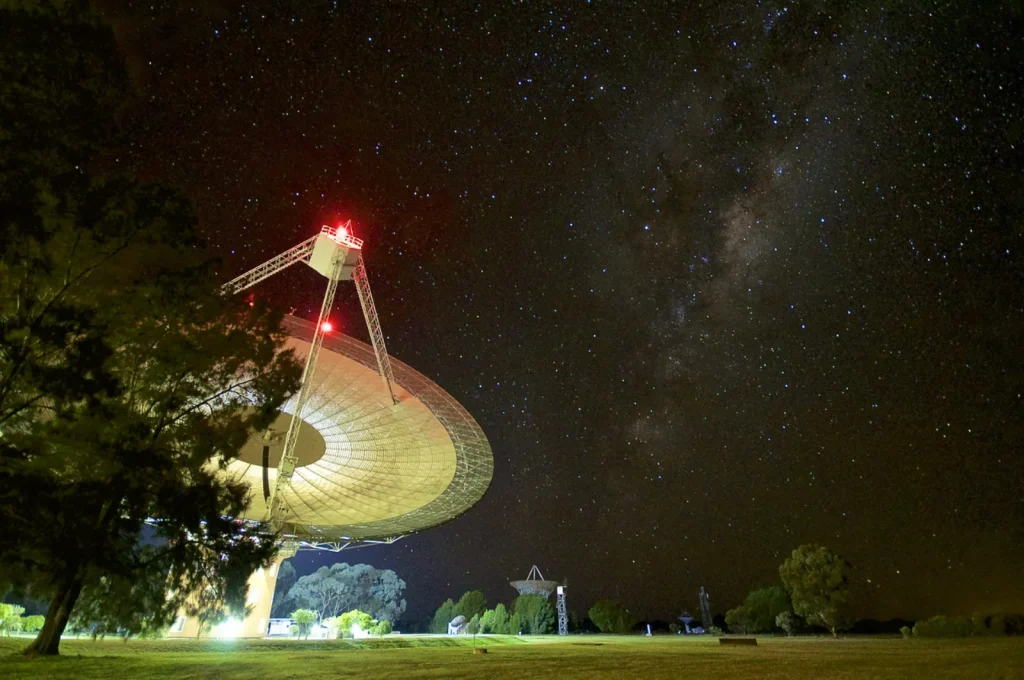
No one has observed such a blast, and the idea does not yet say what caused it. So how could anyone test it? The book points to a real signal: a very slow hum of gravitational waves, which are ripples in space itself. Teams that time spinning dead stars, called pulsars, study this hum. The book fixed a curve for the hum, with a bend, or “knee,” near one cycle per year. It was frozen in a public record on 17 December 2025.
If years more data show no bend there, this version of the idea fails. If a bend does show up, that alone would not show a blast happened. The strongest objection is that most researchers expect the hum to come from pairs of giant black holes slowly circling each other. Such ordinary sources, and choices made in the analysis, can bend the curve too.
THE LONG ANSWER
THE LONG ANSWER · ABOUT 9 MINUTES
The long answer is for All Access members.
The short answer, how sure we are, what we don’t know, what would change our mind and every source stay free on every page, for everyone.
All Access members read the long answer: the idea explained step by step, and how to check it yourself. Its strongest challenge, what would rule it out and anything corrected or withdrawn stay free for everyone on its Research Notebook page.
In some physics theories, a brane is a surface-like universe such as ours, and the bulk is the larger space it sits in. No such theory has been confirmed by experiment.
Gravitational waves
Ripples in space itself, set off by violent events in the universe. The slowest ones take years to pass by.
Pulsar timing array
Dozens of steadily spinning dead stars, timed together for years, used as a galaxy-sized detector for very slow gravitational waves.
Knee
The bend in the HD-Blast benchmark curve, near one cycle per year. It is part of the Author’s hypothesis, not a measured feature.
Calibration
Setting a curve using data you have already seen. Matching that same data later is not a prediction.
Cosmic inflation
The leading picture of the first instant: a brief burst of extremely fast expansion that helps explain why the universe is so smooth and flat.
Sources & further reading
(9) · Checked Sep 30, 2026
GOD PLAYS DICE, Volume One: Introduction and “The Question That Wouldn’t Shut Off”Ricardo MaldonadoThe idea in the author’s words (the local aftermath of a brief release of energy in a larger-dimensional arena; no one has observed such an event); the pond picture and its limits; the fair case for the Big Bang model; what inflation explains and why it moves the mystery one step back; the hypothesis in one sentence.
GOD PLAYS DICE, Volume One: “The Knee in the Noise,” “How We’ll Know” and “Where the Blast Lives”Ricardo MaldonadoThe hill-shaped curve with a knee near one cycle per year, the five frozen numbers, calibration versus prediction; the walk-back of the record’s 3.2-sigma and PASS wording; staying under known energy limits as a conditional consistency check that does not show a real source emitted the curve; brane and bulk, the three possible event types, where the Flatland analogy breaks, why a fit is not an origin story, and why the knee’s microsecond-scale timestamp is not a measured date.
GOD PLAYS DICE, Volume One: Sources and Notes and AppendixRicardo MaldonadoInflation as a powerful framework with an unfinished origin story; the 2023 pulsar-timing evidence; ordinary sources can curve the spectrum; colliding branes (the ekpyrotic proposal) as a precedent, not confirmation; a failure rejects the frozen version only; Zenodo is not peer review.
Research Notebook: Cosmic origins (HD-Blast) ↗officialgodplaysdice.com (status reviewed 30 September 2026)Status: benchmark frozen on 17 December 2025; no test of the frozen curve against later, independent pulsar-timing data has been published. What the idea does and does not claim, the strongest challenge (black-hole pairs; NANOGrav and European team cautions), and what would rule it out.
Test Ledger ↗officialgodplaysdice.com (status reviewed 27–30 September 2026)The knee benchmark is listed as “Committed — awaiting data” (committed 17 December 2025); a fit to existing data is not a successful prediction; a Zenodo deposit is provenance, not peer review.
GOD PLAYS DICE, Volume One: Meaning, correction standards and lessons if the hypothesis failsRicardo MaldonadoThe author reflects on value if the hypothesis fails, retaining useful methods while withdrawing unsupported interpretations, and treating corrections honestly. These passages express personal perspective and conditional standards, not independent validation.
Historical Research Notebook: Cosmic origins (HD-Blast) corrections ↗Ricardo Maldonado / officialgodplaysdice.comHistorical public notebook corrections report a withdrawn interpretation and a defective first reconstruction. These are the author's dated reports, not independent verification of the underlying technical records.
The seven questions behind Ricardo Maldonado's research, from the Big Bang to evolution: what each idea proposes, what has been corrected, and what could settle it.
From the first atomic nuclei back to a possible burst of inflation, here is what scientists have tested about the first second, and where knowledge runs out.
How Ricardo tested his matter–antimatter number match with restricted formula scans, and why those checks do not give a probability of coincidence.
Author’s hypothesis3 min read
THE OCCASIONAL LETTER
Stay curious.
New stories, book updates, and notes from God Plays Dice, delivered when there is something worth sharing.
EMAIL UPDATES ↗
500 DIGITAL COPIES • GIVEAWAY PREVIEW
Be first to know when the 500-copy reader giveaway opens.
Join for the book launch, verified retailer links, and the announcement for a planned giveaway of 500 digital copies. The giveaway is not open yet: dates, eligibility, a dedicated entry form, and Official Rules will be published first.
Privacy · Check your inbox to confirm your subscription. Newsletter signup alone is not a giveaway entry.