Life in the UniverseAnswer
How do astronomers find planets around other stars?
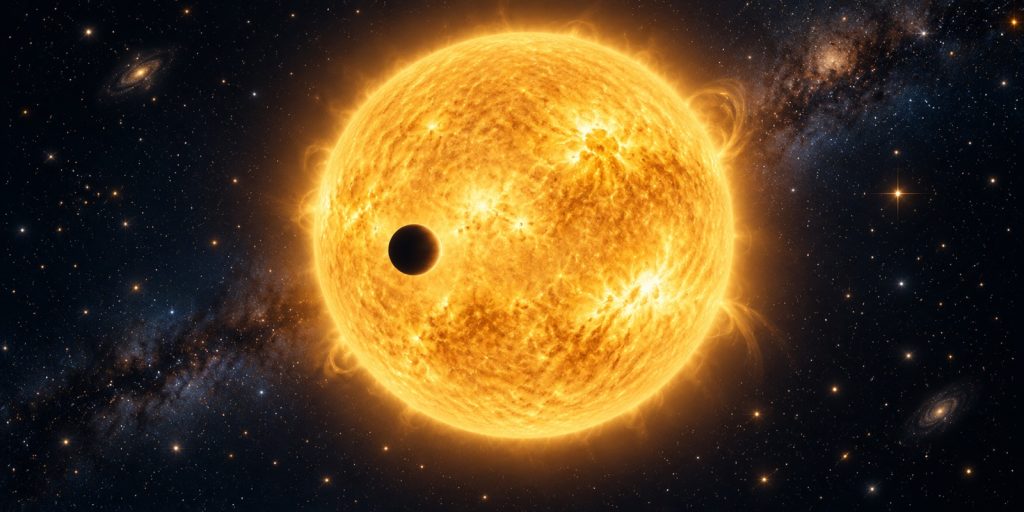
Distant worlds can reveal themselves through changes in starlight and the motion of their stars.
THE QUESTION LIBRARY LIFE IN THE UNIVERSE
Mars and icy moons offer different evidence about possible habitats.
Possibly. Ancient Mars had conditions suitable for microbes. Europa’s inferred ocean and Enceladus’s plume chemistry offer reasons to investigate life under ice. But water, useful chemicals and possible energy supplies establish potential habitats, not inhabitants; candidate biological signals need further tests.
WHERE THE EVIDENCE STANDS
WHAT WE DON’T KNOW YET
Whether life began or survives in these environments remains unresolved.
WHAT WOULD CHANGE THIS ANSWER
Independent biological evidence that survives contamination checks and nonliving alternatives would change the verdict.
Possibly. Mars had environments that could support microbes, and Europa and Enceladus are promising ocean worlds. The evidence described here establishes possible habitats and intriguing chemistry, not life. Whether anything lives—or once lived—there remains open.
Free long answer 1 of 3 this month.
We do not know. In March 2013, NASA reported that Curiosity’s rock analysis at Yellowknife Bay supported an ancient wet environment with chemical ingredients and potential energy sources suitable for microbes. That is evidence of past habitability: conditions in which life could function, not a fossil or a detected organism.
A different question is whether a rock preserves a trace of biology. In September 2025, NASA described potential biosignatures in Perseverance’s Sapphire Canyon sample from Cheyava Falls. Carbon-containing organic material and small mineral patterns could be consistent with microbial reactions. But the minerals can also form without life; the study did not rule out every nonbiological pathway. The sample is a candidate for further testing, not confirmation that Mars had life.
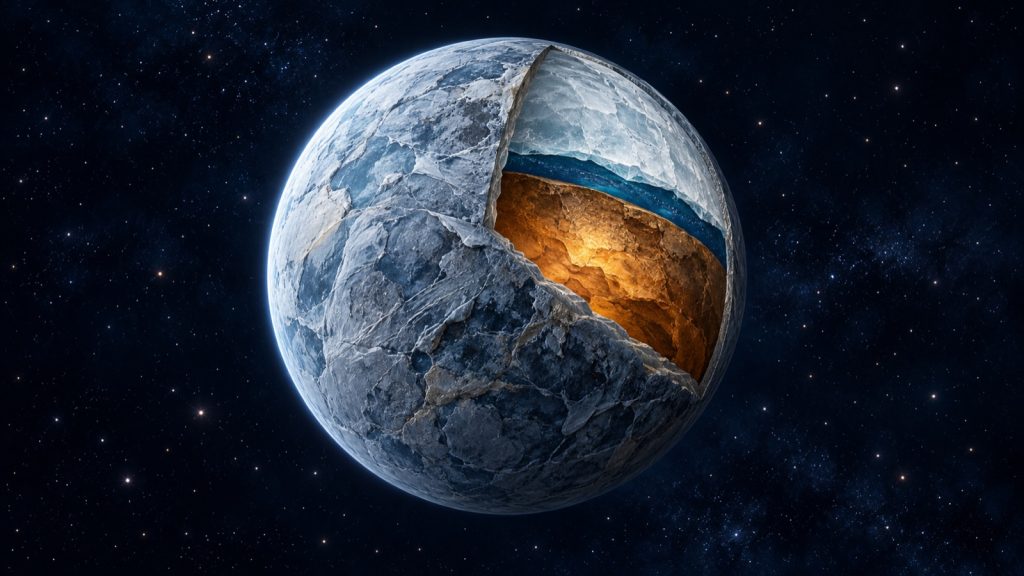
Europa, Jupiter’s moon, likely has an ocean below its ice. While orbiting Jupiter from 1995 to 2003, Galileo measured a magnetic response best explained by salty water beneath the surface. Jupiter’s gravitational tug can generate internal heat. Chemical reactions could supply energy without sunlight, but whether the necessary ingredients mix in usable ways remains a question.
Enceladus, a moon of Saturn, offers a different kind of sample: jets of water vapor and ice escaping through cracks. Cassini sampled material associated with these plumes. A June 2023 analysis identified phosphorus-containing salts in ice grains from Saturn’s E ring, fed by the plume, adding an ingredient used by Earth life. Those measurements tell us about ocean chemistry, not whether cells are present.
A 2017 report described hydrogen measured during Cassini’s 2015 plume flyby. Reactions between water and rock are the proposed source. If microbes were present, some could gain energy by reacting that hydrogen with carbon dioxide. That shows a possible food supply; it does not show that anything has used it.
Investigators must check the signal itself, exclude contamination carried from Earth, and test whether nonliving processes could make it. Independent evidence should then reinforce the interpretation. A habitable setting and a detected organism answer different questions.
Related questions explore how common life might be and how life on Earth began.
THREE THINGS TO REMEMBER
Is life likely to be rare or common in the universe?
Nobody knows yet.
God Plays Dice answers big questions in plain words, with sources and one of six honest labels.
See a mistake? Report a problem. Corrections are made openly.
CONTINUE THE THREAD
Life in the UniverseAnswer
Distant worlds can reveal themselves through changes in starlight and the motion of their stars.
Life in the UniverseAnswer
A world with no sunrise could still have internal heat. The question is whether it can keep water liquid and supply usable energy.
Life in the UniverseAnswer
Identical twins develop from one fertilized egg and begin with almost the same DNA. Yet their conditions before birth, later environments and gene activity can differ. Shared DNA…
The Architect AI companion · All Access
Labels describe the evidence for a claim, not the people who hold it.
Match my phone uses your device’s light or dark setting.