EssaysEssay · personal view
Before We Are Nations, We Are Life
A cosmic case for human dignity. Before we are nations, we are life. Before we inherit a border, we inherit a planet.
ESSAYS PERSONAL VIEW
The freedoms we inherit were purchased by people who challenged authority, survived persecution, and widened the circle of human dignity. Progress is real—but never automatic.
If it were not for progress, many of us would still be punished for our beliefs, our questions, our sex, our ancestry, or the person we love.
The right to speak, study, disagree, worship, leave a religion, or live openly did not arrive as a gift from history. People argued for those freedoms, organized for them, suffered for them, and sometimes died before seeing them.
That is why I think progress deserves more than celebration.
It deserves protection.
History gives us many examples, and each one is more complicated than a slogan. Still, together they reveal a pattern: authority becomes dangerous when it decides that certain questions must not be asked.
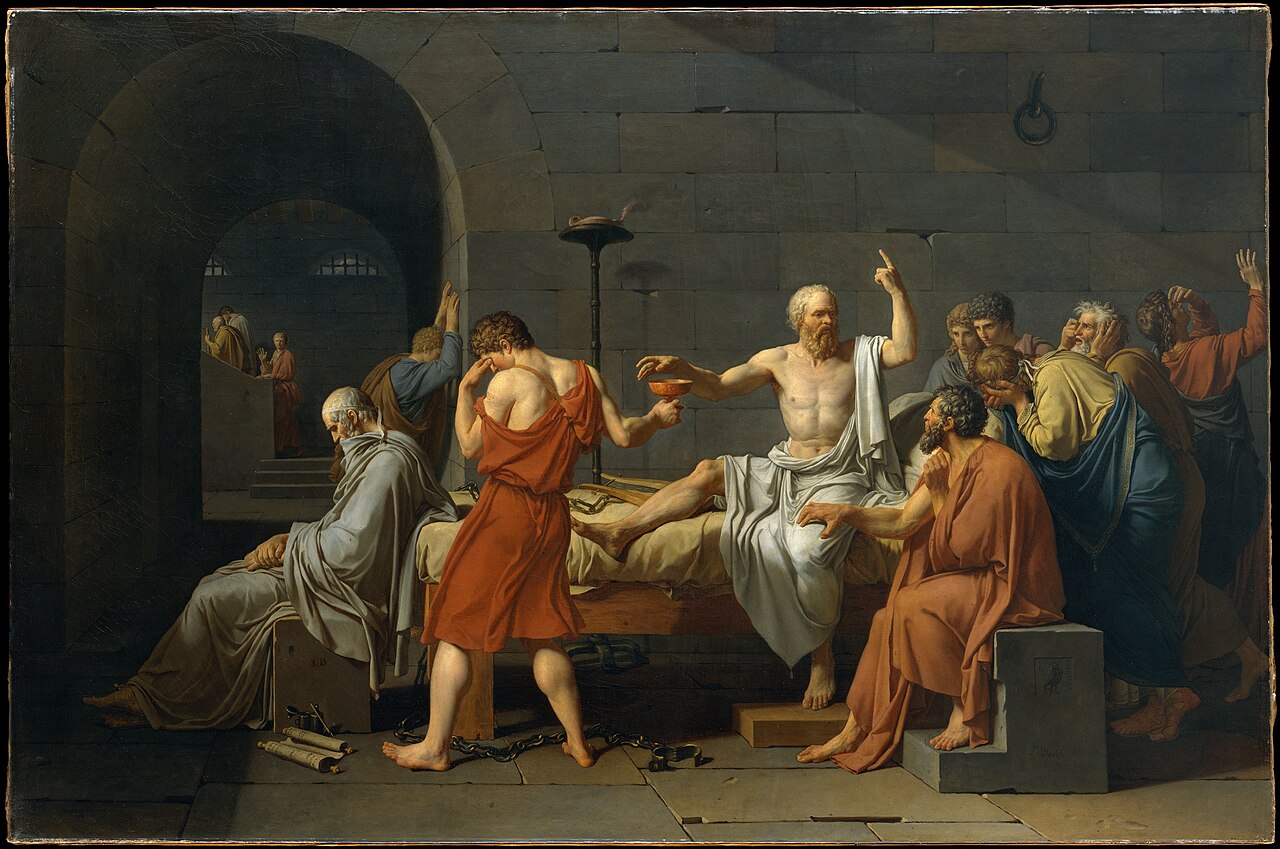
Socrates (469–399 BCE) encouraged people to examine received ideas. Athens convicted him of corrupting the young and of religious offenses, and he was sentenced to die by drinking hemlock. His case remains one of history’s clearest warnings about a society punishing uncomfortable questions. Read more.
Hypatia of Alexandria (died 415 CE) was a mathematician, philosopher, and teacher in a city fractured by political and religious conflict. Her prominence and relationship with the Roman governor placed her in the middle of that struggle. A mob murdered her, and almost all of her own work disappeared. Read more.
Giordano Bruno (1548–1600) imagined an infinite universe filled with countless worlds. He was not executed simply for anticipating exoplanets; his trial involved several theological charges. But his death still shows what can happen when institutions claim the power to punish thought itself. Today, NASA has confirmed thousands of planets around other stars—one part of the universe Bruno imagined. Background · Exoplanets.
Galileo Galilei (1564–1642) defended the conclusion that Earth moves around the Sun. In 1633, the Inquisition found him “vehemently suspect of heresy,” forced him to recant, and kept him under house arrest. Centuries later, Pope John Paul II acknowledged that theologians had erred by treating Scripture as if it settled a scientific question. Background · 1992 address.
Thomas More (1478–1535) reminds us that persecution of conscience does not belong to only one side. A committed Catholic, he refused to recognize King Henry VIII as head of the Church of England and was executed for treason. Believers, nonbelievers, reformers, and traditionalists have all suffered when authority makes honest conscience a crime. Read more.
The same danger continued under secular regimes. Stalin’s Soviet Union imprisoned and killed perceived enemies. China’s Cultural Revolution attacked intellectuals, teachers, religious people, and others marked as politically dangerous.
The robes, crowns, uniforms, and party symbols changed.
The closed mind did not.
Other people were not persecuted for an idea they expressed, but for who they were—or for the group others assigned them to.
Jews were systematically persecuted and murdered during the Holocaust.
Africans and Indigenous peoples lost land, freedom, families, and lives under slavery and colonial rule.
Black Americans endured slavery followed by legal segregation, racial terror, and discrimination whose effects did not vanish when laws changed.
Apartheid in South Africa turned racial hierarchy into an official system of government.
These histories are not interchangeable. Each has its own causes, scale, and victims. But they share one moral failure: people with power decided that some human lives counted less.
Progress is not the claim that every new idea is good or that every tradition is bad.
It is the expansion of who is allowed to learn, speak, vote, work, love, worship, question, and belong.
It is also the growth of methods that let us correct inherited errors.
Again and again, societies have defended injustice as natural, sacred, necessary, or permanent. Women were told education would damage them. Enslaved people were told freedom was impossible or dangerous. Religious minorities were treated as threats. LGBTQ+ people were criminalized or forced into silence.
Many of those claims once sounded normal to the people repeating them.
That should humble us.
The question is not only, How could they have believed that?
The harder question is, What do we believe today that future generations will struggle to forgive?
I want to be fair. Courage and cruelty have appeared in every kind of institution. Believers and nonbelievers have defended human rights. Believers and nonbelievers have also violated them. Political movements that promised liberation have sometimes created new forms of oppression.
So the lesson is not that one tribe owns progress.
The lesson is that no tribe is exempt from self-examination.
A society advances when it becomes more willing to test its assumptions against evidence and more able to see the humanity of people outside its majority.
Today, many people enjoy freedoms that would have been unthinkable in earlier centuries. Yet discrimination, censorship, violence, and legal persecution remain real.
LGBTQ+ people, for example, still face criminal penalties in dozens of countries and violence in many more. Religious minorities are still targeted. Girls are still denied education. Journalists and dissidents are still imprisoned. Racism adapts even when laws improve.
Progress is real.
It is also reversible.
Every right that exists in law must still be defended in culture, institutions, and daily behavior.
Imagine people in the year 3000 looking back at our century.
They will see our medicine, telescopes, artificial intelligence, spacecraft, and global communication. But they will also see what we tolerated.
They may ask why we had so much information and still dehumanized one another. Why we knew the history of persecution and still repeated its language. Why we could detect planets around distant stars but sometimes failed to recognize the dignity of the person next door.
The legacy we leave will not be measured only by what we invented.
It will be measured by who was allowed to benefit from being human.

Ricardo Maldonado, founder and editor of God Plays Dice.
More essays by Ricardo
God Plays Dice answers big questions in plain words, with sources and one of six honest labels.
CONTINUE THE THREAD
EssaysEssay · personal view
A cosmic case for human dignity. Before we are nations, we are life. Before we inherit a border, we inherit a planet.
EssaysEssay · personal view
A simple reading guide to the questions, measurements and scientific limits in GOD PLAYS DICE, Volume One.
EssaysEssay · personal view
World Space Week 2026 celebrates Rocket Revolution. Ricardo Maldonado asks how curiosity about cosmic origins connects to his unproved HD-Blast hypothesis.
The Architect AI companion · All Access
Match my phone uses your device’s light or dark setting.