
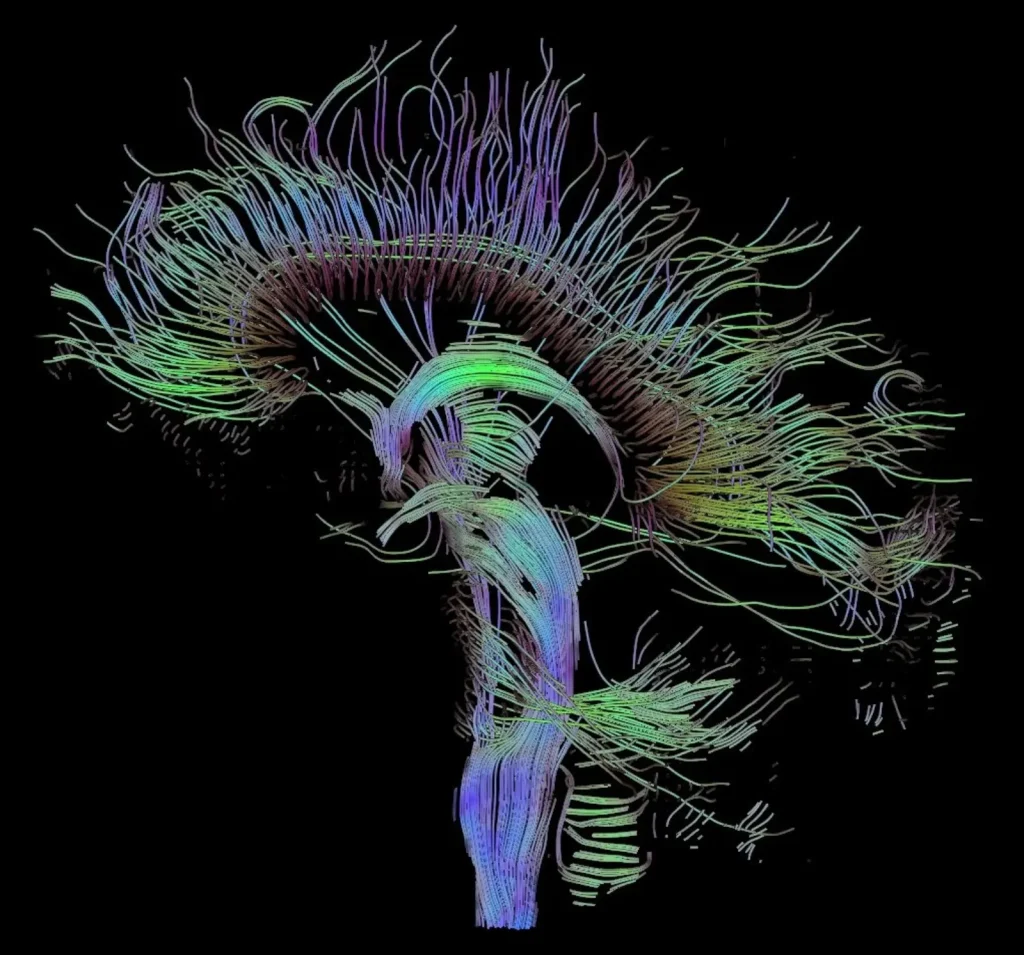
Mind & MortalityExplainer
What Is Consciousness?
Science can map which brain activity goes with experience. Why any of it feels like something from the inside remains one of the great open questions.
THE QUESTION LIBRARY MIND & MORTALITY
Responsiveness, learning and felt experience are different claims, with different evidence.
There is strong scientific support for conscious experience in other mammals and birds, and a realistic possibility in many other animals, including octopuses. That does not establish that their feelings are exactly like ours. Researchers infer experience from several kinds of evidence. Plants respond and signal, but those capacities alone do not establish felt experience. Plant consciousness remains unestablished, and specific claims about plant learning need reliable replication.
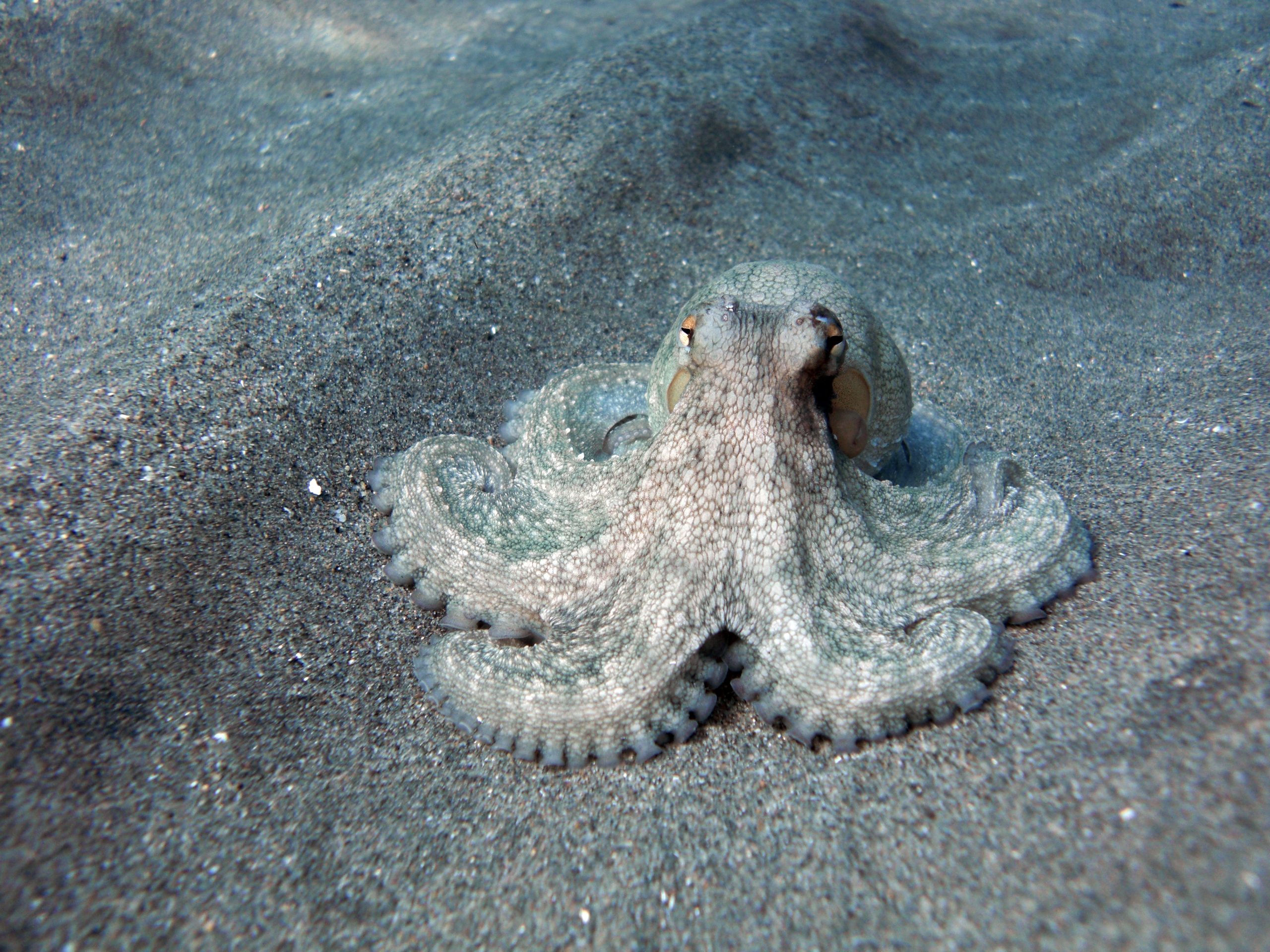
A common octopus. This photograph illustrates the animal; it is not from the cited experiment and cannot show what an experience feels like.
WHERE THE EVIDENCE STANDS
WHAT WE DON’T KNOW YET
We do not know the full range of feelings across animal species. Scientists also disagree about how best to test for them. Plant signals do not settle whether plants could feel anything.
WHAT WOULD CHANGE THIS ANSWER
Better tests could help tell different explanations apart. A stronger account of how feelings arise could also change our view. Repeating a learning effect would strengthen that claim. It would still leave the question of felt experience to assess.
Many animals probably feel things that are good or bad for them. That does not mean their feelings are copies of ours. An octopus could have a point of view without thinking in words. It need not see the world as a person does. The question is whether anything feels like something to the creature itself.
In 2024, a group of researchers issued the New York Declaration on Animal Consciousness. They said there is strong support for felt experience in other mammals and birds. They also see a realistic possibility in all animals with backbones and many without them, including octopuses and insects. This is their judgment of the evidence. It is not one test that settles the question for every species.
Scientists must infer feelings from what they can observe. In a 2021 octopus study, animals avoided a place linked with a harmful stimulus. They also preferred a place linked with relief. Together, these results tell us more than a simple flinch would. They support the idea of an unpleasant feeling. They do not tell us all its details.
Plants are a different case. They respond to their surroundings and send signals through their bodies. Those skills are real. But the word aware can mean two things: responding to information, or having a felt experience. A signal inside a plant does not by itself establish the second.
Keep three questions separate when you read a striking claim. What can this living thing detect? What can it learn? What suggests that it feels anything? A result can answer one question without answering all three. Each claim needs its own evidence.
Free long answer 1 of 3 this month.
Here, a feeling means a subjective experience: something that is pleasant, unpleasant or otherwise has a quality for the creature. This differs from detecting a change and responding to it. A sensor can register heat without feeling hot. That comparison illustrates a distinction in meaning; it does not tell us which living things have experience.
It also differs from having a human-style account of yourself. A creature need not explain its mood in a sentence before an experience is possible. The Stanford Encyclopedia of Philosophy's discussion distinguishes subjective experience from several forms of self-awareness. It also explains why familiar human emotion words can be difficult to apply across species.
So the phrase like we do needs care. It could mean having any experience at all, having an unpleasant experience, or feeling exactly the same emotion in exactly the same way. These are different claims. Evidence supporting the first two does not give us access to every detail of another creature's inner life.
The challenge is to compare explanations of the observations. A movement away from a stimulus could be a simple protective response. A more informative study asks whether the animal remembers a relevant place, changes its preferences and responds differently when the unpleasant condition is relieved. Controls help test whether a simpler explanation fits.
Robyn Crook's octopus experiment combined these approaches. Animals avoided a chamber associated with an injurious stimulus. Local anesthetic treatment produced a preference for its associated chamber in affected animals, but not in controls without that condition. Nerve recordings also examined how information about the harmful stimulus reached the central nervous system.
The author interpreted the combined findings as evidence for an unpleasant, felt component of pain. The experiment did not record a feeling directly or show that octopus pain is identical to human pain. Its strength comes from several observations pointing toward the same interpretation. Its limits matter too: one experiment in one species cannot establish the full range of experience across all animals.
The 2024 declaration similarly distinguishes strong support in mammals and birds from a realistic possibility in a broader set of animals. Possibility and strong support are different levels of confidence. Neither phrase supplies a complete description of what an animal's world feels like.
Yes, that is a serious possibility. The philosophical discussion of animal consciousness separates the distribution question, which creatures have experience, from the question of what their experiences are like. Answering the first does not automatically answer the second. A shared capacity for experience need not mean a shared way of experiencing.
Imagine trying to describe a new sense to someone who has never had it. You could explain what information it detects and how it guides decisions, while still struggling to convey how it feels. This imagined case helps clarify the difficulty; it is not evidence that octopuses possess any particular humanly unimaginable feeling.
We should therefore avoid two shortcuts. Familiar-looking behavior does not guarantee a familiar feeling. Unfamiliar behavior does not establish an absence of feeling. A useful description names the observed capacity and states separately what researchers infer about experience. It leaves the exact character of that experience open where the evidence cannot reach it.
A 2018 experiment by Masatsugu Toyota and colleagues traced a defense-signaling process in plants. Damage released glutamate, which activated channels involved in a calcium signal traveling to distant organs. The work helps explain how an injury in one area can trigger responses elsewhere in the plant.
This is impressive coordination. It establishes neither an unpleasant experience nor a plant equivalent of a human emotion. The measurement concerned molecules, signals and defense responses. The extra claim that those processes feel like something would require an additional argument and evidence connecting the measured process with experience.
A review by Jon Mallatt and colleagues argues that plant signaling and proposed learning effects do not provide adequate evidence of consciousness. That is an assessment of existing arguments and observations. It does not turn every conceivable account of consciousness into a settled question. The careful conclusion is that responsiveness alone is insufficient evidence for plant experience.
No. First the claimed learning needs to be reliable; then its relationship to experience needs a separate assessment. In a 2016 study, Monica Gagliano and colleagues paired airflow with the location of light as pea seedlings grew through a branching apparatus. They reported that later growth direction reflected the pairing and interpreted the result as associative learning.
Kasey Markel subsequently failed to reproduce the effect. The original authors' published comment argued that the replication's less consistent response to light made its setup unsuitable. In his reply, Markel acknowledged the reduced ability to detect an effect but disputed their proposed explanation. He did not claim to rule out plant learning altogether.
That exchange leaves this particular result contested. It is a reason to seek a reliable experiment, rather than a reason to announce either plant consciousness or the impossibility of plant learning. Even a replicated association between two cues would establish a capacity to learn under those conditions. Whether that capacity entails a felt experience is another question.
The strongest objection is that our tests may favor minds resembling our own. An unfamiliar system might have experience that our present measurements miss. This is a legitimate challenge to the reach of an inference. It is not positive evidence that a particular untested organism has experience. A better test would need to explain what observation should differ between competing accounts.
Check a headline by opening the study and writing two separate sentences: what was measured, and what the authors inferred. Then look for controls and independent attempts to repeat the result. A video of a plant moving answers a different question from an experiment designed to investigate learning, and neither automatically answers the question of subjective experience.
Do this by reading existing research, rather than by causing an animal distress yourself. For the broader philosophical question, see the relationship between mind and brain. You can take animal experience seriously while keeping your confidence tied to the evidence for the particular creature and capacity being discussed.
THREE THINGS TO REMEMBER
Do babies understand more than we think?
Often, yes—especially if we judge understanding only by what a baby can say.
God Plays Dice answers big questions in plain words, with sources and one of six honest labels.
See a mistake? Report a problem. Corrections are made openly.
CONTINUE THE THREAD
Mind & MortalityExplainer
Science can map which brain activity goes with experience. Why any of it feels like something from the inside remains one of the great open questions.
Mind & MortalityAnswer
Why death can feel frightening: loss, separation, uncertainty and the dying process, with clear limits on psychological explanations.
Mind & MortalityAnswer
Do babies understand more than they can say? See evidence on early word meanings, sound-pattern learning and speech attention—and the limits of infant experiments.
The Architect AI companion · All Access
Labels describe the evidence for a claim, not the people who hold it.
Match my phone uses your device’s light or dark setting.