Skip to content
BackGOD PLAYS DICE™Big questions, honest answers

THE QUESTION LIBRARY MIND & MORTALITY

Can meditation change the brain?

Meditation has real but modest benefits, brain-scan headlines often run ahead of the data, and mindfulness, a practice with Buddhist roots, deserves to be understood on its own terms.

THE SHORT ANSWER

Probably, with longer practice, but the evidence that it reshapes brain structure is weaker than many headlines suggest. A small 2011 study reported more gray matter after an eight-week course, but a larger, better-controlled 2022 study found no evidence that the same kind of course changed brain structure. Longer training shows more promise. The benefits people feel have firmer support: a 2014 review of 47 trials found small-to-moderate relief from anxiety, depression and pain. Meditation is not risk-free, and it should not replace medical care.
  • A 2014 review of 47 trials with 3,515 people found that mindfulness programs gave small-to-moderate relief from anxiety, depression and pain.
  • The same review found no evidence that meditation programs worked better than drugs, exercise or other behavioral therapies.
  • A 2022 study combining two trials with 218 people found no evidence that an eight-week mindfulness course changed brain structure more than a matched health program or a waiting list did.
  • In a 2020 review of 83 studies, about 8% of people who meditated had a negative effect, most often anxiety or depression.
  • Mindfulness has its roots in Buddhism, where it is one part of a path meant to end sorrow and pain.
On this page
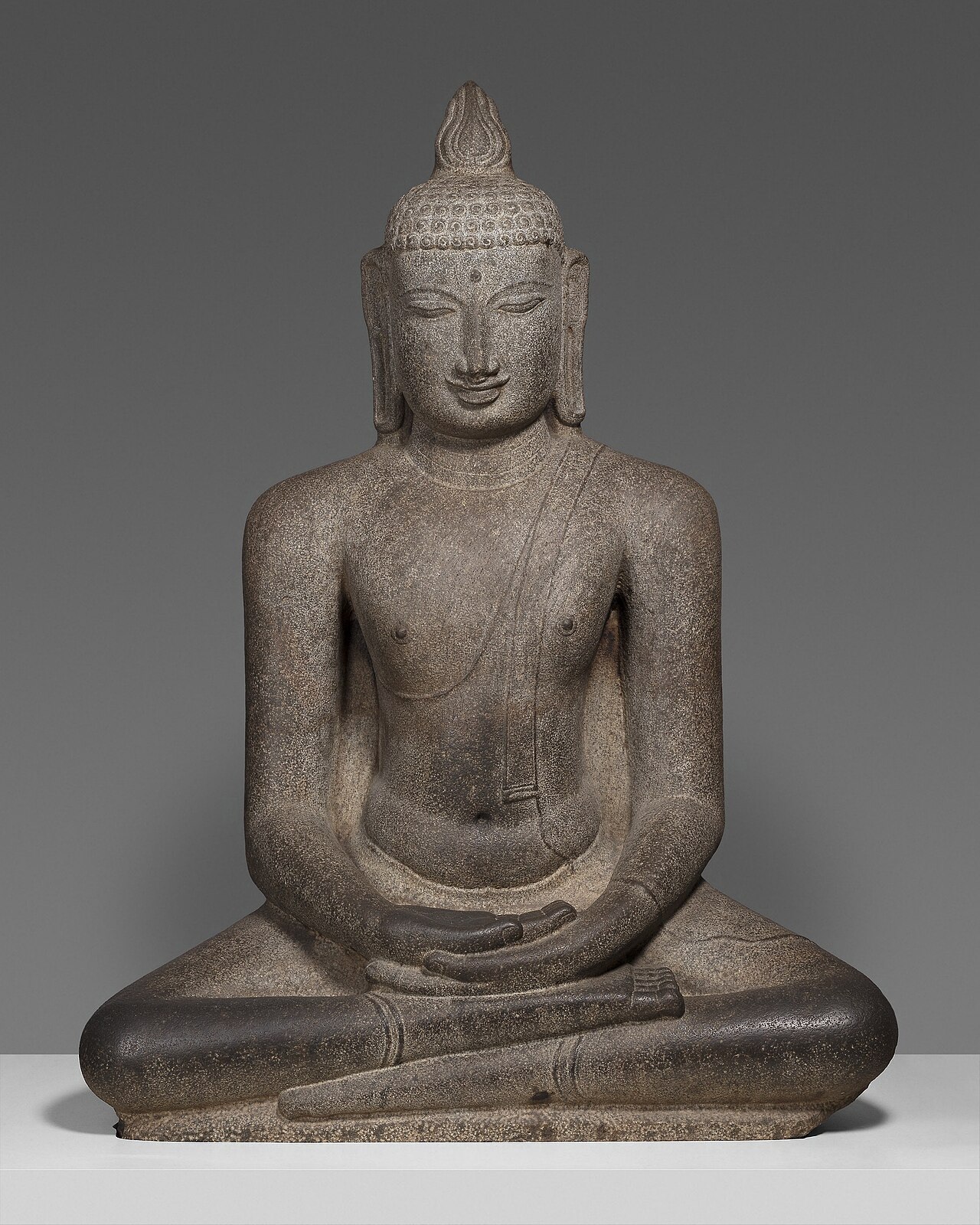
A gray granite statue of the Buddha seated cross-legged, hands resting one on the other in his lap, eyes lowered and a slight smile, with a small flame shape on top of his head, against a plain gray background.
About this picture

Buddha Shakyamuni Seated in Meditation, a granite sculpture from Nagapattinam in southern India, Chola period, about the 12th century. His hands rest in his lap in the gesture of meditation. Art Institute of Chicago.

Art Institute of Chicago, via Wikimedia Commons · CC0 1.0 (public domain dedication) · Image source ↗

WHERE THE EVIDENCE STANDS

How sure are we?

  • Mindfulness programs can ease anxiety, depression and pain a little.Goyal et al., JAMA Internal Medicine 2014: 47 randomized trials with active controls, 3,515 adults with a range of health conditions; moderate evidence of improved anxiety (effect size 0.38 at 8 weeks, 0.22 at 3 to 6 months), depression (0.30 and 0.23) and pain (0.33). NCCIH describes a 2018 analysis of 142 groups with more than 12,000 people that found mindfulness approaches worked as well as established treatments for anxiety and depression. Still debated because NCCIH says much of this research has been preliminary or not rigorous and may have been read too optimistically, and Van Dam et al. (2018) cite an estimate (Dimidjian and Segal, 2015) that only 9% of research on mindfulness programs had reached the stage of testing them against an active control.
  • A standard eight-week mindfulness course reshapes the structure of the brain.Hölzel et al. (2011) reported increases in gray matter concentration in the left hippocampus and other regions in 16 course participants versus 17 on a waiting list. Kral et al. (2022), with 218 randomized participants and active and waitlist controls, failed to replicate this and found no evidence of structural change from the course compared with either control; the authors note that their volunteers were unusually healthy.
  • Longer or long-term meditation practice is linked to differences in brain structure.Valk et al. (2017): 332 adults in a study of up to nine months of mental training; attention training mostly thickened the cortex in prefrontal regions. Fox et al. (2014): 21 imaging studies of about 300 meditators showed a medium overall difference, but the authors called publication bias and methodological limitations strong concerns. Kral et al. (2022) suggest that training longer than the eight-week course may be needed to change brain structure.
  • Meditation is safe for everyone.Farias et al. (2020): 83 studies with 6,703 participants; 8.3% of participants overall had an adverse event (3.7% in experimental studies, 33.2% in observational ones), most often anxiety, depression and cognitive anomalies, which may occur in people with no past mental-health problems. NCCIH notes that few studies have looked for harms.
  • Meditation can lead to the awakening described in Buddhist teaching.The Satipatthana Sutta (Middle Discourses 10) names the goal of mindfulness meditation as ending sorrow and pain and realizing extinguishment (nibbāna). That is a religious goal described in the tradition’s own texts; symptom scales and brain scans do not test it.
What the labels mean

WHAT WE DON’T KNOW YET

Nobody knows yet how much meditation, or which kind, is needed to change the brain’s structure, or whether such changes explain the benefits people feel. Many studies are small and short, and few look for harms.

WHAT WOULD CHANGE THIS ANSWER

Large randomized trials with matched control activities that find the same brain changes again and again would strengthen the brain claim. If such trials kept finding nothing, even after longer training, the brain claim would weaken further.

Probably yes, with longer practice, but the evidence that it reshapes brain structure is weaker than many headlines suggest. Meditation is a family of practices used to calm the mind, often by keeping attention on the breath, a sound or the present moment. It has become common. A national U.S. health survey found that the share of adults who meditate rose from 7.5% in 2002 to 17.3% in 2022. Many people meditate to reduce stress. So it is fair to ask what careful studies show.

Start with how people feel. In 2014, a research team reviewed 47 careful trials with 3,515 adults who had a range of health conditions. They used only trials that compared meditation with another activity that took the same time and attention. Mindfulness programs gave small-to-moderate relief from anxiety, depression and pain. There was no evidence that they worked better than drugs, exercise or other behavioral therapies. That is a real benefit, but a modest one.

Now the brain. Studies have shown the brain changing after other kinds of training, such as exercise and balance practice, so some change from meditation would not be surprising. A small 2011 study reported more gray matter in some brain areas after an eight-week course. But in 2022, a bigger and better-controlled test with 218 people found no evidence that the same kind of course changed brain structure. A 2017 study of 332 adults did find changes in the brain’s outer layer after months of daily mental training. So longer practice may matter, and the size of the change is still debated.

Meditation also has deep roots. Mindfulness has its historical roots in Buddhism, where it is one part of a path meant to end sorrow and pain. Science can measure stress, mood and brain scans. It cannot measure whether meditation leads to the goal Buddhist texts describe.

One more honest note. Meditation is not risk-free. In a 2020 review, about 8% of people had a negative effect, most often anxiety or depression. It can help many people. It is a practice, not a promise.

THE LONG ANSWER

Free long answer 2 of 3 this month.

What do well-controlled studies say about how meditation helps?

The key question for any study is “compared with what?” Many meditation studies compare meditators with people on a waiting list, who get nothing. Then it is hard to tell whether meditation helped, or simply the time, attention and hope that come with any class. The 2014 review in JAMA Internal Medicine, led by Madhav Goyal of Johns Hopkins University, dealt with this by including only trials with an “active control,” another activity that took the same time and attention. From 18,753 citations, the team kept 47 trials with 3,515 adults who had a range of health conditions.

Mindfulness programs showed moderate evidence of easing anxiety, depression and pain. The effects were small to moderate, and some were still there three to six months later. The evidence was weaker for stress and quality of life. For positive mood, attention, sleep, eating, substance use and weight, the evidence showed no effect or was too thin to judge. And the review found no evidence that meditation programs did better than drugs, exercise or other behavioral therapies.

Other reviews are more upbeat. The U.S. National Center for Complementary and Integrative Health (NCCIH) describes a 2018 analysis of 142 groups of patients with diagnosed conditions such as anxiety or depression, more than 12,000 people in all. For anxiety and depression, mindfulness approaches beat no treatment and worked as well as established treatments such as cognitive behavioral therapy and antidepressant medicines. The same page notes a 2021 analysis of treatment for anxiety disorders, in which the few studies that followed people for more than two months found no long-term effects.

Some strong warnings come from inside the field. In 2018, 15 researchers published a review called “Mind the Hype.” They warned that misinformation and poor methods could leave people “harmed, misled, and disappointed.” They cited an estimate that only 9% of research on mindfulness programs had reached the stage of testing them against an active control. One author had co-written the 2011 brain study described below.

Does meditation change the brain’s structure?

Some change would not be surprising. Research shows the brain changing with experience in sensory, motor and thinking skills. The question is how much meditation changes it.

In a widely referenced 2011 study, a team at Massachusetts General Hospital and Harvard Medical School scanned 16 healthy people before and after the eight-week Mindfulness-Based Stress Reduction course, known as MBSR, and compared them with 17 people on a waiting list. They reported increases in gray matter concentration, a measure of brain tissue, in the left hippocampus and in areas linked to learning, memory, handling emotions and taking another person’s point of view.

In 2022, a team at the University of Wisconsin–Madison ran a bigger test. They combined two randomized trials with 218 people who had no prior training in meditation. Each person was assigned by chance to MBSR, to a matched health program, or to a waiting list. The researchers failed to replicate the earlier findings and found no evidence that MBSR changed brain structure compared with either control group. In the same study groups, the course did change how some brain areas responded and connected, and self-reported mindfulness rose. But the matched health program raised self-reported mindfulness about as much. The authors add a caution: their volunteers were unusually healthy, while earlier studies drew people seeking stress relief, who may have had more room to improve.

Longer training looks more promising. A 2017 study followed 332 adults. Most did daily mental exercises and weekly group sessions, in three-month modules over up to nine months; a comparison group did no training. Training focused on present-moment attention, which resembled mindfulness, mostly thickened the cortex, the brain’s outer layer, in regions at the front. A 2014 analysis of 21 imaging studies of about 300 meditators found eight brain regions that differed consistently, with an overall “medium” effect size. Its authors, though, called publication bias and the limits of the studies’ methods “strong concerns.”

What is the strongest objection to brain-scan claims?

The “Mind the Hype” authors list several traps that can make brain studies look stronger than they are.

  • Brain pictures hide many steps. A brain image is the end of a long chain of biological and computer steps, and it is often a group average, not a picture of one person.
  • A snapshot cannot show cause. Many studies compare long-time meditators with non-meditators at one moment. The Wisconsin team notes that such people may have differed from the start, and may live differently.
  • Stillness can fool the scanner. If non-meditators fidget or breathe faster in the machine, the scans can show false differences.
  • Small groups give shaky results. The review warns about small samples.

The same authors add that differences seen across many studies are less likely to be mere artifacts. There is also a deeper point. A change in the brain does not settle whether the mind is only the brain. That question is still open: see Is the mind just the brain? If you have heard that quantum physics explains the mind, see What does quantum physics really say about consciousness and healing?

Can meditation cause harm?

Meditation is usually considered to have few risks, but few studies have checked. A 2020 review of 83 studies with 6,703 participants found that 55 of the studies reported at least one negative effect. Overall, 8.3% of participants had one. The rate was 3.7% in experimental studies and 33.2% in observational ones. The most common problems were anxiety, depression and what the review calls “cognitive anomalies,” or unusual changes in thinking. These can occur in people with no past mental-health problems. NCCIH adds that this rate is similar to the one reported for psychological therapies.

The figure from experiments may miss harms: the “Mind the Hype” authors note that fewer than 25% of meditation trials actively ask about them. They also note that meditation-related difficulties are discussed in many traditional, largely Buddhist, meditation guides.

NCCIH’s advice is plain: do not use meditation to replace medical care or to put off seeing a health care provider, and ask about your instructor’s training. If meditation stirs up distress that does not pass, tell a doctor or someone you trust. Our page If a question is personal right now is a place to start.

Where do contemplative traditions and scientists meet?

NCCIH notes that meditation goes back thousands of years and that many techniques began in Eastern traditions. The word mindfulness has its historical roots in Buddhism. A central text is the Satipatthana Sutta, number 10 in the Middle Discourses. Its translator, Bhikkhu Sujato, calls it and a longer version the most influential texts for modern Theravada meditation. It teaches a meditator to sit down, set the body straight and be mindful of the breath, and to observe the body, feelings, the mind and principles. It says these practices are meant “to get past sorrow and crying, to make an end of pain and sadness,” and to realize extinguishment, nibbāna in the Pali language. In the translator’s notes, mindfulness is the seventh factor of the Noble Eightfold Path. In that tradition, stress relief is not the whole point.

MBSR was introduced in the late 1970s as a complementary therapy for people with medical illness. From 1987, the Mind and Life Institute helped bring the Dalai Lama and scientists together in regular dialogues. People of faith and skeptics can agree on several things:

  • Attention can be trained. In the nine-month study, brain changes tracked improvements in attention in the same people.
  • Practice can be hard. Traditional guides and modern safety reviews both warn about difficult experiences.
  • Claims should match the evidence. Overselling meditation can mislead the very people it could help.
  • Some goals lie beyond a scanner. Whether meditation leads to awakening is a question for practice and faith, and we label it Beyond science.

On awe, a feeling many people call spiritual whether they are religious or not, see Why do we feel awe under the night sky?

How can you check a meditation claim yourself?

  • Ask “compared with what?” A study against a matched activity tells you more than one against a waiting list.
  • Count the people. The 2011 brain study had 16 people in its course; the 2022 test had 218 across its three groups.
  • Check the design. Did the same people get scanned before and after training, or were two different groups compared once?
  • Look for harms. Did the study ask about bad effects, or only wait for people to mention them?
  • Read the review yourself. The authors’ manuscript of the Goyal review is free to read on PubMed Central, and NCCIH has a plain-language page.

The answer stays the same after all this detail. Meditation can modestly ease anxiety, depression and pain. It may change brain structure with longer practice, but how much is still debated, and a short course may not change it at all.

THREE THINGS TO REMEMBER

  1. Meditation can give real but modest relief from anxiety, depression and pain.
  2. Brain-change headlines often run ahead of the evidence, especially for short courses.
  3. Meditation is not risk-free and should not replace medical care.

Keep asking

Next on the path “Astrology, psychics, awakening: what holds up?” · step 6 of 8

What are near-death experiences, and what do they tell us?

Near-death experiences are real experiences, reported by about 10 to 20% of people who survive a stopped heart.

EstablishedRead the answer

See this path: Astrology, psychics, awakening: what holds up?

Words worth knowing (6)
Mindfulness
Keeping attention on the present moment without judging it. The term has its historical roots in Buddhism and is now also used in medicine and psychology.
MBSR
Mindfulness-Based Stress Reduction, an eight-week course introduced in the late 1970s that teaches mindfulness through meditation, yoga and body awareness in weekly group classes.
Active control
A comparison activity that takes the same time and attention as the treatment, such as a health class. It helps show whether the treatment itself made the difference.
Meta-analysis
A study that combines the results of many earlier studies to get a clearer overall answer.
Cortex
The brain’s thin, folded outer layer. Some imaging studies measure how thick it is.
Cross-sectional study
A study that compares different groups at one moment. It can show a difference but not what caused it.

Sources & further reading

(9) · Checked Sep 29, 2026
  1. Meditation programs for psychological stress and well-being: a systematic review and meta-analysis (Goyal et al.) ↗JAMA Internal Medicine 174(3):357–368 (2014)Abstract (PubMed 24395196): 18,753 citations, 47 trials, 3,515 participants; RCTs with active controls for placebo effects; moderate evidence for anxiety (0.38 at 8 weeks, 0.22 at 3–6 months), depression (0.30, 0.23) and pain (0.33); low evidence for stress/distress and mental-health quality of life; low evidence of no effect or insufficient evidence for positive mood, attention, substance use, eating, sleep and weight; no evidence better than drugs, exercise or other behavioral therapies; “small to moderate reductions.” Free author manuscript PMC4142584 (its abstract says 17,801 citations and 3,320 participants; its methods section and the published abstract say 18,753 citations; the page uses the published figures): active control defined as a program matched in time and attention; trials had to include participants with a clinical condition, defined broadly to include mental health conditions such as anxiety or stress and physical conditions such as low back pain or heart disease; first author Madhav Goyal, Department of Medicine, Johns Hopkins University.
  2. Mind the Hype: A Critical Evaluation and Prescriptive Agenda for Research on Mindfulness and Meditation (Van Dam et al.) ↗Perspectives on Psychological Science 13(1):36–61 (2018)15 authors; Lazar SW (Massachusetts General Hospital, Harvard Medical School) is also an author of Hölzel et al. 2011. Full text PMC5758421: “harmed, misled, and disappointed”; mindfulness has its historical footing in Buddhism; MBSR introduced in the late 1970s; Mind and Life Institute from 1987 with dialogues between the Dalai Lama and scientists; cited estimate (Dimidjian and Segal, 2015) that a mere 9% of MBI research was at the stage compared against an active control; neuroimaging pitfalls (group averages, cross-sectional designs, head motion and breathing artifacts, small samples), partly mitigated because findings supported by meta-analyses of multiple studies are less likely to stem merely from artifacts; fewer than 25% of trials actively assess adverse events; adverse effects discussed in many traditional (largely Buddhist) guides.
  3. Absence of structural brain changes from mindfulness-based stress reduction: Two combined randomized controlled trials (Kral et al.) ↗Science Advances 8(20):eabk3316 (2022)University of Wisconsin–Madison; 218 meditation-naive participants (no prior training or formal practice in meditation) randomized to waitlist (70), MBSR (75) or a validated, matched active control, the Health Enhancement Program (73: exercise, music therapy, nutrition education); “largest and most rigorously controlled study to date”; failed to replicate prior findings, no evidence of neuroplastic change versus either control. Full text PMC9122316: MBSR (yoga, meditation, body awareness) changed amygdala reactivity and connectivity in sample one and PCC connectivity in sample two; the active control raised self-reported mindfulness about equally; cross-sectional studies of long-term meditators may reflect preexisting differences and lifestyle factors; brain structure changes after other training such as aerobic exercise and balance training; a well-powered study with training 50% longer than MBSR (Valk et al. 2017) found cortical thickness increases, and interventions longer than the standard 8-week course might be required to change brain structure; limitation: unusually healthy samples, while prior studies drew people seeking stress reduction who may have had more “room for improvement.”
  4. Mindfulness practice leads to increases in regional brain gray matter density (Hölzel et al.) ↗Psychiatry Research: Neuroimaging 191(1):36–43 (2011)Abstract (PubMed 21071182): Massachusetts General Hospital, Harvard Medical School; 16 healthy meditation-naive participants before and after the 8-week MBSR program vs 17 waitlist controls; increases in gray matter concentration in the left hippocampus, posterior cingulate, temporo-parietal junction and cerebellum; regions tied to learning and memory, emotion regulation, self-referential processing and perspective taking. Full text (PMC3004979): MBSR is eight weekly group meetings of two and a half hours plus one full day.
  5. Is meditation associated with altered brain structure? A systematic review and meta-analysis (Fox et al.) ↗Neuroscience & Biobehavioral Reviews 43:48–73 (2014)Abstract (PubMed 24705269): 123 morphology differences from 21 studies of about 300 practitioners; eight regions consistently altered; global medium effect (d = 0.46); “Publication bias and methodological limitations are strong concerns.”
  6. Structural plasticity of the social brain: Differential change after socio-affective and cognitive mental training (Valk et al.) ↗Science Advances 3(10):e1700489 (2017)Abstract and full text (PMC5627980): 332 healthy adults aged 20 to 55; 9-month program of daily exercises and weekly group sessions; present-moment attention module resembled mindfulness interventions and mostly increased cortical thickness in prefrontal regions; changes correlated with improvements in attention; experience-dependent brain change known in sensory, motor and cognitive domains.
  7. Adverse events in meditation practices and meditation-based therapies: a systematic review (Farias et al.) ↗Acta Psychiatrica Scandinavica 142(5):374–393 (2020)Abstract (PubMed 32820538): 83 studies, 6,703 participants; 55 studies (65%) reported at least one adverse event; prevalence 8.3% overall, 3.7% experimental, 33.2% observational; most common anxiety, depression and cognitive anomalies; may occur in people with no previous mental-health history.
  8. Meditation and Mindfulness: Effectiveness and Safety ↗National Center for Complementary and Integrative Health (NIH)Meditation is used to calm the mind, often by focusing on breathing, a sound or the present moment; mindfulness means attention on the present moment without making judgments; a mantra is a repeated word or phrase; history of thousands of years, many techniques from Eastern traditions; NHIS: adults meditating rose from 7.5% (2002) to 17.3% (2022); usually considered to have few risks, but few studies examined harms; 2020 review about 8% negative effects, similar to psychological therapies; 2018 analysis of 142 groups of participants with diagnosed psychiatric disorders such as anxiety or depression (more than 12,000 participants) found mindfulness better than no treatment and as good as evidence-based treatments for anxiety and depression; 2021 analysis of treatment for diagnosed anxiety disorders found no long-term effects beyond 2 months in the few studies that checked; much research preliminary or not scientifically rigorous and may have been interpreted too optimistically; in 3 MBSR studies (521 participants) mindfulness practices were not more harmful than no treatment; brain studies difficult to interpret; do not replace conventional care; ask about instructor training. Page shows “Last Updated: June 2022.”
  9. Mindfulness Meditation (Satipaṭṭhānasutta, Middle Discourses 10), translated by Bhikkhu Sujato ↗SuttaCentralRead via the SuttaCentral API (bilarasuttas/mn10/sujato). mn10:2.1: the four kinds of mindfulness meditation are “to get past sorrow and crying, to make an end of pain and sadness … and to realize extinguishment” (Pali: nibbānassa sacchikiriyāya). mn10:4.2: sits, sets the body straight, brings mindfulness to the present. Translator’s notes: this discourse and DN 22 are the most influential texts for modern Theravada meditation; satipaṭṭhāna is the seventh factor of the noble eightfold path. Licence (SuttaCentral bilara-data publication record scpub3): Creative Commons Zero (CC0), dedicated to the public domain.

See a mistake? Report a problem. Corrections are made openly.

The Architect AI companion · All Access

Your next question can go further.

Included with All Access →Up to 5 questions a day while available.

Put God Plays Dice on your Home Screen

On iPhone: tap Share (on iOS 26, tap ••• first), then Add to Home Screen, then Add.

On Android: In Chrome, you can also open the ⋮ menu and choose Add to Home screen or Install.

The Home Screen version keeps its own memory on iPhone, so your nights and saved answers start fresh there.

Search the Question Library

149 answers to read · 0 questions awaiting answers Your search runs on your device.

Answers about death, grief and crisis are always free, in full. If a question is personal right now →