EssaysEssay · personal view
Where to start in GOD PLAYS DICE if you are new to cosmology
A simple reading guide to the questions, measurements and scientific limits in GOD PLAYS DICE, Volume One.
ESSAYS PERSONAL VIEW
At forty, I looked back at a science book, a church, three magazines, several reinventions, and a daughter—and found the same question running through all of them: what should I do with the life I was given?
When I turned forty, I realized something simple that I had never thought about before.
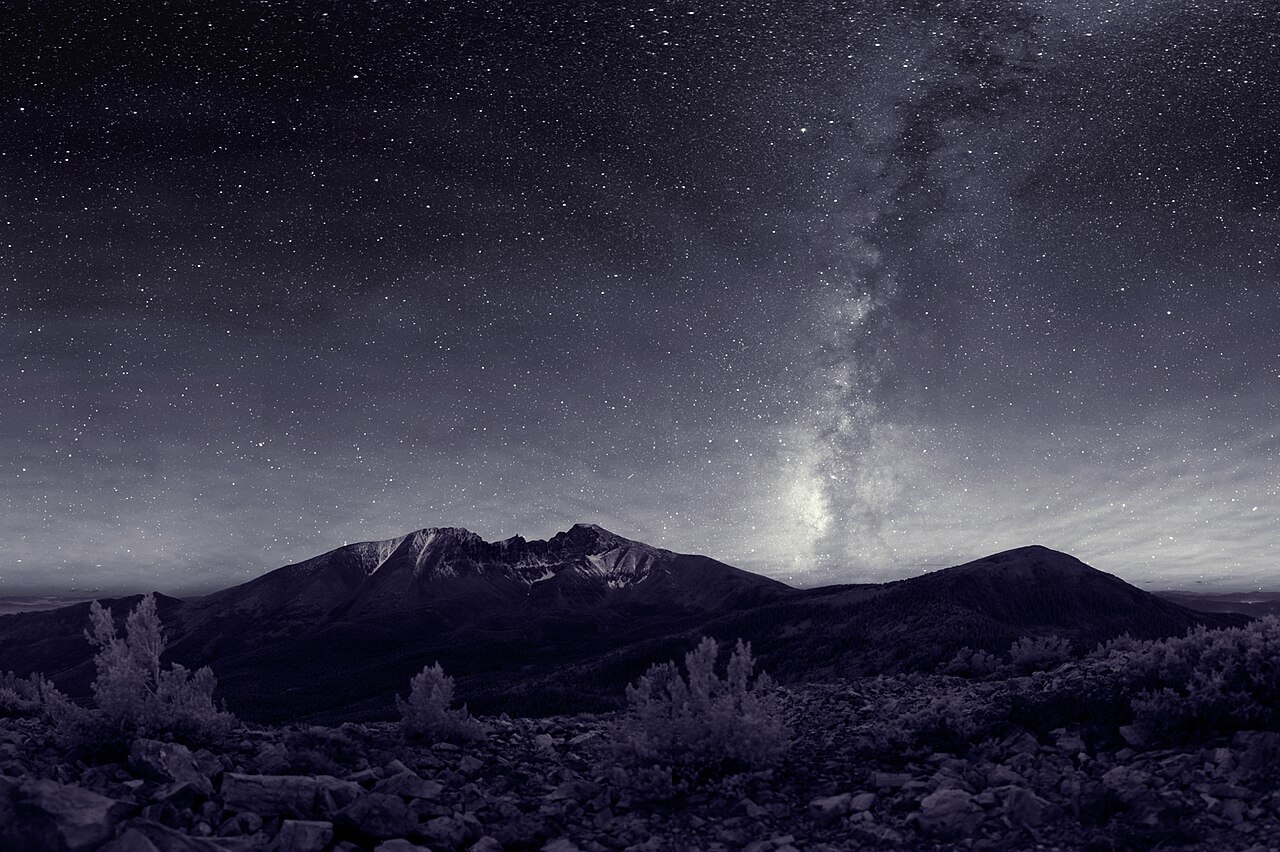
The Milky Way over Great Basin National Park, Nevada.
I was not beginning my fortieth year. I was finishing my fourth decade and stepping into my fifth.
So I looked backward, one decade at a time.
What I found was not a straight path. It was a series of lives: a curious child, a deeply religious teenager, a young publisher, an entrepreneur, a man who lost certainty, and finally a father trying to decide what kind of legacy matters.
The common thread was not success.
It was questions.
I was the youngest in a large, close family. Around seven or eight, I opened a science book that changed the direction of my life. I do not remember every page, but I remember the feeling: reality was larger, stranger, and more understandable than I had imagined.
Science became my favorite subject.
At night, I would talk with my father about existence, God, the universe, and where everything came from. He was not a professional scientist. He was a reader who treated my questions seriously, and that mattered more than I understood at the time.
A child does not always need an answer.
Sometimes a child needs an adult who does not laugh at the question.
Church became my second home. I served, sang, listened, volunteered, and attended so often that one day my family nearly called the police before realizing I was probably still there.
Religion gave me structure, community, discipline, and a language for awe. It also gave me a place to turn the questions I could not put down.
At nineteen, I founded Una Voz en el Desierto—A Voice in the Desert—a Spanish-language Catholic magazine in Las Vegas. As far as I knew, nothing quite like it existed in the city at the time.
I had more conviction than experience. I learned by doing: writing, selling advertisements, working with printers, carrying boxes, and asking strangers to take a chance on a young person with an idea.
That decade taught me that a sense of purpose can move us before we are fully prepared.
It also taught me that purpose is not proof. Feeling called to something does not guarantee we understand it correctly.
In my twenties, my relationship with the Church changed. The magazine changed with me. I shifted it toward personal development, and later created La Voz de la Mujer—The Woman’s Voice—for Latina readers in Las Vegas.
I was studying at the College of Southern Nevada while trying to keep publications alive with limited money and an uncertain future. I read hundreds of books and listened to as many audiobooks as I could. I became obsessed with growth, leadership, psychology, and the belief that a person could rebuild a life through effort.
Some of that helped me.
Some of it exhausted me.
Critics often told me I did not know enough to write about the subjects I cared about. Sometimes they were right: I had much to learn. But I also learned that waiting until everyone grants you permission is another way of never beginning.
There is a balance between humility and paralysis.
I may never satisfy people who demand endless proof of my worth, but I can remain teachable while continuing the work.
That decade taught me that reinvention is not necessarily ambition. Sometimes it is survival.
In my thirties, I built businesses, including Las Vegas en Español and Rank.Vegas. I learned web design, marketing, photography, video, search optimization, and whatever the next problem required.
I also spent years listening to political, historical, religious, and scientific discussions for hours each day. Information was everywhere. Wisdom was harder to find.
For a long time, I measured progress by how much I could produce. Then pain, fatigue, disappointment, and time began changing the question.
What if wealth is not only what we accumulate?
What if it is also what we understand, what we repair, what we give, and how present we are with the people who depend on us?
I no longer want to leave only money behind. Money can disappear in a generation. I want to leave questions, lessons, writing, and evidence that I tried to think honestly.
Not because my words belong beside history’s great thinkers. They do not. But because every generation receives unfinished questions, and each of us has the right to record what we learned while carrying them.
When we were children, adults told us, “You are the future.”
Then we grew up and repeated the sentence to our own children, as if the responsibility had moved past us.
But we are the future they were talking about.
The child inside us did not lose responsibility simply because another generation arrived.
I understand the temptation to withdraw. The world is noisy, divided, and exhausting. A private life can feel safer. I have stepped away before too.
But comfort does not cancel obligation.
We do not all need to become public figures or save the world. We can mentor one person, raise a thoughtful child, volunteer, build something useful, correct a mistake, or bring calm into one room.
The future is not only made by famous people.
It is made by ordinary people repeating ordinary choices.
At forty, I entered what I hope will be the deepest stage of my life: fatherhood.
My daughter gave time a different weight. I want to give her love, but love is not only a feeling. It is attention, patience, protection, honesty, and the willingness to be present when something else seems more urgent.
I also want to leave her what I have learned, including the parts I may have misunderstood.
That is why I write about the questions that followed me from childhood:
What is the meaning of life? What happened before the Big Bang? Does God exist? Are we alone? What is consciousness? Why is there something rather than nothing?
I do not claim final answers. Some of my writing is reflection. Some is scientific explanation. Some is speculation clearly labeled as speculation. One idea—the higher-dimensional blast hypothesis—became the subject of God Plays Dice because I wanted to turn a lifelong question into something evidence could judge.
I used to think a legacy was something large enough for the world to notice.
Now I think it may be something useful enough for one person to carry forward.
My four decades did not form a perfect plan. They formed a trail of questions, mistakes, changes, and second beginnings.
If I have learned anything, it is this:
We do not need to know exactly where our lives are going before we begin living them honestly.
We need enough humility to keep learning, enough courage to begin before we feel ready, and enough love to pass what we learn to someone else.
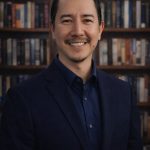
Ricardo Maldonado, founder and editor of God Plays Dice.
More essays by Ricardo
CONTINUE THE THREAD
EssaysEssay · personal view
A simple reading guide to the questions, measurements and scientific limits in GOD PLAYS DICE, Volume One.
EssaysEssay · personal view
World Space Week 2026 celebrates Rocket Revolution. Ricardo Maldonado asks how curiosity about cosmic origins connects to his unproved HD-Blast hypothesis.
EssaysEssay · personal view
A short reading exercise separates understanding a proposal from accepting it, while keeping your unresolved questions visible.
Match my phone uses your device’s light or dark setting.